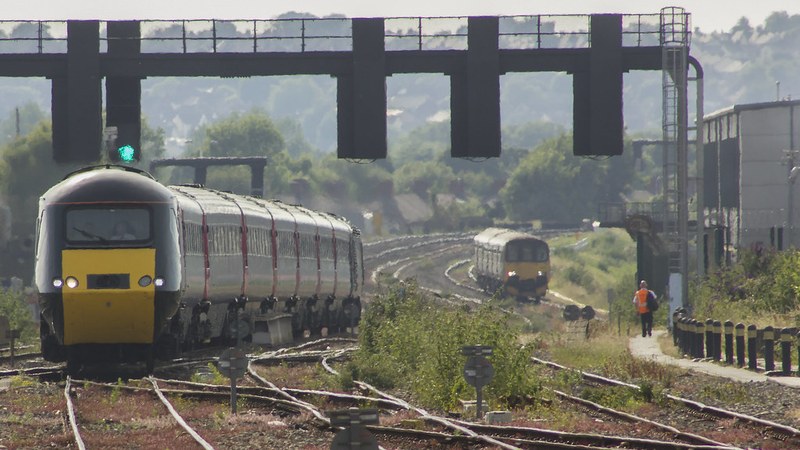
Two train derailments occurred in the UK within less than 24 hours during the fifth heatwave of summer 2026, impacting rail operations in East Sussex and Essex.
Details of Lewes and Wickford Derailments
On Thursday afternoon, a Southern train traveling from London Victoria to Eastbourne derailed near Lewes, East Sussex. About 150 passengers were onboard the service which was evacuated following the incident. Two people sustained serious injuries requiring admission to major trauma centres. On Friday, a Greater Anglia train derailed upright at Wickford railway station, Essex, with no injuries reported among approximately 40 onboard passengers. This Greater Anglia service departed Rayleigh at 2:06pm and was
scheduled to arrive at Wickford by 2:11pm.
Operational Impact and Safety Measures
The derailment near Wickford led to closure of all rail lines between Wickford and Southend Victoria, suspending train services between London Liverpool Street and Southend Victoria. Southern warned of significant disruptions with anticipated cancellations and advised passengers to allow an extra hour for journeys. Network Rail imposed speed restrictions and monitored track temperatures as part of proactive measures to manage heat-related risks on the network.
Official Responses and Investigations Underway
Martin Frobisher, Group Safety and Engineering Director at Network Rail, described the unprecedented hot and dry summer weather as having “presented exceptional challenges to the railway” and stated
that investigations are ongoing to identify all potential causes. The Rail Accident Investigation Branch has deployed inspectors to the Lewes derailment scene to support a comprehensive inquiry. John Whitehurst, CEO of Greater Thameslink Railway, praised four railway staff for their rapid response during evacuation at Lewes and confirmed a full investigation is underway. The Department for Transport emphasized that UK railways remain among the safest globally despite the rare incidents.
Heat Effects on Rail Infrastructure
The extreme temperatures caused steel rails to expand significantly, with experts noting approximately 11mm extension per kilometer per 1°C temperature increase. This expansion raises the likelihood of track buckling, where
rails deform and disrupt train movement. Rail engineers and MPs from affected regions indicated that prolonged heatwaves have altered track conditions, making them bumpier and potentially contributing to derailments.
Traveller Considerations During Disruptions
Passengers using routes affected by the derailments, including London Liverpool Street to Southend Victoria and London Victoria to Eastbourne, should prepare for delays and cancellations until further notice. Southern services in particular are expected to face ongoing challenges, with customers advised to confirm travel plans and factor in additional journey time amid rail network congestion.
Ongoing Investigations and Safety Assurances
Network Rail is conducting internal reviews alongside the Rail Accident Investigation Branch to determine the precise
causes behind the two derailments. Heat-induced track buckling remains a likely factor being examined, alongside potential ground effects from the dry weather. Officials continue to affirm ongoing commitment to passenger safety and rail operational integrity following the incidents.