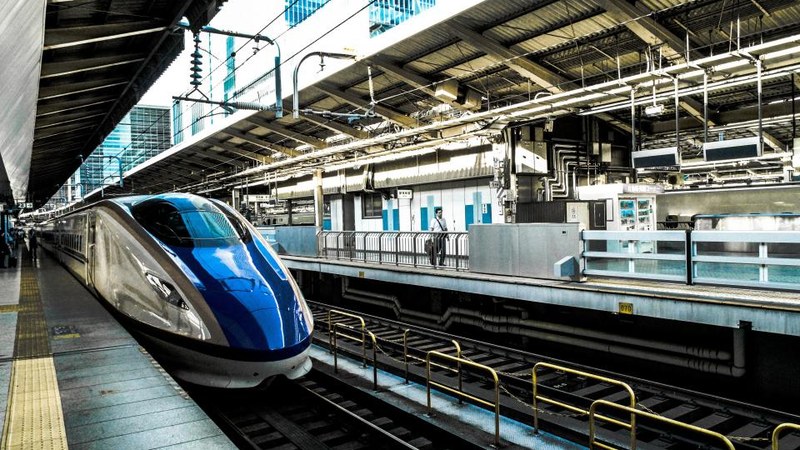
The Executive Yuan has approved a 60.6 km extension of Taiwan’s standard-gauge high speed rail line from Nangang station, east of Taipei, to Yilan on the northeast coast. The Railway Bureau of the Ministry of Transportation & Communications estimates the extension will cost NT$222 billion (€5.95 billion), rising to NT$352.2 billion (€9.44 billion) when including the construction of a new depot and procurement of rolling stock.
New Infrastructure Planned for Yilan Extension
The project includes building a new station near Yilan County Hall to serve as the high speed rail terminus. A depot and maintenance facility will be established southeast of this terminus to support operations.
Separately, a 15.6 km section of the existing conventional railway through central Yilan will be rebuilt on an elevated track to minimize interference with road traffic. This redevelopment involves reconstructing four stations and creating a new interchange connecting the conventional rail network with the high speed line in Yilan.
Capacity Relief and Regional Rail Strategy
The extension aims to alleviate congestion on the existing 1,067 mm gauge conventional line running between Shulin, southwest of Taipei, and Qidu, south of Keelung, which currently operates at full capacity. The Railway Bureau has been evaluating the extension since 2019 and projects completion by 2037. The initiative supports Taiwan’s strategy
to establish an efficient, round-island rail network to promote balanced development along the east coast.
Additional Rail Projects and Network Enhancements
Alongside the Yilan extension, Taiwan is progressing other rail upgrades including double-tracking the conventional line between Hualien and Taitung. Improvements are also underway on the South Link line between Fangliao and Taitung, focusing on removing bottlenecks via additional tracks. Furthermore, a separate 25.9 km southern extension of the high speed rail line, from Zuoying through Kaohsiung main station to Pingtung, was approved in December 2020, expanding the island-wide high-speed rail coverage.