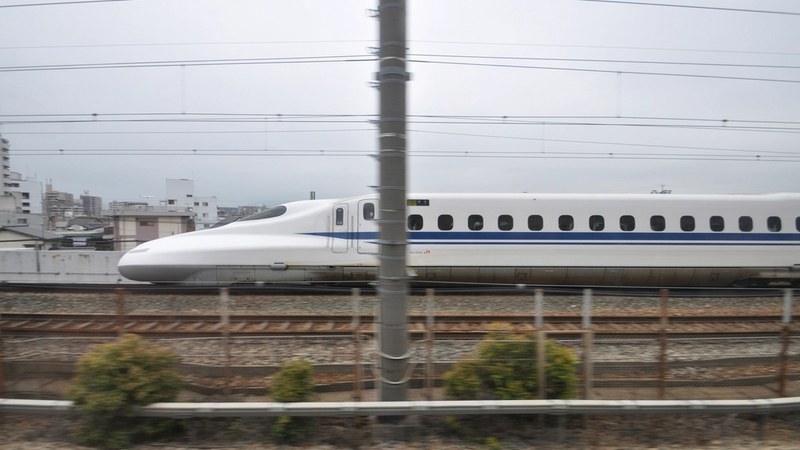
On 6 August 2026, the Taiwan Executive Yuan approved a 60.6 km extension of the island’s standard-gauge high speed rail line from Nangang station east of Taipei to Yilan on the northeast coast. The project includes construction of a new station near Yilan County Hall and a depot and maintenance facility southeast of the new terminus.
The Railway Bureau of the Ministry of Transportation & Communications estimates the extension cost at NT$222 billion (€5.95 billion). When including the new depot and rolling stock, the total investment rises to NT$352.2 billion (€9.44 billion). The extension aims to relieve capacity constraints on
the existing 1,067 mm gauge conventional line between Shulin, southwest of Taipei, and Qidu, south of Keelung, which currently operates at full capacity.
Evaluation of the extension has been ongoing since 2019. The Railway Bureau projects completion by 2037. Separately, a 15.6 km section of the existing line through central Yilan will be rebuilt on an elevated alignment to reduce conflicts with surface traffic. This will involve reconstructing four stations and building a new interchange connecting to the high speed line.
Taiwan’s Round-Island Rail Strategy
The Yilan extension is part of Taiwan’s broader strategy to develop a high-efficiency round-island rail network. This approach seeks
to promote balanced development on the east coast in relation to the west coast. Other projects in the plan include double-tracking the 1,067 mm gauge conventional line between Hualien and Taitung and improving the South Link line between Fangliao and Taitung.
In a related project approved in December 2020, a 25.9 km high speed rail extension from Zuoying to Kaohsiung main station and then east to Pingtung is underway, reflecting the overall push to expand Taiwan’s high speed rail coverage.