More than 1,600 flights were delayed and over 300 cancelled across nine major US airports on November 10, 2026, due to a fast-moving storm system that led to ground delay programs and arrival restrictions at multiple hubs including Seattle–Tacoma International Airport and New York LaGuardia Airport.
Storm System Affects Airports from Pacific Northwest to Northeast
The storm system stretched from the Pacific Northwest through the Upper Midwest to the Northeast US, impacting airports such as Seattle–Tacoma International, New York LaGuardia, and Boston Logan Airport. The disturbance brought low ceilings, gusty winds, rain, and reduced visibility, prompting knock-on delays and restrictions at East Coast airports. Flights inbound to Chicago and
Detroit were rerouted and held in holding patterns due to rain bands crossing Midwestern states.
Delay and Cancellation Figures Reflect Widespread Disruption
According to FAA data, more than 1,600 flight delays and over 300 cancellations were reported on November 10. US airports typically handle more than 45,000 flights daily, so the numerous ground delay programs, arrival rate caps, and reduced arrival flows significantly affected passenger flows and aircraft scheduling. The FAA reported a near 20% year-on-year increase in ground stops at the 30 largest US airports as of 2024, a trend linked to rising storm intensity and airspace congestion.
Operational Causes Include Weather and Staffing Constraints
Low cloud layers, crosswinds, rain, and embedded thunderstorms
forced traffic management initiatives to keep operations within safety margins. Constraints on air traffic control and ground operations staffing limited the ability to quickly recover disrupted schedules once weather conditions improved. The rolling constraints across several airports caused reduced airspace capacity and cascading delays throughout the national network.
Traveler Impacts and Advice
Passengers faced extended wait times, reroutes, and cancellations at the nine affected airports on November 10, with lingering delays expected into early November 11, especially at northern hubs. Tight connections are likely to be disrupted as aircraft and crews delayed earlier propagate issues. Major US airlines monitor conditions to determine travel advisories
and fee-waiver policies, often allowing rebooking without change fees during severe weather. Travelers were recommended to build in extra connection times, choose earlier flights, and use flight status tools for updates.
FAA and Weather Service Monitoring
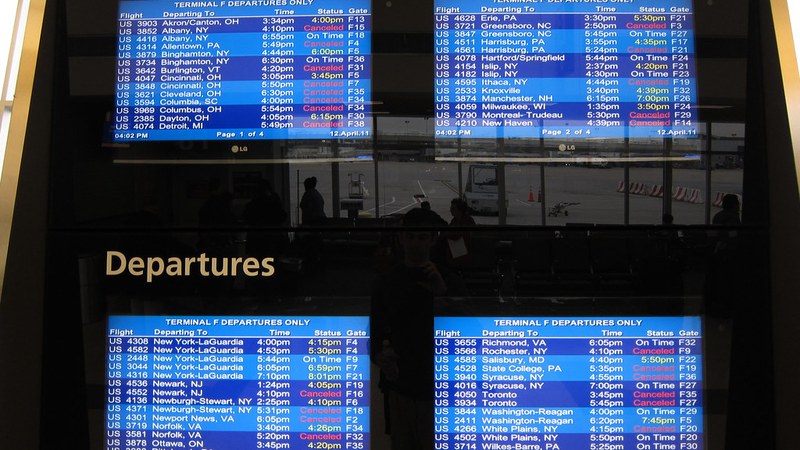
The Federal Aviation Administration’s daily air traffic reports and real-time status boards, refreshed every few minutes, tracked ground delay programs and arrival restrictions across the nine airports. The National Weather Service’s Aviation Weather Center forecasted the disturbed weather band affecting the northern US corridor. Independent delay tracking services using FAA data also showed rapid growth in delays once morning weather programs began, attributing disruptions mainly to convective weather and
volume constraints.