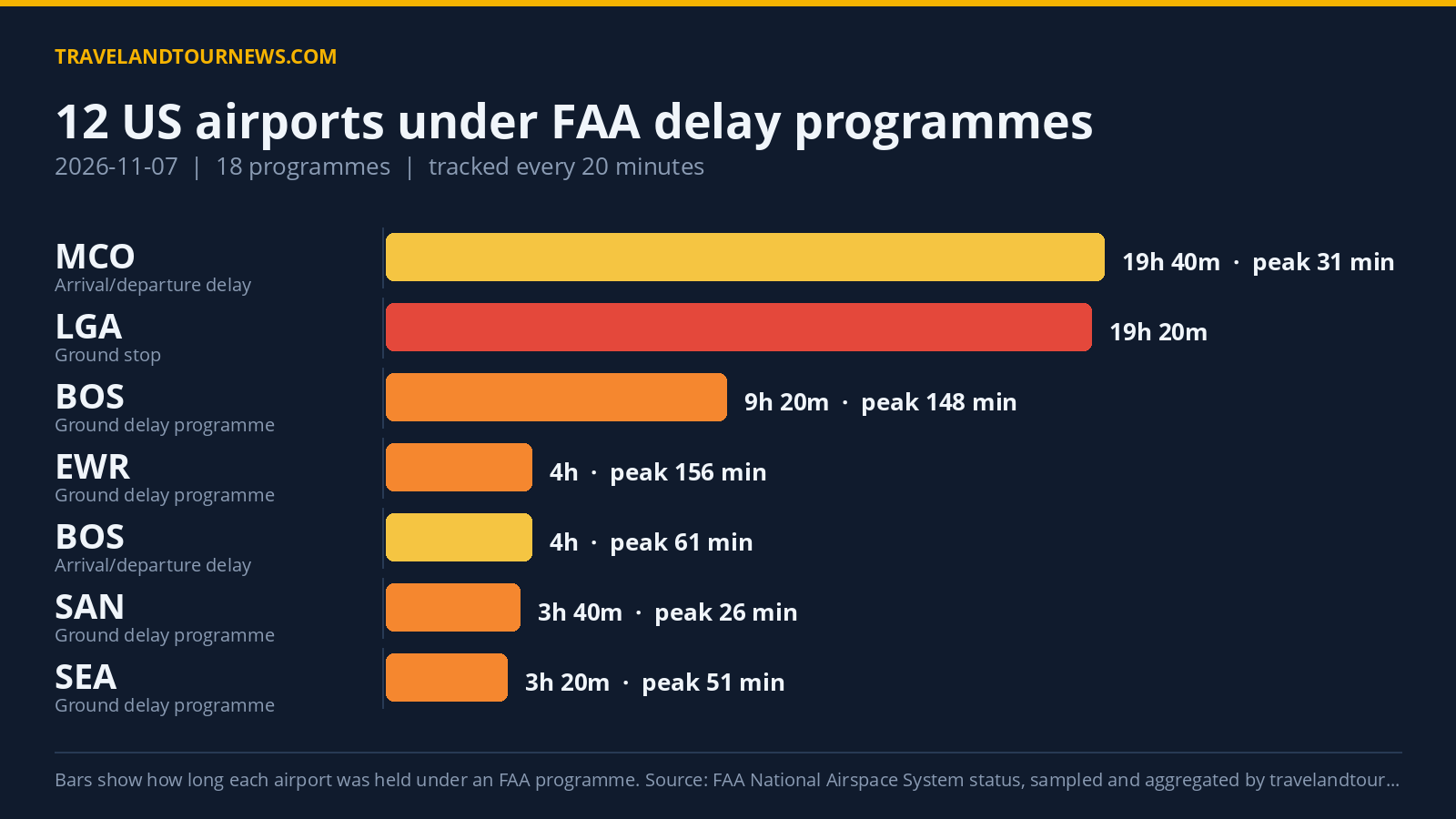
Flight operations across the United States faced significant disruptions on November 7, 2026, with at least 1,331 flights delayed and 59 canceled as of 10 a.m. Eastern Standard Time, according to data from FlightAware. Globally, delayed flights exceeded 11,413, alongside 548 cancellations recorded by the same time.
Weather Impact on Major U.S. Airports
The Federal Aviation Administration (FAA) attributed these delays and cancellations primarily to thunderstorms and low cloud cover affecting several major airports. Boston Logan International Airport (BOS), New York City airports including John F. Kennedy (JFK), LaGuardia (LGA), and Newark Liberty International (EWR), Philadelphia International Airport (PHL), and Washington D.C. area airports comprising Ronald
Reagan Washington National (DCA), Baltimore/Washington International Thurgood Marshall (BWI), and Washington Dulles International (IAD) were specifically impacted by the adverse weather.
In addition, the FAA noted that flight disruptions could occur at Charlotte Douglas International Airport (CLT) due to low cloud conditions.
Travel Expert Advice on Managing Disruptions
Travel specialists recommend that passengers monitor their flights through official airline websites or mobile applications which provide real-time updates. Enabling notifications for gate changes, delays, and cancellations is advised to stay informed.
Eryn Gordon, founder of Earth to Editorial and a TedX speaker on ethical travel, emphasized handling cancellations as logistical challenges rather than emergencies. She advised travelers
to “screenshot the rebooking policy before you leave the house” to prepare for any adjustments. Gordon cautioned against quickly accepting the first available alternative seating, warning that rushed decisions can result in being stranded overnight at connecting airports without luggage.
Passenger Impact and Preparations
The nationwide disruptions caused more than 1,331 U.S. flights to be delayed and 59 to be canceled by mid-morning, affecting passenger itineraries extensively. Due to ongoing delays, travelers are encouraged to keep essential belongings in carry-ons to maintain access during prolonged wait times.
Connecting travelers should allocate extra time when moving through busy airports, particularly those listed by the FAA,
to reduce the risk of missing subsequent flights.
Reviewing each airline’s policies on refunds and rebooking ahead of travel may help passengers manage unexpected changes efficiently.
FlightAware provides continuous, live tracking of flight delays and cancellations worldwide, while the FAA monitors weather conditions that influence airport operations and flight safety.