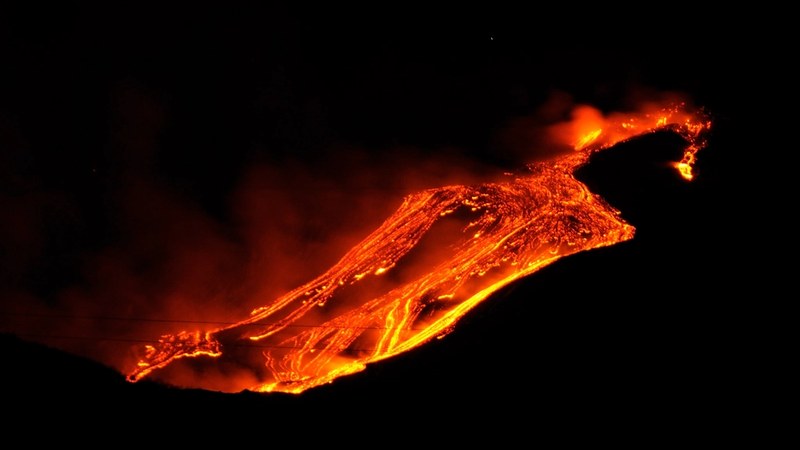
Mount Etna’s eruption on August 11, 2026, forced 98 flight cancellations and 23 delays at Catania-Fontanarossa Airport in eastern Sicily. The volcano’s renewed activity prompted Italy’s volcanic monitoring authorities to issue the highest aviation alert level, halting flights due to airborne volcanic ash hazards.
Across Europe, a total of 2,204 flight delays and 229 cancellations were reported on the same day, according to FlightAware data timestamped at 1:27 PM ET (5:27 PM GMT). Catania’s cancellations made up around 43% of all European flight cancellations during this disruption. Other major affected airports included Barcelona-El Prat in Spain, with 282 delays, and
Rome Fiumicino Airport in Italy, which recorded 219 delays.
>
Flying Through Volcanic Ash and Safety Risks
The eruption emitted substantial clouds of volcanic ash and gas over eastern Sicily and nearby airspace including Malta. These ash clouds contain microscopic glass particles that present severe risks to jet engines by causing abrasion and potential engine failure. This threat has led to strict airspace closures and rerouting to maintain flight safety.
>
Passenger Impact and Travel Advice
Passengers at Catania-Fontanarossa faced significant travel interruptions with nearly 100 cancellations and 23 delays on August 11, 2026. Across Europe, airlines had to manage scheduling challenges amid widespread delays and cancellations. Travelers affected are urged to
seek rebooking options through airline mobile apps or customer support. Within Italy, reliable ground alternatives include high-speed rail services alongside disrupted air travel.
Travelers impacted by these extensive delays should prepare by keeping essential items such as prescription medications, device chargers, and travel documents in hand luggage to handle extended transit times.
>
Environmental and Operational Challenges
Flight cancellations and extensive delays increase carbon emissions due to aircraft idling and holding. This event highlights European aviation’s vulnerability to natural hazards like volcanic eruptions. Continuous cooperation among geological monitoring bodies, meteorological offices, and civil aviation authorities remains critical to safeguard passengers.
Authorities are investing in
real-time volcanic ash tracking and adaptive flight routing technology to reduce airspace closures and limit operational impact from such natural disruptions in the future.