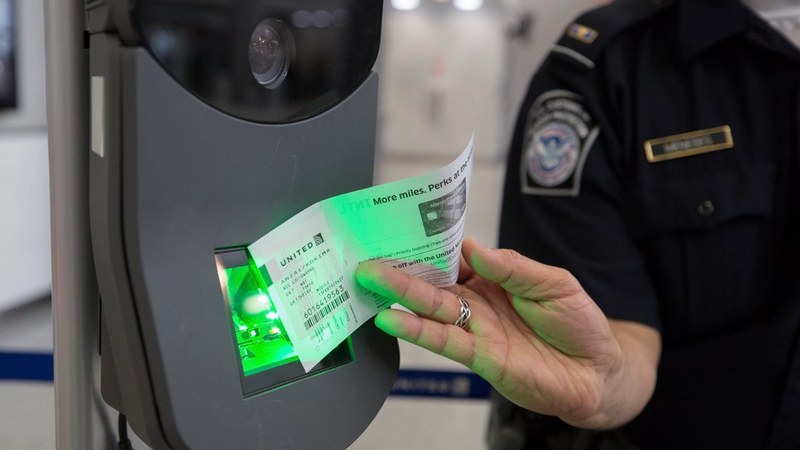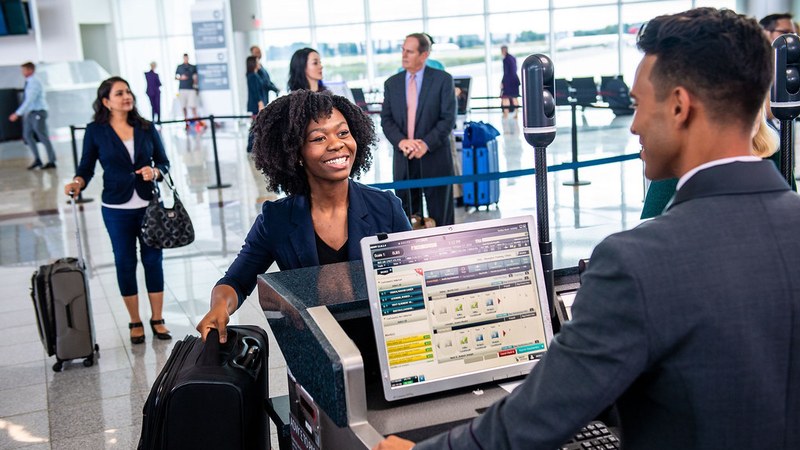
SITA and Qatar Airways have introduced an opt-in facial biometric system at Hamad International Airport (HIA), Qatar, integrating over 700 touchpoints into a unified biometric passenger journey. The Fast Pass system allows passengers to enroll via the Qatar Airways mobile app or at self-service kiosks, thereafter using facial recognition instead of a traditional boarding pass for check-in, bag drop, security, and boarding.
Extensive Biometric Deployment in Middle Eastern Airports
More than 43% of airports worldwide now operate biometric-enabled boarding, according to SITA. Dubai International Airport (DXB) has implemented the Red Carpet Smart Corridor, which utilizes Paravision facial biometrics in partnership with emaratech to process more than 10
travelers at once. Emirates Airline began installing biometrics in 2017, deploying over 200 boarding cameras at DXB.
Abu Dhabi’s Zayed International Airport uses facial recognition at five of nine passenger touchpoints. Etihad Airways is trialing facial identity verification not only for boarding but also lounge access. Meanwhile, Al Maktoum International Airport, still under construction, aims to deploy an interconnected AI-powered biometric ecosystem to manage passenger flow.
Passenger Experience and Operational Efficiency Gains
Passengers at HIA enroll once for the Fast Pass system, enabling biometric processing throughout their airport journey. According to Selim Bouri, president for Middle East, Africa & Türkiye at SITA, “When a passenger is
verified once and recognized across the whole journey, the airport runs more smoothly and the traveler stays in control of their data.”
The International Air Transport Association (IATA) estimates that biometric verification can reduce passenger processing times by up to 40%, a figure supporting investments that accommodate rising passenger volumes, such as DXB’s record 95.2 million international passengers in 2025. Majed Al Joker, COO of Dubai Airports, emphasized the need for “consistent, measurable improvements in how guests move through our terminals.”
Regional Biometric Trials and Deployments Beyond the Gulf
In Kazakhstan, Nursultan Nazarbayev International Airport plans to trial biometric passenger registration allowing self-service check-in and electronic passport use.
Vietnam’s Noi Bai International Airport operates biometric check-in kiosks synchronized across security and boarding, handling 2,000 to 3,000 passengers daily and reducing check-in times.
Nigeria’s Federal Airports Authority is rolling out the V-Pass biometric identity system developed with Verxid Technologies. This system uses facial recognition and a Central Management System to confirm passenger identities and support analytics for passenger movement, integrating AI solutions by Barnksforte Technologies as part of Nigeria’s digital transformation.
Growth Prospects and Industry Challenges
Industry forecasts predict the biometric airport technology market will reach $150.58 billion by 2030, while the airport biometrics services market is expected to hit $276.56 billion by 2032.
By 2027, 75% of airports are projected to use biometric technologies across passenger processing stages, including check-in, baggage drop, boarding, and border control.
Global adoption of digital travel credentials could surpass 1.2 billion passengers by 2035, according to Juniper Research. Despite rapid deployment, Asian Aviation reports that few biometric passenger processing systems have achieved scalable, interoperable operating models due to unresolved issues around governance, liability, funding, and ownership. These challenges currently leave implementations dependent on individual airports, airlines, and border authorities.