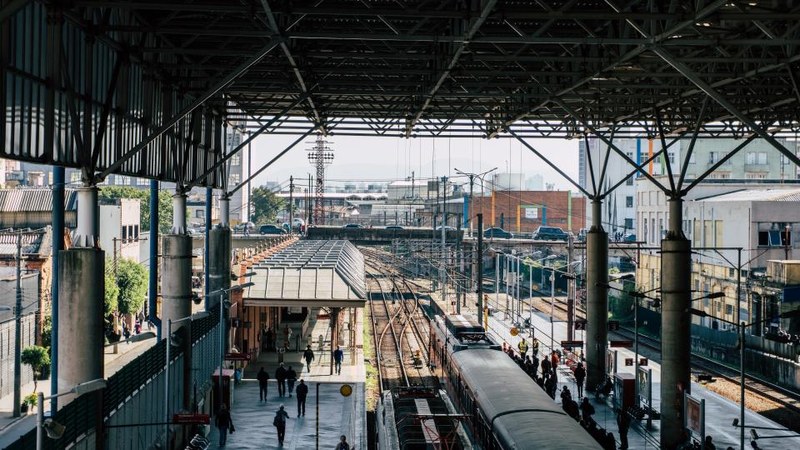
Hungary announced a national rail investment programme worth HF3 550 billion (€9.76 billion) to be completed by 2035. The Gábor Baross Railway Development Plan was revealed by Prime Minister Péter Magyar and Minister of Transport & Investment Dávid Vitézy on July 22, 2026, at Budapest’s Rákospalota-Újpest main line station, a site earmarked for major renovation and extension as the new terminus of the metro Line M3.
EU Funding and Governance Conditions
The investment relies on European Union funds contingent upon Hungary meeting reform and governance requirements by August 31, 2026. A political agreement enabling access to these funds was signed on May 29, 2026, between
Prime Minister Magyar and EU Commission President Ursula von der Leyen. Financing has been approved by the government and is structured into multiple components to support rail and coach transport development.
Rolling Stock Procurement and Battery EMUs
The plan addresses rolling stock renewal for MÁV Személyszállítási Zrt, whose current fleet averages 43 years in age. It includes purchasing 35 double-deck electric multiple-units (EMUs) for inter-city routes, and 42 EMUs for Budapest’s suburban HÉV lines H5 (21 km), H6 (40 km) and H7 (6.7 km). Additionally, HF95 billion is allocated for battery-electric multiple units (BEMUs) and related charging infrastructure to operate on specific regional lines including Debrecen–Füzesabony,
Sárbogárd–Szekszárd–Baja, and Hatvan–Salgótarján–Somoskőújfalu.
Infrastructure Upgrades and Urban Rail Projects
Priority infrastructure improvements target major network reliability issues, such as the reconstruction of Szolnok station and upgrades around Lake Balaton. Projects in Budapest include extending metro Line M3 by two stations from Újpest-központ to Rákospalota-Újpest, with a completion goal of 2030. The HÉV suburban lines H5, H6, and H7 will undergo comprehensive infrastructure renewal by the same year. Upgrades also cover the Budapest–Lajosmizse–Kecskemét line, set for rebuilding and electrification to enable through train services.
Regional Rail and Tram-Train Developments
The Budapest–Veresegyház–Vác line will be modernized along with the complete rebuild of Rákospalota-Újpest station, including new overbridges. The third phase of the Budapest
Southern Circle railway capacity upgrade is planned to finish, featuring a flyover at Ferencváros and a new passenger station at Népliget with interchange to metro Line M3. Déli pályaudvar terminus will be upgraded, and the tunnel to Kelenföld rebuilt to accommodate double-deck trains. A new station is planned on the Budapest–Miskolc main line at Hungária körút for interchange with tram Route 1.
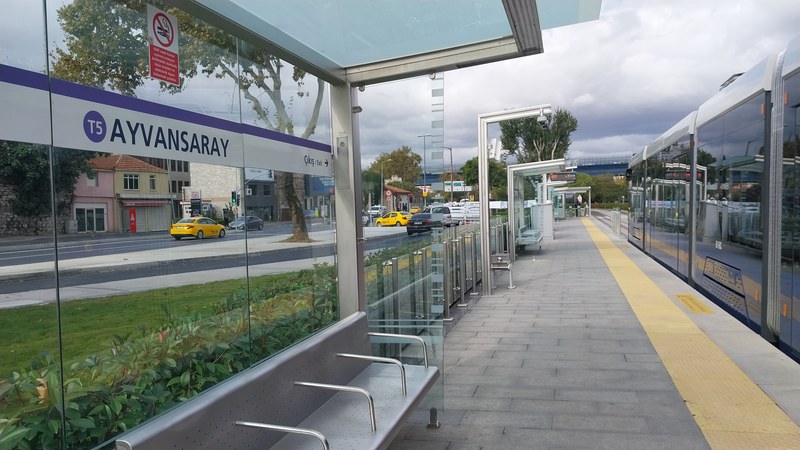
The Debrecen–Nyíregyháza main line is targeted for upgrades to support 160 km/h operation and two new stations in Debrecen by 2030. Tram-train schemes are in early planning phases, including extending Debrecen’s tram Route 1 on mainline tracks and
a proposed tram-train link connecting Kazincbarcika, Miskolc, and Tiszaújváros. Dedicated suburban rail services for Győr and Eger are also planned.
Budapest–Beograd Line Signalling and Certification
The Budapest–Beograd line faces delays in the commissioning of its signalling system supplied by China Railway Signal & Communication. Safety certification by the notified body TÜV is ongoing, with revenue service potentially starting in September 2026 if the assessments conclude positively.
Programme Delivery and Passenger Impact
Minister Dávid Vitézy described the programme as unprecedented in scale for Hungary’s rail sector in the past 60 years. He confirmed the project is fully financed and constitutes a mandate for the ministry and MÁV Személyszállítási Zrt to complete
the works by 2035. Early programme priorities include establishing a national rail and coach transport authority, launching digitalisation, upgrading electrical substations, and improving passenger information systems.
The investment will bring new rolling stock, infrastructure renewal, and the integration of battery-electric trains, which aim to improve regional and urban mobility. Service adjustments may occur during line modernisations and station reconstructions, particularly on the HÉV suburban routes and metro Line M3 extension.
Political and Industry Context
The investment plan follows Hungary’s April 2026 general election and reflects a shift in transport policy facilitated by EU funding conditions. The broad modernisation strategy targets ageing infrastructure, outdated rolling
stock, and the introduction of sustainable technologies such as battery traction and tram-trains. This comprehensive approach aims to raise rail network capacity, reliability, and passenger experience across urban and regional corridors.