The Federal Aviation Administration (FAA) issued a nationwide ground stop on all departing flights across the United States on November 13, 2026, halting operations for about five hours. The suspension ended by 7:30 a.m. Eastern Time on November 14, when airspace operations returned to normal and flights resumed under close monitoring.
Flight tracking data showed the ground stop led to 9,159 flights canceled and 7,190 delayed on November 13. Delta Air Lines reported the highest cancellations at 640, followed by United Airlines with 530 and American Airlines with 488, according to FlightAware statistics. Around 3,100 airborne aircraft were scheduled to
land in the U.S. at the time the ground stop began, as reported by Flightradar24.
Major US Airports Experience Disruptions
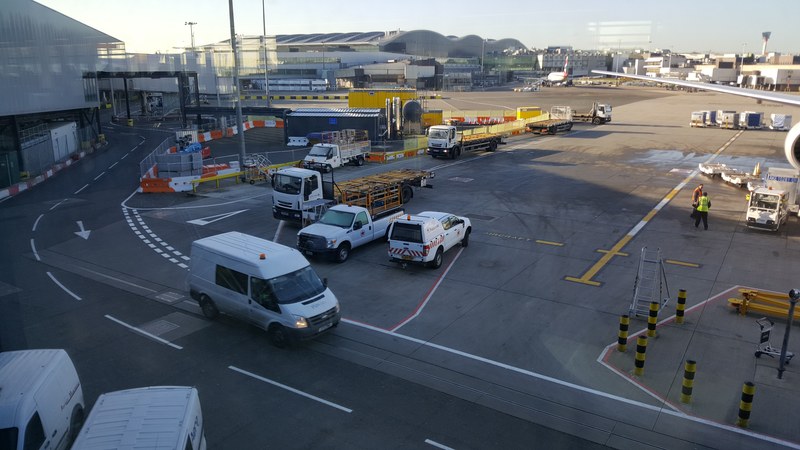
Operational chaos spread through key airports including Atlanta Hartsfield-Jackson International, Chicago O’Hare International, and New York John F. Kennedy International. Other affected locations included Boston, Miami, Pittsburgh, Los Angeles, and Baltimore, where significant backlogs developed. Flight delays and cancellations continued into the morning of November 14 as airlines worked to recover the flight schedules.
Communications Outage Caused by Overloaded Legacy Routers
The FAA identified the cause of the disruption as a telecommunications outage triggered by overloaded Cisco 600 series routers manufactured between 2001 and 2006. The routers became overwhelmed with data after
a security patch installation and fed out-of-sync data packets into the air traffic control system, disrupting voice communications and display screens. The FAA Telecommunications Infrastructure (FTI) network, operated by L3Harris, relies on outdated technology using time-division multiplexing (TDM) that is no longer supported by modern telecommunications systems.
Officials Respond to Crisis and Call for Modernization
Transportation Secretary Sean Duffy stated on November 14 that “operations are slowly returning to normal this morning. Planes are pushing back, taxiing, and taking off, and it is safe to fly.” He added that agencies were coordinating closely with airlines to support recovery efforts, warning travelers to expect continued delays as carriers reposition
crews and reschedule flights. Regarding the ground stop decision, Duffy said, “Because of that, we shut the system down.” He emphasized that the FAA’s air traffic control system is “incredibly old.”
Homeland Security Secretary Markwayne Mullin confirmed there was no evidence the outage was a cyberattack, saying, “There was no indication, as of yet, that this was a nefarious act against us.” He reiterated, “There is no indication, we had no reason to believe, that as of right now, that this was a threat to the United States.”
Robert Sumwalt, former National Transportation Safety Board chair, described the event as
unprecedented, remarking, “This is absolutely unbelievable that this could happen in this day and age.” He recalled previous major ground stops occurred on 9/11 and briefly in 2023 but said the five-hour nationwide halt was unique.
Passenger and Airline Operations Ongoing Recovery
Thousands of passengers faced cancellations and delays, with airlines and airports managing a significant backlog at major hubs. Pilots and crews operated under stress to maintain safety during the outage, and workflow disruptions persisted as carriers rescheduled flights and repositioned flight crews. No flights were permitted to depart during the ground stop, causing buildups of aircraft awaiting takeoff clearance once operations resumed early November
14.
FAA Urges Emergency Funding to Upgrade Aging Infrastructure
The FAA highlighted the need for Congressional funding to modernize the country’s air traffic control communications. The agency oversees the obsolete FAA Telecommunications Infrastructure network, operated by L3Harris since 2002. A 2023 safety review warned the network’s dependency on outdated TDM technology creates vulnerability to failures that can isolate FAA facilities. The FAA and L3Harris have faced scrutiny over communications and incident response. Secretary Duffy warned, “You will have more of these [incidents] unless the American people and the Congress tell us to build.” The Trump administration has called for a complete replacement of the air traffic control system
at an estimated cost of $50 billion, reflecting bipartisan concerns about the current system’s fragility.