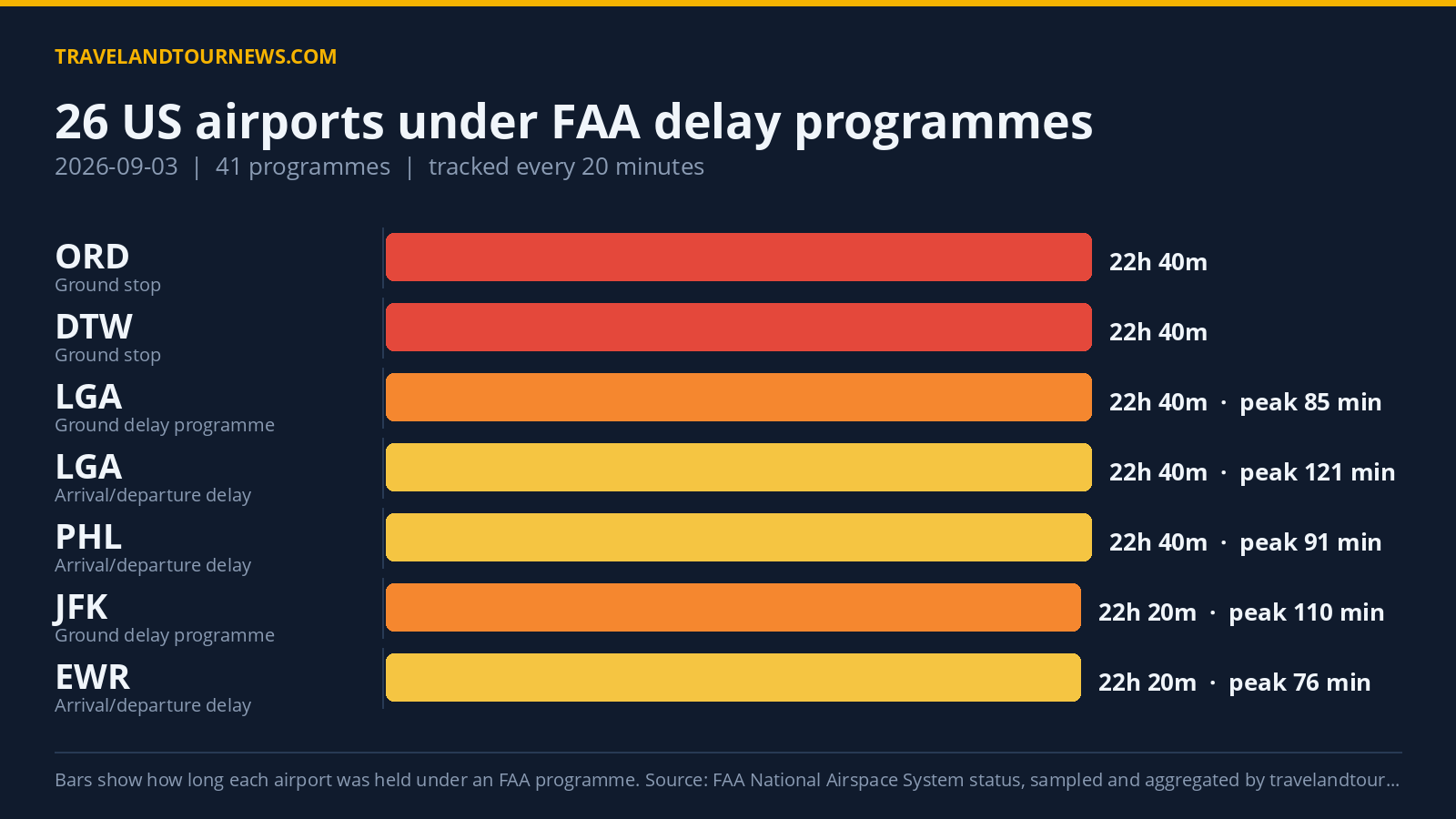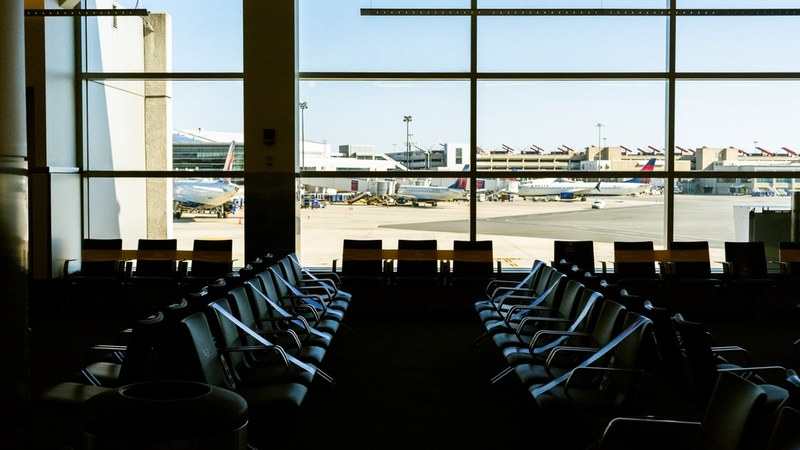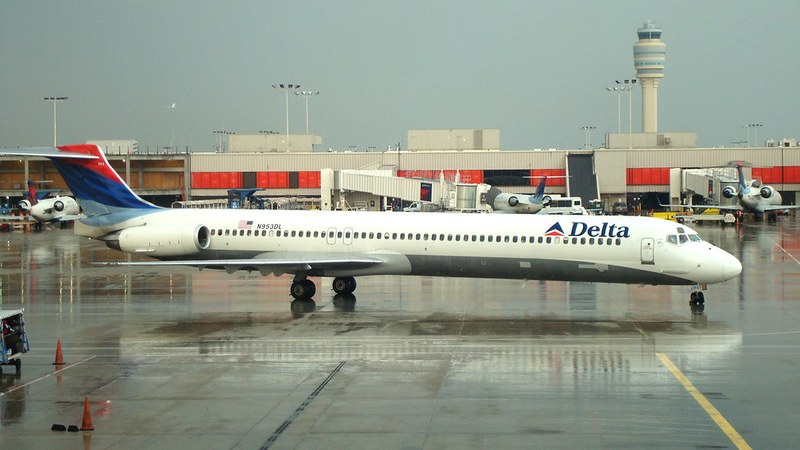
The Federal Aviation Administration (FAA) issued ground stops at 10 U.S. airports on September 3, 2026, including LaGuardia Airport, halting all departures at affected sites due to severe thunderstorms impacting the Northeast corridor.
Storm Delays at LaGuardia, Newark, and Boston
LaGuardia Airport reported average ground delays of 45 minutes as thunderstorms swept through the region. Newark Airport experienced peak delays reaching two hours. Boston Logan Airport led U.S. airports with 19 delays amid ongoing thunderstorms. The FAA implemented ground-delay programs specifically at Newark, JFK, and LaGuardia airports during the storm disruptions.
Three-Day Northeast Disruption and System-Wide Effects
Severe thunderstorms affected the Northeast and Mid-Atlantic airspace for three consecutive days from September 1 to
3, 2026. The storms caused flight restrictions around major hubs in the tri-state area—New York, New Jersey, and Connecticut—which created ripple effects and cascading delays across the East Coast aviation network. The combination of ground stops at multiple hubs stranded crews and aircraft, intensifying systemwide disruptions.
Traveler Impact During Peak Holiday Period
Flight departures from LaGuardia and other airports were temporarily halted due to the FAA ground stop on September 3, during the Labor Day weekend, a period of typically high passenger volume. Airlines issued travel waivers allowing passengers to rebook flights or travel dates without penalty due to the weather disruptions.
FAA Ground Stop Definition and Seasonal Weather Trends
The FAA defines ground
stops as halting all departures from an airport, typically issued for short, sharp weather events when full ground delay programs cannot yet be modeled. Recent summer and early fall weather patterns have increased the frequency of severe thunderstorms on the East Coast, contributing to repeated disruptions. These multiday storms and multiple ground stops exacerbate cascading delays across major New York-area hubs and the broader East Coast air traffic network.