The Federal Aviation Administration imposed a nationwide ground stop on the evening of November 13, 2026, halting all departing flights across U.S. airspace for over four hours due to a telecommunications outage. The disruption extended into November 14, causing significant flight cancellations and delays nationwide.
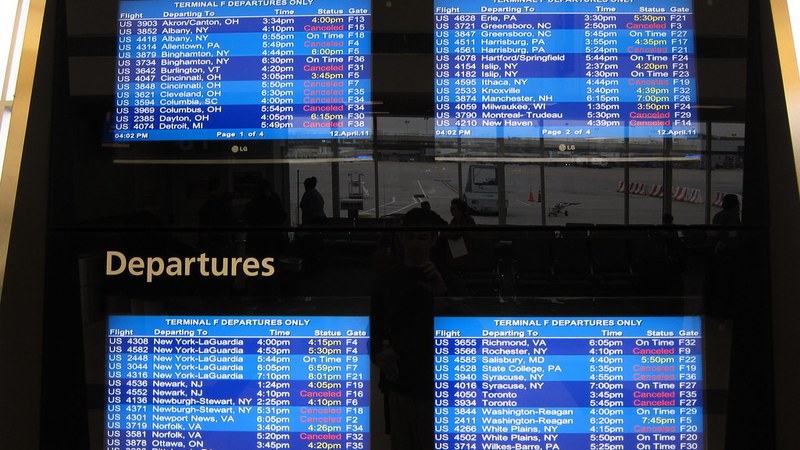
At Philadelphia International Airport, the ground stop resulted in at least 150 flight cancellations and approximately 150 delays as of late Saturday afternoon. American Airlines responded by extending travel alerts into Sunday, issuing refunds for canceled flights, and adding around 1,750 extra seats through additional flights on November 14 in an effort to accommodate affected
passengers.
Travelers reported frustration and financial losses caused by the cancellations. Jonas Cooper, whose Philadelphia flight was canceled on Friday night, described the situation as “Aggravated. You plan things, you set up reservations and something like this happened and you end up losing a lot of money because of it.” Another traveler, Thomas Scott, abandoned his travel plans to Chicago after multiple cancellations, stating, “The other option was for me to drive to Baltimore, and then fly from Baltimore to go to Chicago, but it’s not looking like it. I’m gonna call it quits.” At the airport, unclaimed luggage remained
in baggage claim, evidencing passengers stranded by the disruption.
The FAA attributed the outage to a failure during a contractor operation performed by L3 Harris. The company was replacing old copper telecommunications wires with fiber optic cables when the system experienced an overload, triggering the ground stop. Secretary of Transportation Sean Duffy said investigations are ongoing to determine if the cause relates to contractor errors or faulty equipment, declaring, “Our contractor didn’t meet the moment or the equipment didn’t meet the moment.” L3 Harris affirmed their cooperation with the FAA investigation and emphasized the seriousness of the incident and its
impact on travelers and air traffic operations.
Secretary Duffy and other federal officials highlighted the need for comprehensive modernization of the nation’s air traffic control infrastructure. The FAA’s telecommunications software currently dates back to the 1990s. Duffy announced plans to formally request billions of dollars in funding from Congress and President Donald Trump, expected to be submitted on November 16, to overhaul the system. New Jersey Governor Mikie Sherrill criticized the federal response, calling the breakdown “completely unacceptable” and urging prioritization of air traffic control modernization over other federal projects.