On November 14, 2026, the Federal Aviation Administration (FAA) issued a nationwide ground stop that disrupted more than 12,500 flights across the United States. The stoppage affected major hubs including Chicago O’Hare, Chicago Midway, New York’s JFK, LaGuardia, Newark, and Boston Logan International Airport.
Copper to Fiber Optic Upgrade Triggers System Failures
The FAA traced the shutdown to cascading communications failures caused by contractor L3Harris upgrading air traffic control equipment from copper wire to fiber optic cable at a remote FAA facility. Transportation Secretary Sean Duffy said the system’s analog technology became unstable due to overloaded routers, prompting a system shutdown at 3:36 p.m. Eastern Time. The exact
fault—whether equipment or installation—remained undetermined.
FAA Administrator Bryan Bedford confirmed no evidence indicated cyberattacks or artificial intelligence involvement in the communication breakdown. Secretary Duffy emphasized the antiquated state of the US air traffic control system, which still relies on outdated analog copper wires and equipment difficult to maintain.
Flights Halted for Over Four Hours Across Key US Airports
The ground stop lasted more than four hours until around 8:15 to 8:30 p.m. Eastern Time on November 13. Prior to the halt, over 3,500 planes were airborne nationwide; by 8 p.m., fewer than 400 remained in flight. Exceptions were made for critical medical evacuation, life-saving cargo, and law enforcement flights.
Major
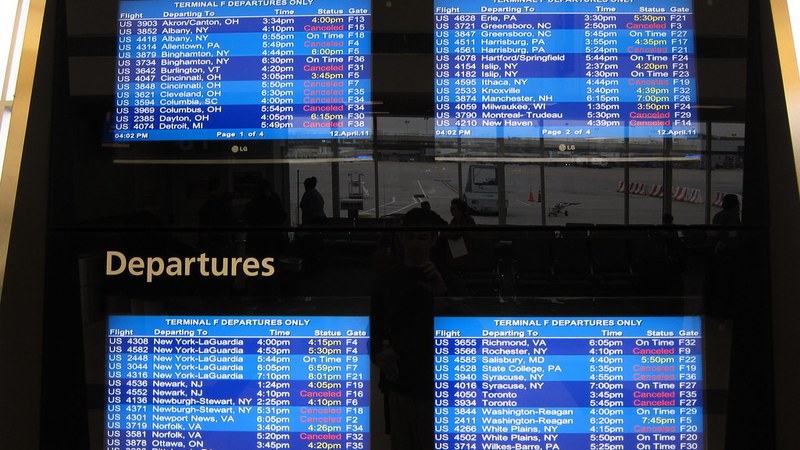
airports such as Hartsfield-Jackson Atlanta International, Miami International, and Philadelphia International also faced significant disruptions. On November 14 alone, approximately 5,600 flights, over 25% of total US departures, were canceled. Boston Logan International Airport recorded the highest cancellation rate at over 31%. Chicago O’Hare issued a ground stop for United Airlines flights following the incident.
Airlines Respond with Recovery Plans Amid Ongoing Disruptions
American Airlines, United Airlines, and Delta Airlines announced recovery and rescheduling plans in response to the ground stop. Delta allowed customers to change flights without additional charges, while American prioritized flights to non-hub cities and international routes. United Airlines reported that some flights operated despite
cancellations.
Thousands of passengers faced prolonged waits exceeding five hours, especially at American Airlines rebooking centers such as Miami airport. Travelers turned to alternate transportation including trains, buses, and rental cars. The surge in demand caused rental car companies like Hertz, Enterprise, and Avis to face inventory shortages and to sometimes refuse honoring existing reservations. At airports such as Hartsfield-Jackson and O’Hare, customers were turned away for one-way rentals.
Amtrak’s booking system experienced technical difficulties due to overwhelming demand, complicating efforts for rebooking rail travel. Some Southeastern Conference college football games, including a match between Ole Miss and Oklahoma, were
postponed due to travel delays.
Calls for FAA Modernization and Congressional Funding
Transportation Secretary Sean Duffy requested $50 billion from the Republican-controlled Congress to modernize the aging US air traffic control infrastructure. This request follows last year’s congressional approval of $12.5 billion for upgrades. Duffy described the outdated system and warned that failures like this will recur without substantial investment, stating, “You will have more of these. You will have more of them, unless the American people and in Congress tell us to build.”
House Democrats, including Representatives Rick Larsen and André Carson, criticized the FAA’s use of already appropriated funds and questioned the need for additional
money. Representative Hakeem Jeffries labeled the event as part of a series of unacceptable air travel incidents.
Aviation management expert John Gradek from McGill University highlighted that the FAA’s funding model differs from Canada and the European Union, which operate under privatized or hybrid systems funded primarily by user fees. Canada completed a similar copper-to-fiber upgrade in 18 months, whereas the US has taken approximately 25 years due to reliance on congressional appropriations and annual budgeting challenges.