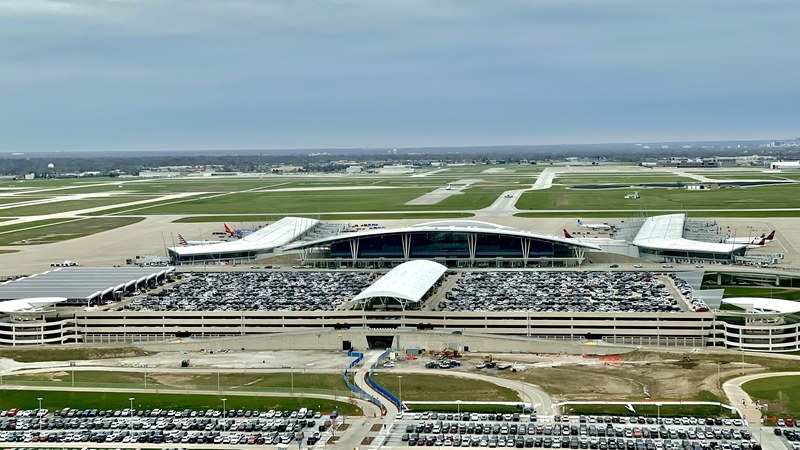
The Federal Aviation Administration (FAA) imposed a ground stop at Chicago O’Hare International Airport (ORD) on September 17, 2026, halting inbound flights for nearly two hours and driving the airport to record the highest number of flight cancellations globally during that period.
Thunderstorms over the Chicago area triggered this FAA traffic management action, which temporarily shut down arrival operations from 1803Z to 1930Z (approximately 87 minutes). This halt stopped inbound traffic to O’Hare, an airport designated as the busiest in the United States by flight volume. The City of Chicago’s delay-and-cancellation dashboard recorded 19 cancellations and 2,550 total flights in
the preceding 24 hours, reflecting the rapid increase in cancellations once the ground stop and related programs commenced.
Thunderstorms Prompt FAA Traffic Management Programs
Severe weather at O’Hare reduced runway acceptance rates and arrival corridor capacity. This forced the FAA to use layered traffic management tools including ground stops, ground delay programs, and metering to manage flow. Even after the ground stop lifted, arrival metering and gate congestion continued, prolonging delays into the afternoon.
On September 17, 2026, FAA airport-status pages showed average arrival delays at O’Hare just over two hours amid the thunderstorms. Flight disruption levels at O’Hare vary widely; during severe weather, delays can
exceed a thousand flights, compared to normal days with substantially lower delay counts.
Operational Impact and Schedule Vulnerability at O’Hare
O’Hare’s high flight volume and hub scheduling structure make it especially vulnerable. Peak-day flight schedules previously exceeded 3,000 flights daily before the FAA imposed limits. The concentrated arrival waves mean delays compound rapidly when storms block access or reduce acceptance rates. Aircraft delayed at O’Hare can cause knock-on disruptions across other connecting flights nationwide.
The FAA identified construction constraints, gate, and taxiway limitations as contributors to congestion. The scheduling reductions in place for summer 2026 capped daily operations at 2,708 flights between May 17 and October 24,
aiming to limit overscheduling effects and allow better recovery from disruptions.
FAA Scheduling Limits and Level 2 Schedule Facilitation
O’Hare operates under a Level 2 schedule-facilitated designation, reflecting chronic capacity strain and encouraging voluntary coordination among carriers. This federal classification aims to smooth demand through peak periods, mitigating the risk of severe delays and protracted recovery times.
The FAA’s April 16, 2026 announcement of schedule reductions specifically referenced the need to address overscheduling and infrastructure constraints during peak travel months. These measures do not prevent weather disruptions but reduce the frequency of extreme congestion.
Traveler Impact and Recovery Challenges
During the ground stop, flights bound for Chicago were held at their departure airports,
resulting in delayed departures and extended gate or tarmac waits. Post-ground stop recovery has been hampered by lingering arrival metering and gate unavailability, extending delays well beyond the initial weather event.
Passengers affected by cancellations are compelled to seek rebooking options that maintain onward connections, often leading to routes through alternative hubs. Flight availability on the same day is limited as the backlog clears, and travelers who can adjust departure times by several hours encounter more options when the system stabilizes.
The FAA airport-status page and the City of Chicago’s dashboard remain key tools to monitor real-time conditions for flights
to and from O’Hare, reflecting ongoing impacts of both weather and operational constraints.
Statistical Overview from FAA and City Sources
According to FAA advisories, the ground stop on August 9, 2026, lasted about 87 minutes, with additional disruptions reported on September 17, 2026, when weather again reduced arrival capacity. The City of Chicago’s rolling 24-hour dashboard data confirms 19 cancellations amid 2,550 flights during the latest period, illustrating how swiftly cancellations accumulate during such events.
FlightAware tracking and other third-party sources have consistently shown O’Hare fluctuating between low and high disruption days, with numbers ranging from hundreds to over a thousand delayed flights depending on weather severity.