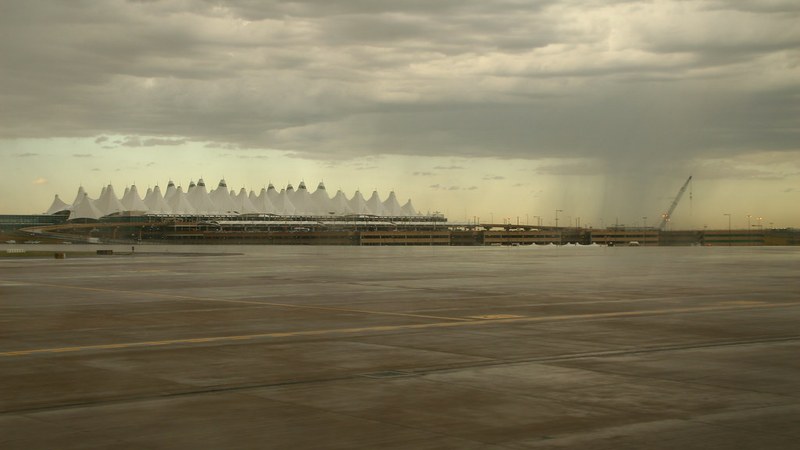
The Federal Aviation Administration issued a ground stop at Denver International Airport (DEN) on August 15, 2026, beginning at 3:25 p.m. local time due to severe thunderstorms affecting the Colorado Front Range. The halt on arrivals was lifted at 4 p.m., but flight disruptions persisted throughout the afternoon and evening.
Flight Delays and Cancellations Breakdown
More than 700 flights experienced delays or cancellations at DEN on that day. FlightAware tracked 689 delayed flights and 22 cancellations by the time the ground stop was lifted. As of 4:30 p.m., total cancellations had risen to 91, while delays increased to 708. Among airlines, SkyWest reported 38 cancellations
and 121 delays, United Airlines had 34 cancellations and 265 delays, Southwest Airlines recorded 14 cancellations and 211 delays, and Frontier Airlines had five cancellations and 49 delays.
During the ground stop, departures from the contiguous United States headed to Denver averaged delays of 114 minutes. The average delay before lifting the ground stop itself was approximately one hour and 44 minutes.
Severe Weather Conditions Prompt Ground Stop
Heavy rainfall, damaging winds, large hail, and localized flash flooding on the Front Range led the FAA to impose the ground stop. Thunderstorms encroached on final approach paths to DEN, forcing air traffic controllers to hold inbound flights
at their departure points rather than allowing aircraft to circle the area. The storms produced some of Denver’s most intense single-day rainfall totals for the year, with rates expected to reach 1 to 2 inches within 30 minutes.
The National Weather Service issued a severe thunderstorm watch for the Front Range, effective until 9 p.m. local time, as additional rounds of heavy rain were forecast through the coming weekend.
Passenger Impact and Ongoing Weather Risks
The widespread delays and cancellations significantly affected airline operations and passenger schedules at DEN. The FAA forecasted that the ground delay program could extend until 9:59 p.m. local time. Thunderstorm-driven disruptions
persisted despite the ground stop being lifted, resulting in hundreds of flight delays and cancellations.
Passengers faced challenges related to the severe weather and its impact on flight schedules, compounded by the risk of flash flooding in the Denver metropolitan area due to intense rainfall.
Denver International Airport Context
Denver International Airport recorded an all-time annual passenger record in 2025, serving over 82.4 million travelers and ranking as the fourth-busiest airport in the United States. United Airlines operates its second-largest hub at DEN, carrying more than 41.4 million passengers through the airport in 2025. Southwest Airlines designates DEN as its single most-served airport, while
Frontier Airlines regards it as its second-busiest hub.
Its high elevation and frequent exposure to convective thunderstorms place DEN among the FAA’s “Core 30” airports most susceptible to weather-related ground stops and delay programs. The airport spans 53 square miles and generates approximately $47.2 billion annually for Colorado’s economy.
Official Statements and Weather Alerts
The FAA halted arrivals at 3:25 p.m. as severe thunderstorms moved through the Denver metropolitan area and Castle Rock, Colorado. The ground stop was lifted at 4 p.m., but the FAA anticipated that ground delays would continue until 9:59 p.m. due to ongoing weather conditions.
The National Weather Service maintained the
severe thunderstorm watch for the Front Range until 9 p.m., warning of damaging winds, large hail, and heavy rainfall expected to continue through the evening and weekend.