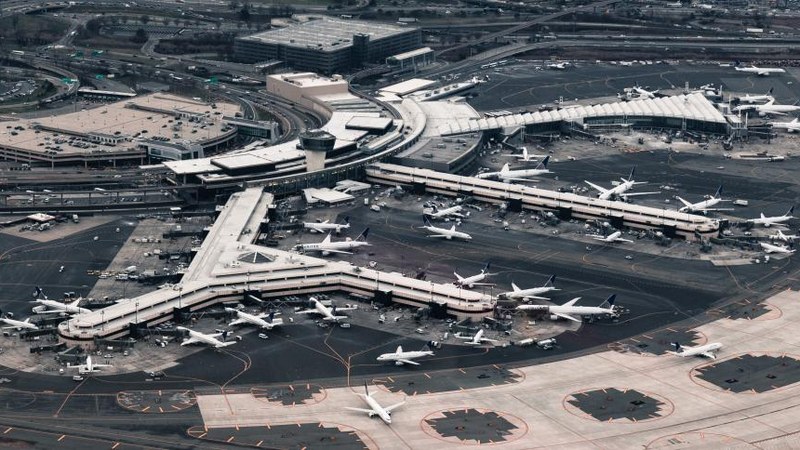
The Federal Aviation Administration (FAA) is pursuing dismissal of two air traffic controllers at LaGuardia Airport who ended their shifts roughly an hour early on March 22, 2026. That night, an Air Canada Express flight en route from Montreal collided with a Port Authority fire truck on the runway, killing Captain Antoine Forest and First Officer Mackenzie Gunther. Thirty-nine people, including the two fire truck operators, were hospitalized following the incident, which closed LaGuardia Airport for over 12 hours.
Controller Staffing and Shift Duties During the Incident
On March 22, two controllers staffed LaGuardia’s control tower. One controller managed both ground and air traffic positions simultaneously, a combined
responsibility typically split between two people. The other controller was occupied coordinating a separate emergency involving smoke in the cockpit of another plane. According to the National Transportation Safety Board (NTSB), the presence of two controllers was standard for that shift and time. Following a similar accident at LaGuardia in 1997, the FAA directed controllers not to combine these positions before midnight. Staffing shortages contribute to controller workload issues, often resulting in personnel working six days per week and occasionally leaving shifts early.
Official Statements on Controller Early Departure and Accountability
Transportation Secretary Sean Duffy condemned the early departures as a form of fraud that compromises airspace safety.
He said, “The vast majority of air traffic controllers are great patriots — they show up for work, complete their full shift, and come back and do it all again.” Duffy added, “But when a small percentage of individuals take advantage of the American taxpayer, unfairly add additional work to their fellow controllers, and impact the airspace — we have no choice but to act. We will not tolerate fraud, and we are taking appropriate action to hold folks accountable and prevent unlawful practices from disrupting the traveling public.” The National Air Traffic Controllers Association stated it is “discussing these
allegations with FAA leadership” and considers those discussions the appropriate forum to address the matter. The FAA reiterated its commitment to holding employees accountable to maintain safety and efficiency of the National Airspace System.
Investigation Status, Hospitalizations, and Operational Impact
The NTSB issued a preliminary report in April 2026, confirming the collision and resulting fatalities. The Air Canada Express flight carried 72 passengers and four crew members. Among the injured, a flight attendant suffered leg fractures after being thrown from the aircraft. LaGuardia Airport remained closed for over 12 hours following the crash to facilitate emergency and investigative operations. The NTSB continues to investigate the collision,
with a final report expected within 12 to 24 months.
Background on Early Departure Practices and FAA Response
Leaving work early ahead of shift end—referred to as “early shove”—is regarded as a form of timecard fraud and has been identified as an ongoing issue within the FAA workforce. Staffing shortfalls compel many air traffic controllers to work six-day weeks, contributing to fatigue and occasional premature departures. The two controllers implicated in the March 22 incident are currently on leave while the FAA continues its disciplinary review. This case highlights operational challenges tied to controller workload and staffing at major U.S. airports.