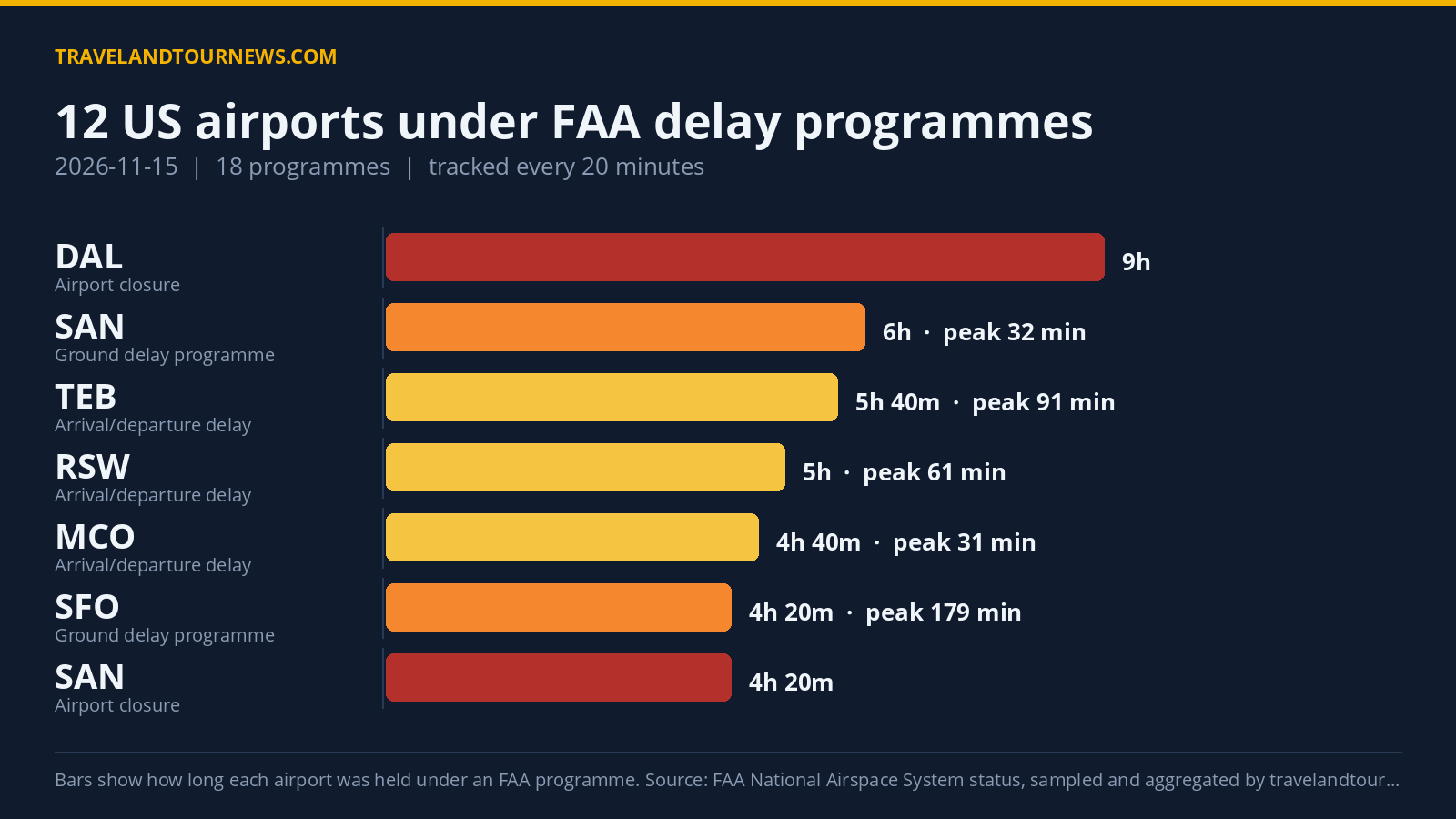
More than 100 flights were cancelled in Canada on Saturday, November 15, 2026, as a ripple effect from a five-hour nationwide ground stop in the US airspace issued by the Federal Aviation Administration (FAA) due to a telecommunications failure.
Impact at Canadian Airports with Focus on Calgary International Airport
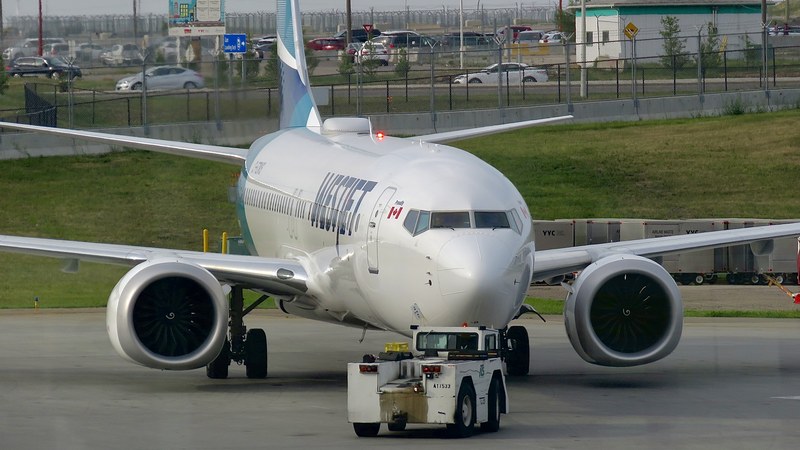
While Canada’s air traffic control systems operated without interruption, the US FAA ground stop grounded all flights departing from the United States starting Friday and caused significant disruption in Canadian airports. At Calgary International Airport (YYC), hundreds of US-bound flights were cancelled and passengers experienced extended delays. Passengers onboard Calgary flights waiting to depart for the US were held on the
tarmac for approximately an hour before being asked to disembark, with many forced to secure overnight accommodations at their own expense.
Similar disruptions affected other Canadian hubs including Toronto Pearson International Airport, where 143 US-bound flights were cancelled on Friday and an additional 63 on Saturday. Montreal, Ottawa, and Vancouver also reported dozens of cancellations on Saturday.
Airline Responses and Official Statements
Air Canada cancelled roughly 250 flights on Friday, impacting around 27,000 passengers, according to spokesperson Yasmine Mehdi. She said the disruption was substantial with continued effects on Saturday due to aircraft and crew being out of position across their network. Mehdi stated, “This
was a significant disruption, and its effects have carried over into today, with additional cancellations as aircraft and crews are out of position across our network.” Air Canada added extra flights to assist stranded passengers, while WestJet and Porter offered free flight changes.
The FAA Administrator Bryan Bedford anticipated the US air travel schedule would return to normal by the end of Sunday, November 15, 2026. Calgary International Airport advised travelers to monitor flight statuses as schedules progressively normalized after the ground stop was lifted shortly after 7 p.m. on Friday.
Passenger Experiences During Disruptions
Passengers detailed significant travel disruptions and unexpected expenses due
to the cancellations. Naji Zuain, whose Denver-bound flight from Calgary was delayed, was asked to disembark after about an hour onboard and had to pay for overnight accommodation without airline reimbursement. He commented, “It is what it is. It’s kind of unfair for them to have to cover each and every passengers’ expenses due to something that was no fault of their own.” Toronto resident John Jacques spent 16 hours on a grounded plane traveling from Brisbane, Australia through Dallas before connecting to a further delayed flight to Toronto. His total journey extended beyond 24 hours.
Long-haul truck driver Maggie
Sepulveda faced repeated flight changes at Toronto Pearson, resulting in over $250 in out-of-pocket accommodation and food expenses while stranded. She expressed gratitude for safety despite the disruptions, saying, “I’m hopeful that I’ll be able to get out tonight, and I’m thankful that I’m safe. Everything happens for a reason.”
Cause of the FAA Ground Stop
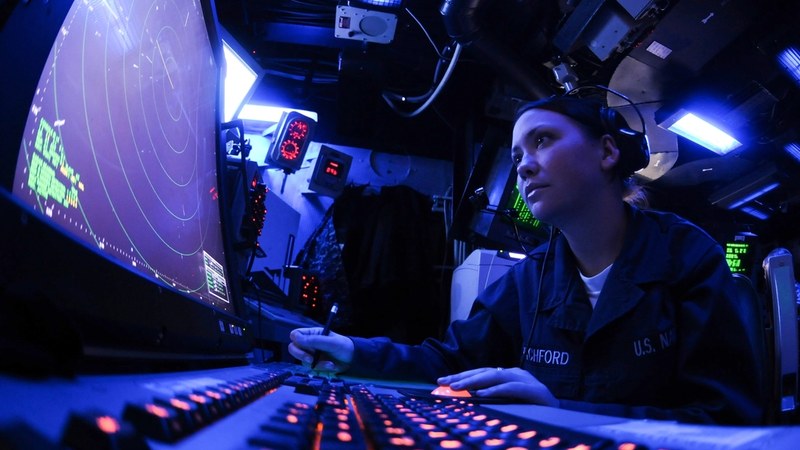
The US nationwide FAA ground stop was triggered by a failure caused by FAA contractor L3Harris during a router installation at a remote facility. US Transportation Secretary Sean Duffy reported that the router replacement flooded other routers in the US air traffic system, causing communication lines and radar feeds to
malfunction. He described this as the longest nationwide flight shutdown in the US since the September 11, 2001 attacks. The FAA continues investigating whether the issue stemmed from equipment failure or human error.