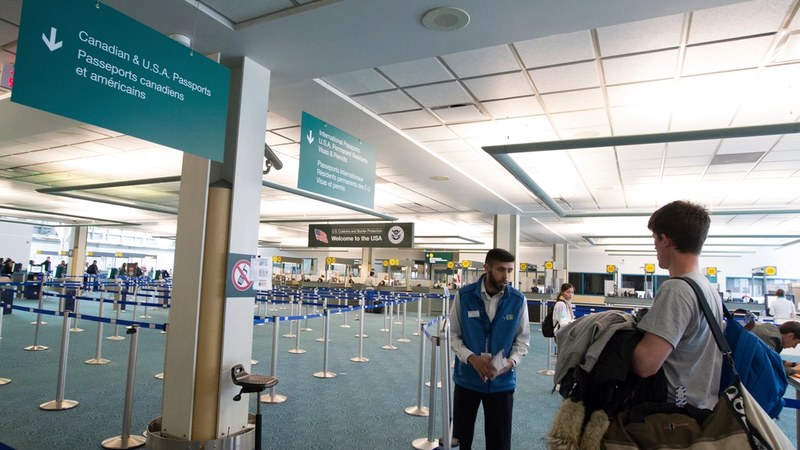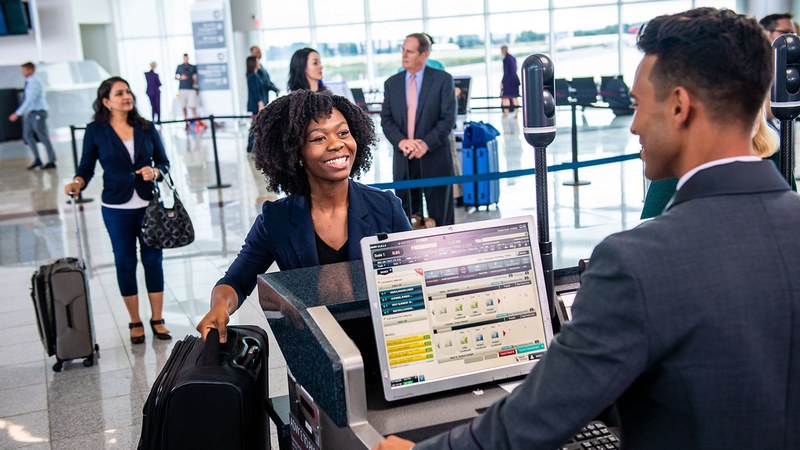
Air Canada has introduced a biometric boarding pilot at Toronto Pearson International Airport featuring four facial verification e-gates: one serving domestic passengers and three operating in the US transborder area. Eligible travelers can enroll through Air Canada’s mobile app prior to reaching the domestic gate.
Hardware and software integration in biometric boarding pilot
The physical biometric gates are provided by Dormakaba. Middleware connecting the gates to identity verification systems is supplied by Airsphere and SITA. Air Canada manages the mobile app enrollment process and maintains the domestic identity gallery used to verify traveler identities at the gate.
At the domestic gate, a live facial image captured by a
camera is compared with the traveler’s approved record stored in Air Canada’s identity gallery. A match negates the need to show a passport or boarding pass before boarding. For US-bound travelers using the three transborder gates, the process differs by relying on images collected during US border preclearance at Pearson, eliminating the need for separate enrollment.
Passenger impact and enrollment process
Participation in the pilot is voluntary. Air Canada passengers departing from Toronto Pearson domestic flights can opt into the facial-verification system through the airline’s mobile app before approaching the gate. Those who pass facial verification avoid presenting a passport and boarding pass at the
gate, while conventional document checks remain available for travelers who prefer or require them.
Airport capacity growth and digital identity modernization
Toronto Pearson handles approximately 47 million passengers every year and aims to manage up to 65 million by the early 2030s. The airport is integrating digital identity technologies and automated processing as part of a broader modernization strategy to accommodate this growth. This pilot expands on Air Canada’s previous mobile-based traveler identity program that linked smartphone enrollment with facial recognition. A similar biometric boarding deployment is active at Calgary Airport, where selfie onboarding is used.
The current pilot focuses solely on the boarding process and collects
data on passenger enrollment rates, processing times, throughput, and satisfaction levels to assess performance and scalability.