Delta Air Lines experienced a critical failure in its Automated Load Instruction System (ALIS) on Sunday, November 22, 2026. The ALIS system, responsible for calculating weight and balance for departing aircraft, disrupted flight dispatch. The failure affected safety-critical calculations of passenger, baggage, cargo, and fuel distribution, requiring a shift to manual processing by airline staff.
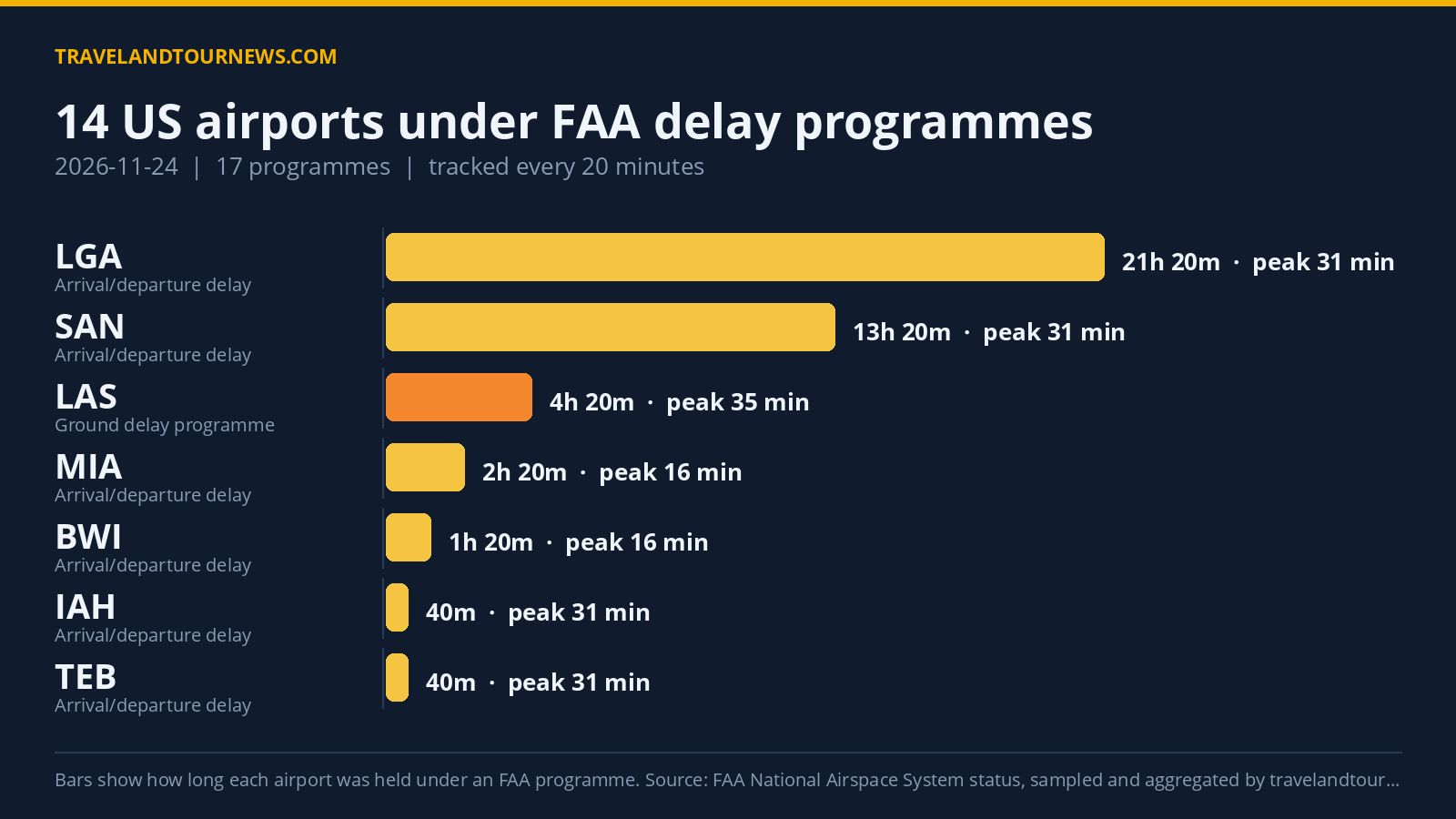
As a safety precaution, the Federal Aviation Administration (FAA) imposed a ground stop for Delta flights into Hartsfield-Jackson Atlanta International Airport on Sunday morning, which was later downgraded to a ground delay program to manage arrival flow into the hub. This action significantly impacted operations
during the busy Thanksgiving travel period.
On November 22, more than 1,400 Delta flights worldwide were delayed, with several hundred canceled as aircraft awaited manual weight-and-balance clearance and crew repositioning. By late morning on Monday, November 23, at least 1,300 domestic flights were delayed and nearly 200 canceled across all U.S. airlines, with many disruptions linked to the residual effects of Delta’s outage.
Delta’s Hub Airports Bear Brunt of Disruptions
The ALIS outage caused severe knock-on delays at Delta’s key hubs, including Hartsfield-Jackson Atlanta International, Detroit Metropolitan, Minneapolis–St. Paul International, Salt Lake City International, Los Angeles International, LaGuardia, and John F. Kennedy International airports. Passengers encountered rolling
schedule changes and extended wait times, especially those connecting through Atlanta, as Delta crews and ground operations worked to clear the backlog.
Congestion at these shared airports and within shared airspace also affected other carriers, compounding delays beyond Delta’s network. FAA traffic management data for November 23 attributed continuing disruptions primarily to recovery from the Delta outage, combined with standard flow control and localized weather, rather than any new nationwide system failure.
Passenger Impact and Airline Response
Travelers experienced multi-hour waits to rebook missed connections at Atlanta and other busy hubs. Some passengers were rerouted through secondary airports or placed on flights days later, while
a limited number required overnight accommodation near airports due to unavailable seats. Delta provided meal vouchers, hotel stays, and ground transportation assistance to affected travelers.
Delta acknowledged the outage originated with its own automation systems and confirmed teams adapted to manual load planning during the failure. The FAA and airlines characterize ground stops or slowdowns during outages as essential safety measures. Transportation Secretary Sean Duffy summarized the FAA’s November 13 data outage, unrelated to Delta’s incident, saying, “They went down.” Homeland Security Secretary Markwayne Mullin added, “There was no indication that the issues were a threat to the United States”
and, “It doesn’t appear to be a cyber attack, and that it appears this was mechanically driven.”
Thanksgiving Travel Volume and Remaining Risks
The outage occurred as U.S. skies enter the busiest Thanksgiving travel season in 16 years, with over 410,000 scheduled flights from November 23 to December 1, 2026. Airlines have increased seat capacity and added frequencies at major hubs such as Atlanta, Dallas–Fort Worth, Denver, Chicago O’Hare, and Los Angeles. This tight scheduling leaves minimal spare capacity, complicating rebooking after cancellations or large delays.
Delta crews and airport staff continued clearing flight backlogs through Monday, but delays and cancellations attributed to the ALIS outage
were expected to persist into the November 27–29 Thanksgiving weekend. Travelers with pending itineraries were advised to plan for possible localized disruptions due to ongoing weather and operational recovery efforts.
System Restoration and Ongoing Monitoring
By Tuesday, November 24, Delta’s weight-and-balance automation system was restored. No separate nationwide air traffic control outages were reported. Despite system restoration, the combination of recent infrastructure challenges, high passenger volumes, and unsettled weather meant that delays and cancellations could continue throughout the holiday period.
Federal and airline officials recommend travelers departing from congested hubs allow extra connection time and consider morning flights to reduce risk. Official airline channels and
FAA traffic advisories remain the most reliable sources for current flight status during this period.