The Federal Aviation Administration (FAA) issued a nationwide ground stop on November 13, 2026, after routine telecommunications equipment upgrades by contractor L3Harris malfunctioned, grounding flight operations for roughly four hours. The update involved replacing aging copper wire systems with fiber optic cables at remote FAA locations, triggering widespread communication failures across the nation’s air traffic control system.
Flight disruptions persisted into November 15, with more than 6,500 flights canceled and over 8,100 delayed across U.S. airports. On the initial day, nearly 25,000 flights were delayed and over 9,000 canceled, according to flight tracking data. The following day, cancellations exceeded 4,000,
representing 18% of flights departing the United States.
Major Airports and Passenger Experiences
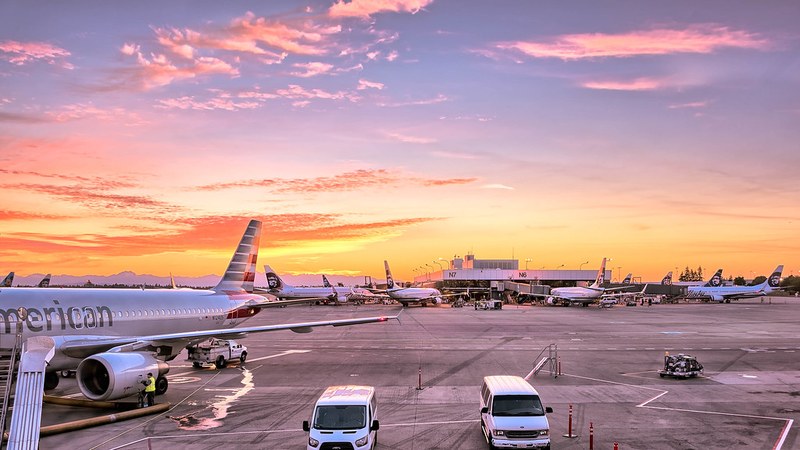
Significant delays and cancellations affected major hubs including Chicago O’Hare and Midway, Ronald Reagan Washington National Airport, and Tampa International Airport. Flight boards at airports nationwide showed numerous cancellations early on November 14. Passengers at Tampa International resorted to resting in terminals due to extended waits. In Washington, D.C., dozens of flights were postponed overnight, stranding travelers.
JetBlue customers reported lengthy wait times for customer service and multiple flight cancellations. Southwest Airlines arranged alternative flights for displaced passengers. Some travelers abandoned flying altogether, opting for car rides or Amtrak trains, which also
faced brief outages on November 13.
Official Statements and Investigation
Transportation Secretary Sean Duffy confirmed that aging telecommunications equipment was central to the disruption. “When I tell you that we’re using old equipment, we’re using old equipment,” Duffy stated, emphasizing the FAA’s delayed modernization efforts. He noted the ongoing investigation aims to determine whether the issue resulted from user error, installation mistakes by L3Harris, or faulty routers.
FAA Administrator Bryan Bedford said schedule issues should resolve by the evening of November 15 and affirmed no evidence of malicious activity or AI involvement. L3Harris confirmed involvement in the upgrade and stated it has completed over
70% of the copper-to-fiber conversions, cooperating fully with FAA investigators.
FAA Modernization Context and Previous Disruption
The FAA remains the last major U.S. institution still operating partially on outdated copper wire telecommunications. Congress approved $12.5 billion in July 2025 to modernize the nation’s air traffic control system. Duffy called for increased funding, saying, “This is the moment, if we don’t start to switch out our systems, when, how long are we going to wait, America, and Congress?”
This event marks the second nationwide ground stop since September 11, 2001. The previous instance, in 2023, was caused by a NOTAM system outage triggered by accidental deletion of
crucial data by contractors. Current FAA rollout of the AI-enhanced SMART system, developed by Air Space Intelligence, has been ruled unrelated to the current ground stop.
Passenger Impact and Airline Response
The FAA lifted the ground stop on the morning of November 14, but flight schedules remained heavily disrupted. Airlines have been rebooking passengers or issuing full refunds to those affected. Bedford advised travelers to engage directly with airlines regarding rescheduling.
Extended delays left passengers stranded at multiple airports, with some canceling trips due to uncertainty. Others faced prolonged customer service hold times, particularly JetBlue customers. Southwest Airlines offered rerouted flights, assisting some passengers in
resuming travel by early November 14.
Alternative transport options such as Amtrak trains were utilized, though their systems also experienced brief outages on the night of November 13. Several passengers resorted to road travel, including a four-hour drive from Ocean City, New Jersey, to Washington, D.C.
Disruption Scale and Recovery Outlook
The FAA continues to manage ongoing delays and cancellations as schedules normalize. The agency expects full recovery by Sunday evening, November 15. The incident exposed vulnerabilities tied to the FAA’s aging telecommunications infrastructure amid a critical modernization phase funded by congressional allocations.
Officials stress the importance of upgrading the FAA’s systems to prevent similar
disruptions. The massive ground stop remains among the most severe interruptions to U.S. air travel since the post-9/11 era, underscoring infrastructure risks in the national aviation framework.