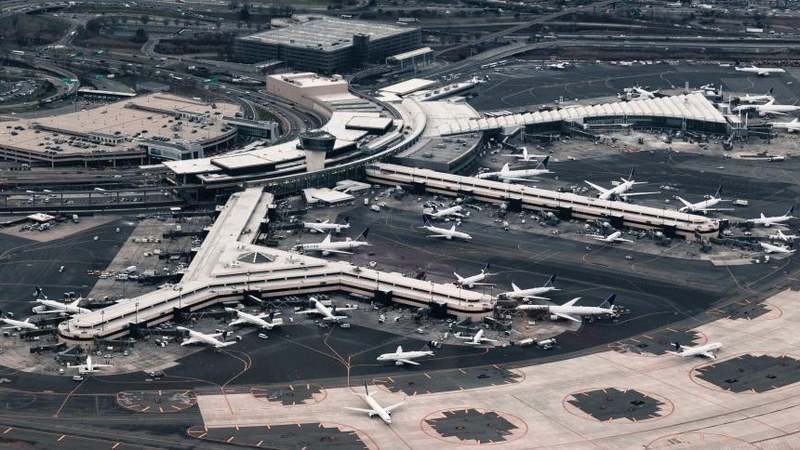
The Federal Aviation Administration (FAA) lifted a nationwide ground stop around 8:15 p.m. ET on Friday, November 13, 2026, after imposing a halt on departing flights starting about 4 p.m. ET earlier that day. The stoppage affected more than 11,000 flights and approximately 1.5 million passengers across major US airports including Chicago O’Hare, Newark Liberty, John F. Kennedy, LaGuardia, Orlando, Hartsfield-Jackson Atlanta, and Boston Logan.
Cause of the Ground Stop
Transportation Secretary Sean Duffy attributed the disruption to overloaded telecommunications routers within the FAA’s aging analog air traffic control system. He explained that the system’s instability began around 3:36 p.m. ET when the routers delivered
inconsistent data, forcing the FAA to halt flights nationwide as a precaution. Duffy said digital IP systems at some control centers did not experience these issues, highlighting the need for modernization.
Safety and Security Assurances
Homeland Security Secretary Markwayne Mullin reassured the public there was no safety threat or cyberattack linked to the outage. Mullin emphasized that critical flights such as medevac, law enforcement, and life-saving cargo were exempted from the ground stop. He stated, “The public was never at danger through this process,” and that investigations found no evidence of any nefarious activity.
Airline Responses and Recovery Efforts
American Airlines prioritized resuming flights to non-hub cities and international
routes while working to operate as many flights as possible during recovery. United Airlines handled international departures on a case-by-case basis and resumed flights as conditions allowed. Delta Airlines offered customers free flight changes to accommodate disruptions. JetBlue canceled the rest of its flights on November 13—except for European routes and select Saturday flights—for resource repositioning.
Passenger Impact and Airport Disruptions
The ground stop caused widespread delays and cancellations at many airports. More than 3,500 airplanes were airborne at the time the stop began, shrinking to fewer than 400 flights by 8 p.m. Passengers at Philadelphia, Boston Logan, Detroit-area airports, and others faced long waits,
rebookings, and deferred travel plans. Flight disruptions extended into the pre-Thanksgiving travel period, a peak season for US air travel.
Transportation Secretary Duffy called attention to repeated equipment failures in New York and Newark airports in previous years and reiterated the urgent need for system upgrades. He requested $50 billion from Congress for modernization, an increase from the prior $30 billion proposal. Duffy warned that without significant investment, similar disruptions are likely to recur.
Friday’s nationwide ground stop was the first since January 2023 and the second of its kind since September 11, 2001, underscoring long-standing vulnerabilities in US air
traffic control infrastructure.