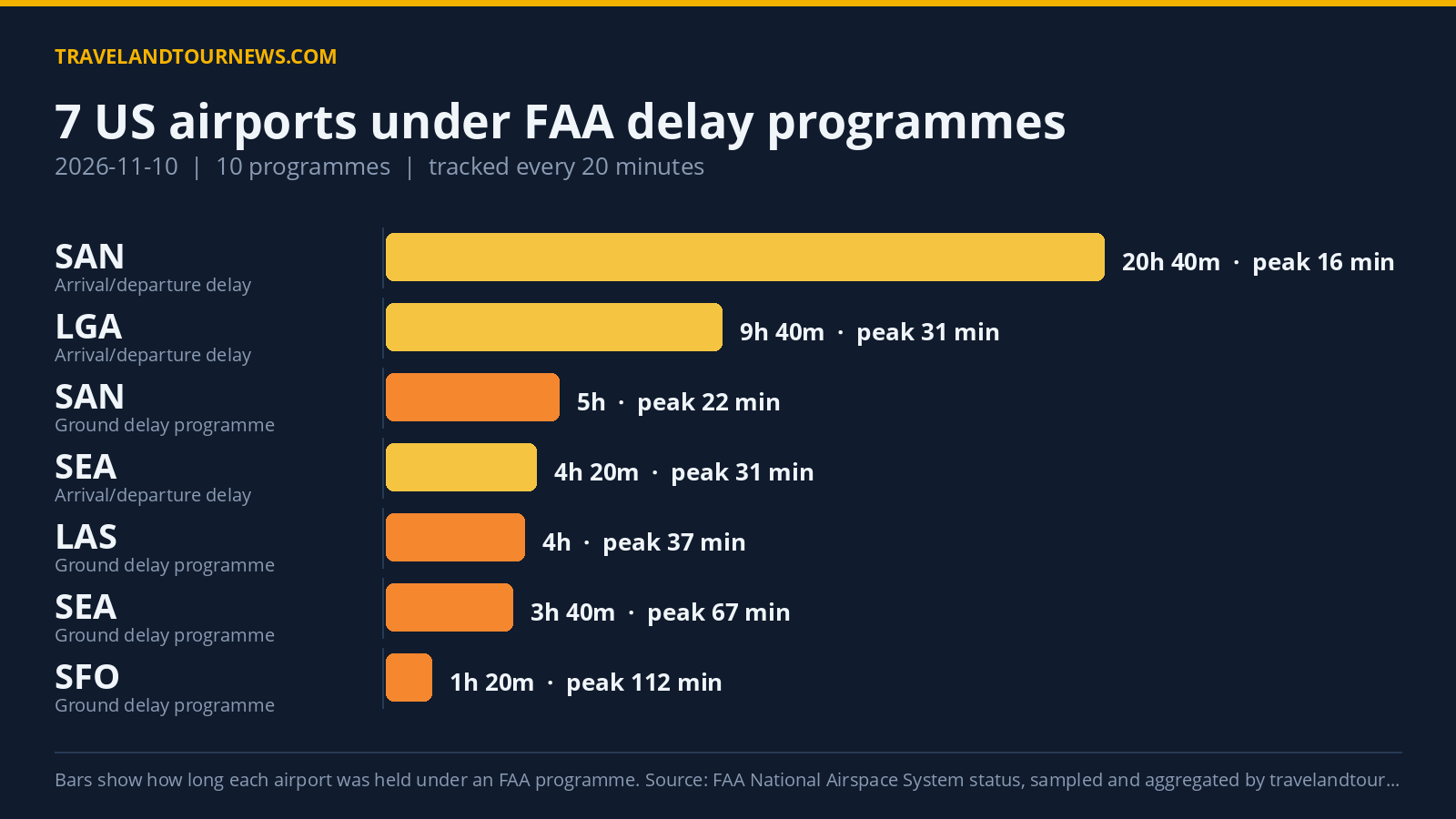
A fast-moving storm system on November 10, 2026, brought low clouds, gusty winds, rain, low ceilings and reduced visibility, causing flight disruptions across nine major US airports from the Pacific Northwest through the Upper Midwest and into the Northeast.
Ground delay programs and arrival restrictions were implemented at key hubs including Seattle–Tacoma International Airport and New York LaGuardia Airport. Boston Logan Airport and other busy East Coast airports reported knock-on effects. Airlines and the Federal Aviation Administration (FAA) confirmed thousands of same-day flight delays nationwide by early afternoon Eastern time due to these weather conditions and related airspace volume constraints.
FAA data and air traffic monitoring services showed traffic management initiatives active at nine US airports throughout the day. Many coastal airports reduced arrival rates to maintain safety during peak morning and late afternoon periods. The storm’s impact extended beyond the directly affected airports as delays propagated through connecting airline hubs, affecting flights arriving into Chicago and Detroit with holding patterns and reroutes also noted.
The storm’s progression was accompanied by low cloud layers and rainfall that forced reliance on instrument flight rules, limiting the spacing of arrivals. Crosswinds and embedded thunderstorms further reduced controllable arrival rates. Seattle–Tacoma faced low
ceilings and poor visibility in the morning, while LaGuardia and other New York-area airports experienced gusty winds and showers, slowing arrivals. The National Weather Service’s Aviation Weather Center forecast continuing residual weather impacts into early November 11, especially for early morning operations at northern airports.
Passengers experienced extensive delays and cancellations at the nine airports, with mounting terminal queues and disrupted nationwide schedules. Travelers with tight overnight connections through northern hubs should anticipate ongoing delays into November 11. Airlines have issued fee waivers and are closely monitoring conditions to manage passenger reaccommodation. Travel industry data indicates that weather and airspace
management issues accounted for nearly 10% of all delay minutes nationally in 2024, with ground stops at the 30 largest US airports rising by almost 20% year on year, reflecting an increasing trend of weather-related disruptions.