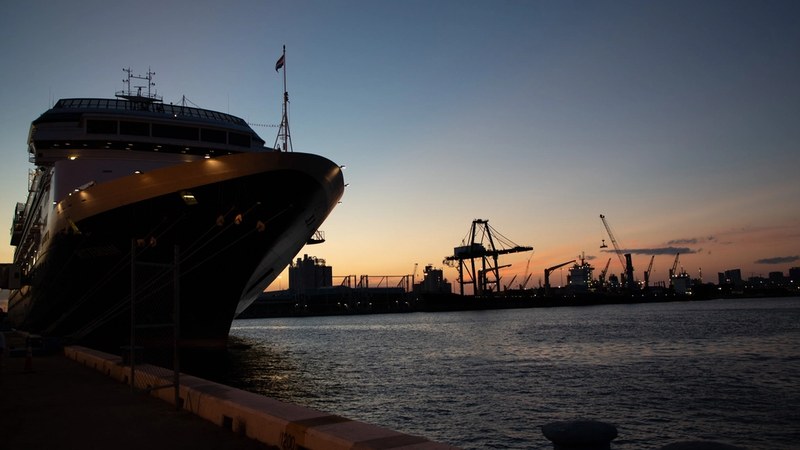
The US-based MV Odyssey cruise ship halted its 3.5-year global voyage in Sihanoukville, Cambodia, on October 23, 2026, forcing 203 passengers, mostly Americans, and 156 crew members to disembark.
Operated by Florida-based Villa Vie Residences, the MV Odyssey was docked at the Cambodian port on the Gulf of Thailand with no confirmed departure date. The vessel, designed to carry 650 passengers, was sailing with 203 passengers at the time of suspension while offering residential-style cabins with purchase prices starting at approximately $230,000 for lifetime use.
Fuel Price Surge Due to Geopolitical Conflict
Fuel costs soared from about $1,800 per cabin monthly to between $6,000 and $8,000 in
Asian waters, driven by disruptions from the war in Iran. The conflict has tightened petroleum supplies by curtailing maritime traffic through the Strait of Hormuz, a critical passage for global oil shipments, particularly affecting Southeast Asian fuel prices.
Villa Vie Residences attempted to reduce fuel consumption by adjusting the itinerary to slower speeds and longer port stays but could not compensate for the tripling of fuel expenses, making continued operation financially unsustainable.
Passenger and Crew Impact Amid Suspension
Passengers were given only seven hours’ notice to disembark on October 27, 2026, and had to arrange their own accommodations and transport. Reports indicate some crew members remain
unpaid amid financial difficulties, and passengers said they had been frequently requested to contribute additional funds to cover rising fuel and operational costs.
Among the affected passengers, retired couple Paul and Lynn Montoya, who boarded 17 months earlier in Panama, criticized the company’s management, citing declining services such as unreliable internet access and food quality alongside the fuel crisis. Lynn Montoya said, “We were tired of every two to four weeks being asked for money for fuel, money for everything.”
Official Statements and Local Developments
Villa Vie Residences stated, “We have been unable to continue carrying the resulting operating losses” and that “passing the full
increase on to residents is not a realistic solution. Our focus now is on supporting residents, crew, and employees.” The company added it is working to coordinate disembarkation and help find temporary living arrangements for those onboard.
Deputy Governor Long Dimanche of Preah Sihanouk province confirmed the ship’s arrival on October 23 and announced plans to refuel and depart by October 31, 2026, although this departure date has not been publicly confirmed by the operator.
Passenger Perspectives on Residential Cruise Model
California siblings Carol Larson and Crystal Lavering, who lived aboard the MV Odyssey for 18 months, described the suspension as “heartbreaking” but expressed hope the
residents might purchase the vessel to continue the residential cruise concept. Larson purchased her cabin for $120,000 plus monthly fees under a plan promising up to 15 years of onboard living.
Larson recalled improved health during her time on the ship and viewed her investment as an experiment despite the enterprise’s financial downfall. The residential cruise concept combined long-term living at sea with global travel, attracting passengers seeking lifestyle changes through continuous voyages.
Ship History and Voyage Details
The MV Odyssey, built in 1993, changed hands multiple times before Villa Vie Residences acquired it in 2023. Its current voyage began in October 2024 in Belfast,
Northern Ireland, after an extensive refit, and was planned to last three and a half years, ending in 2027. A subsequent cruise was tentatively scheduled to complete by August 2030.
The ship was one of several vessels to dock in Sihanoukville during crises, including the MS Westerdam in February 2020, which was allowed entry by Cambodia after pandemic-related port rejections elsewhere. The suspension of the MV Odyssey reveals the financial vulnerabilities of long-term cruise living amid rising operational costs and geopolitical tensions.