Portugal formally began construction of its first high-speed rail line on October 12, 2026, linking Porto Campanhã station to Lisboa Oriente station over a 290 km route. Initial works focus on the 71 km section from Porto to Oiã near Aveiro, developed under a 30-year public-private partnership (PPP) concession.
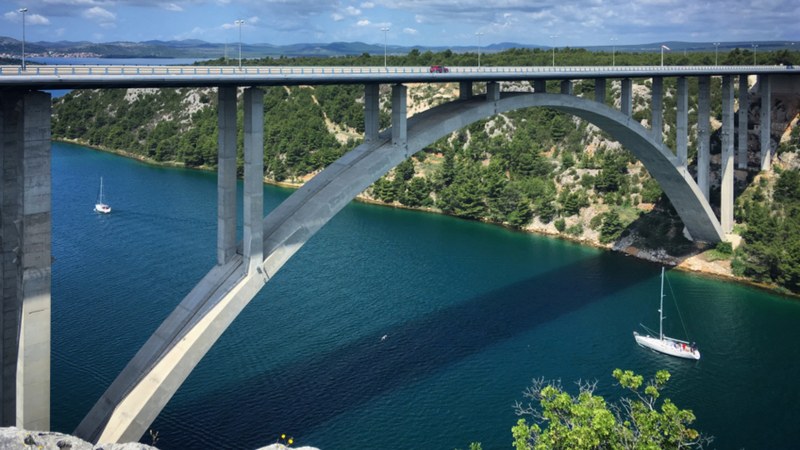
The initial section under construction includes eight tunnels and 15 viaducts, among them a combined road and rail bridge over the River Douro. The route features a tunnel beneath Vila Nova de Gaia with a station located 60 meters below the city center, having platforms 405 meters long. The station will
connect to Metro do Porto’s Yellow Line and future Rubi Line, including two office buildings and 475 parking spaces. About 4000 workers are involved in construction.
The double-track line is built mainly on a dedicated alignment using Iberia’s 1668 mm gauge for compatibility with the conventional network. It is designed for speeds up to 300 km/h. The total budget for the initial section is €2.651 billion, with €628 million in state funding.
Private investment includes €165 million from the AVAN consortium, led by Mota-Engil with Teixeira Duarte, Alves Ribeiro, Casais, Conduril, and Gabriel Couto. A syndicate of 13 commercial and
institutional lenders provides €1 billion in financing repayable over 25 to 28 years. The European Investment Bank loans €844 million for 28 years, supplemented by the European Union’s €450 million Connecting Europe Facility grant. Mezzanine funding of €52 million is included.
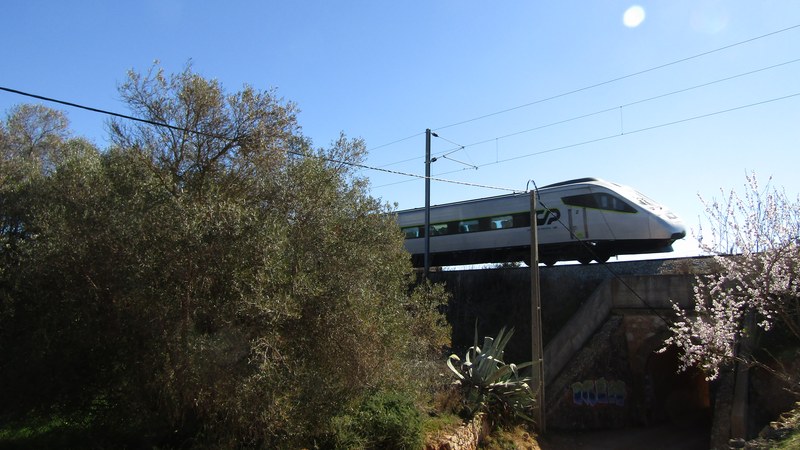
National rail operator CP has prequalified Alstom and Talgo to supply 12 high-speed trains for the line, with contract awards expected by the end of Q1 2027. Infraestruturas de Portugal manages the infrastructure and aims to complete the second section (60 km from Oiã to Soure near Coimbra) and the third section (130 km from Soure to Carregado near
Lisboa) by 2032.
Upon full completion, the line will reduce journey times between Porto and Lisboa from 2 hours 48 minutes to 1 hour 20 minutes.
Philippe Chantraine, head of transport investment at the European Commission Directorate-General for Mobility & Transport, stated: “The Portuguese PPP model for the Lisboa to Porto line [is] a strong example to carry forward. The approach supports continued infrastructure development and strategic investment in the economy’s structural foundations while reducing reliance on public funds, easing budget pressure and avoiding additional public debt.”
The project is supported by a mixed public and private funding model, including
institutional loans and EU grants, exemplifying a European approach to infrastructure finance that leverages private investment to reduce public fiscal burden.
The new high-speed rail line will enhance rail transport options and significantly cut travel times between Portugal’s two largest cities, Porto and Lisboa.