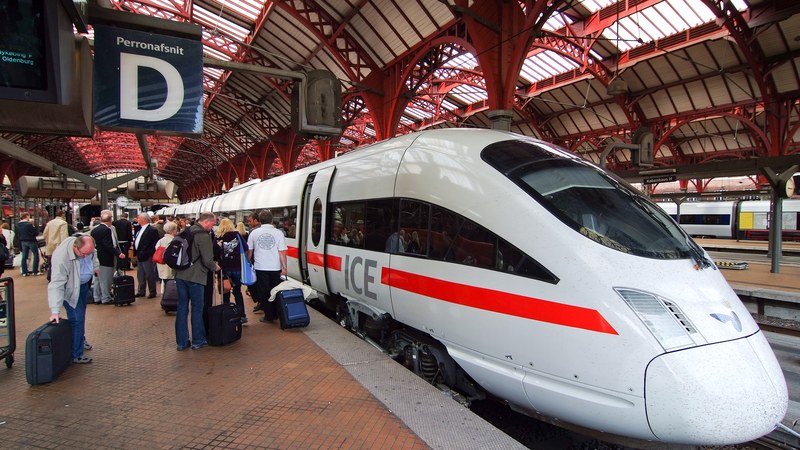
The federal administrative court in Köln ruled on October 7, 2026, blocking a regulatory measure by the German rail authority Bundesnetzagentur that sought to reserve train path capacity for new operators on long-distance routes.
The measure, introduced by Bundesnetzagentur in July 2026, aimed to limit any single operator to between 60% and 75% of train paths on congested long-distance routes. This was intended to reduce the dominance of Deutsche Bahn and secure path availability for competitors like NTV-Italo. However, the court decided that neither German nor EU railway law provided a legal basis to impose such capacity restrictions.
The disputed
measure was planned for the 2028 train timetable, with infrastructure capacity preparation scheduled for 2027. A separate court decision also overturned a requirement forcing Deutsche Bahn to provide access for competitors to its station lounges, as the facilities were not deemed sufficiently specific to railway operations.
Italian open access operator NTV-Italo had announced plans to invest approximately €3.6 billion to enter the German long-distance passenger rail market by 2028, using a fleet of high-speed trains ordered from Siemens Mobility. The court’s ruling presents a potential setback for these market entry plans.
The blocked capacity allocation rule was part of Bundesnetzagentur’s
efforts to foster competition in the German long-distance rail market, which remains dominated by Deutsche Bahn. DB InfraGO, the infrastructure manager, would have been responsible for reserving path capacity for competitors under the regulation now struck down by the court.