American Airlines flights operating through Hartsfield–Jackson Atlanta International Airport in Atlanta, Georgia, experienced airborne arrival delays of 15 minutes or less on September 14, 2026, according to the Federal Aviation Administration (FAA). The FAA’s Daily Air Traffic Report and Atlanta airport status pages confirmed Atlanta as one of several U.S. airports affected by delays today.
FAA Reports and Nationwide Flight Disruptions
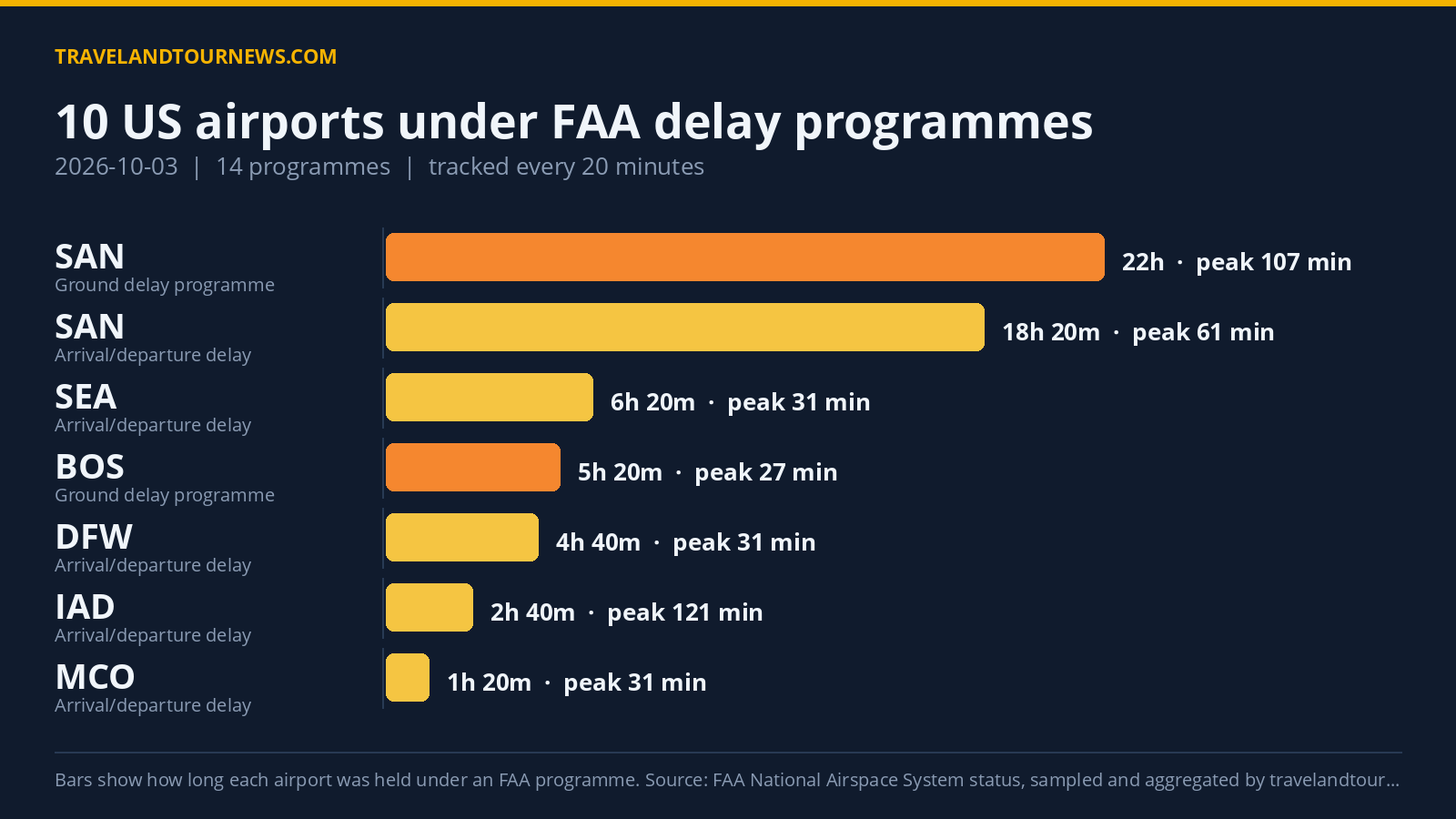
The FAA’s National Airspace System status page indicated a possible “GROUND STOP/DELAY PROGRAM” for Atlanta, signaling potential traffic management measures to limit or slow incoming flights. Nationwide, the FAA recorded 3,979 flight delays and 175 cancellations on September 14, with Atlanta identified as one of
the worst-affected hubs for disruptions.
Lack of Airline-Specific Bulletins and Passenger Guidance
American Airlines had not issued a dedicated airline-wide bulletin addressing the delays at Atlanta as of reporting. The primary sources reporting the delay levels remain the FAA and flight-tracking services. Passengers traveling through Atlanta are recommended to consult the FAA’s airport status pages and their flight carriers’ status tools for the latest updates during ongoing operational delays.
Delay Causes and FAA Traffic Management Measures
According to FAA reporting, flight delays at busy hubs like Atlanta typically reflect traffic-management strategies, weather factors, and the hub’s ability to recover from operational congestion. The current airborne arrival delays, along with potential ground stop or delay
programs, result from daily traffic conditions and programmed delay procedures rather than being linked to any airline-specific operational issues.
The FAA described its Daily Air Traffic Report as providing a “reasonable expectation of any daily impacts to normal air traffic operations,” underscoring the routine nature of such traffic management measures during peak periods or complex operational situations.