The Mumbai-Ahmedabad High-Speed Rail corridor has completed over 100 kilometers of piers in Maharashtra as of 2026, advancing construction of the 135.45 km elevated track stretch in the state. Approximately 124 km of this stretch runs on elevated alignments from Shilphata in Thane district to Zaroli village near the Maharashtra-Gujarat border.
Elevated Stations and Major Bridge Construction
Three elevated stations are under development within Maharashtra at Thane, Virar, and Boisar. The Thane station concourse is positioned about 12 meters above ground level and incorporates design measures to protect surrounding mangrove ecosystems. The corridor includes major river bridges spanning the Ulhas River at 460 meters, the Vaitarna
River at 2.32 kilometers, and the Jagani River at 510 meters, along with 36 additional bridges and crossings. To support these works, the National High Speed Rail Corporation Ltd (NHSRCL) has deployed nine casting yards, seven full-span launching gantries, and eight segmental launching gantries for segment installation.
Bullet Train Features and Passenger Amenities
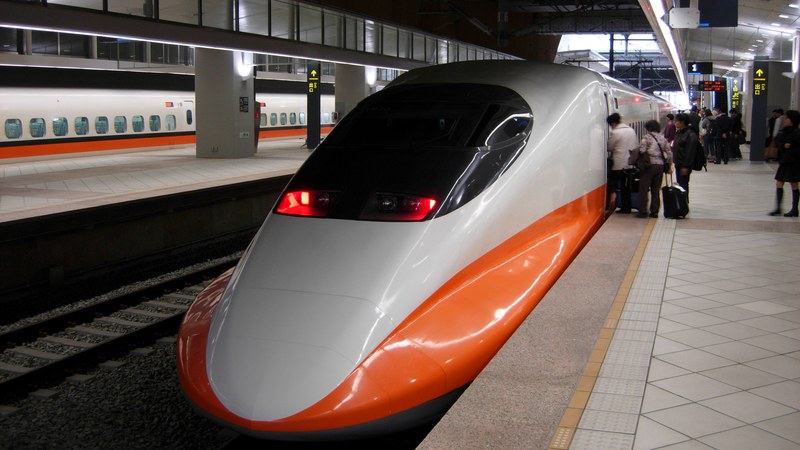
The bullet train operating on the corridor is designed to reach a top speed of 280 km/h. Trains will offer fully air-conditioned environments with reclining and rotatable seats, infotainment systems, and facilities for passengers with disabilities.
Indigenous Manufacturing and Technology Adaptation
BEML Limited has been awarded an ₹866.87 crore contract to design, manufacture, and commission two eight-coach trainsets,
codenamed B-28. Production is taking place at the Aditya High-Speed Rail Complex in Bengaluru, using stainless steel and precision technologies to accommodate India’s tropical monsoon climate, differentiating from the cold-climate Japanese designs on which the technology is based. Integral Coach Factory (ICF) in Chennai is also involved in the indigenous production efforts.
Project Timeline and Funding
Initial bullet train operations are scheduled to commence on the Gujarat segment between Surat and Bilimora by August 2027. Full corridor completion is anticipated by 2030. The project was initially funded with ₹1.1 lakh crore from the Japan International Cooperation Agency (JICA), but current cost estimates stand at
approximately ₹2.1 lakh crore, mainly due to land acquisition delays in Maharashtra. The elevated corridor approach in Maharashtra was chosen to minimize land acquisition complications and reduce urban disturbances.
Future High-Speed Rail Plans and Rail Network Expansion
India aims to develop seven additional high-speed rail corridors, including routes connecting Bengaluru-Chennai, Bengaluru-Hyderabad, and Bengaluru-Pune-Mumbai. Railway Minister Ashwini Vaishnaw has announced intentions to introduce next-generation bullet trains capable of speeds up to 350 km/h.
Passenger Impact and Connectivity
The bullet train will significantly reduce travel time between Mumbai and Ahmedabad. Elevated stations like Thane enable integration with local transit while preserving ecological systems, necessitating last-mile connectivity solutions such as shuttle services or ride-sharing platforms
at concourse levels.