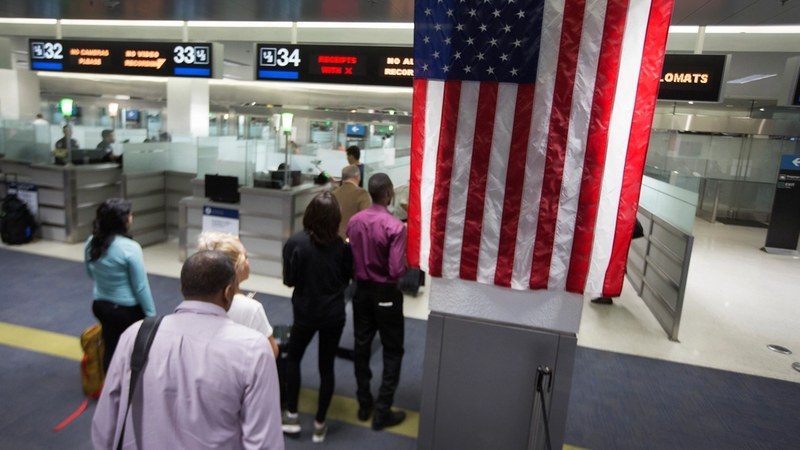
The Trump administration implemented a global pause on all immigrant visa applications in early August 2026. The suspension, announced publicly in late August 2026, applies to immigrant visas processed at U.S. embassies worldwide and is expected to continue until early to mid-September 2026 as consular officials receive new policy training.
Public Charge Rule Drives Visa Application Suspension
The halt in immigrant visa processing is tied directly to the introduction of revised public charge rules. These new screening policies deny green cards to applicants who have used public benefits such as food stamps, Medicaid, and housing vouchers. The U.S. Citizenship and Immigration Services (USCIS), part of the Department
of Homeland Security, revived these rules to restrict entry to individuals deemed likely to become a public burden.
Visa Interview Rescheduling and Affected Applicants
Immigrant visa interviews scheduled in August 2026 were not canceled but are being rescheduled for the months of September, October, and November 2026. Officials say the pause mainly impacts family-sponsored immigrant visas for parents, spouses, children, and siblings of U.S. citizens, who are highly vulnerable to the public charge grounds. Worker-sponsored and employment-based immigrant visas remain unaffected, as applicants typically demonstrate sufficient earnings to avoid public charge denial.
Julia Gelatt, associate director of the U.S. immigration policy program at the Migration Policy
Institute, told NBC News that rescheduling poses challenges because immigrant visa appointments are scarce. She noted, “They’re hard to get, and so having to reschedule is a big challenge for people.” Gelatt also anticipates possible litigation if the pause extends beyond initial estimates.
Planned Visa Revocation Targets Asylum Seekers Holding B-1 and B-2 Visas
In parallel with the application pause, the Trump administration intends to revoke up to 200,000 business (B-1) and tourism (B-2) visas issued from 2016 through 2026. This large-scale revocation targets visa holders who have applied for or are seeking asylum in the United States, with efforts coordinated between the U.S. State Department and the Department of Homeland
Security.
Deputy Secretary of State Christopher Landau stated, “People in the U.S. and all over the world are fed up with bogus asylum claims. Asylum isn’t supposed to be a loophole to circumvent immigration laws.” Visa revocations will not directly affect those already inside the U.S. with pending asylum cases, as their stay depends on the asylum adjudication, not the visa.
Legal Context and Previous Visa Restrictions Lifted
Earlier in 2026, from January until mid-August, the administration enforced a ban on immigrant visa issuance to nationals of 75 countries. This policy was struck down by U.S. District Judge Jeannette A. Vargas of the Southern District of New
York in August 2026. The court ruling is seen as influencing the current enforcement strategies and visa processing adjustments.
A State Department official, who spoke anonymously, confirmed the pause began to allow consular officials worldwide to train on the updated public charge policies and emphasized the temporary nature of the suspension.
Impact on Immigrant Visa Applicants and Enforcement Philosophy
The pause and visa revocation plans align with the administration’s broader immigration approach, aimed at reducing the number of people allowed into the U.S. Julia Gelatt described the effort as part of a “general philosophy that immigration is bad for the United States and that the Trump administration is
looking for all of the ways it can to button down our immigration system to allow in fewer people.” She added that the suspension’s short-term objective is to facilitate training, but longer interruptions could trigger legal challenges.
The Visa suspension complicates efforts for immigrant visa applicants worldwide, as the rescheduling of appointments extends processing times amid an already limited number of interview slots.