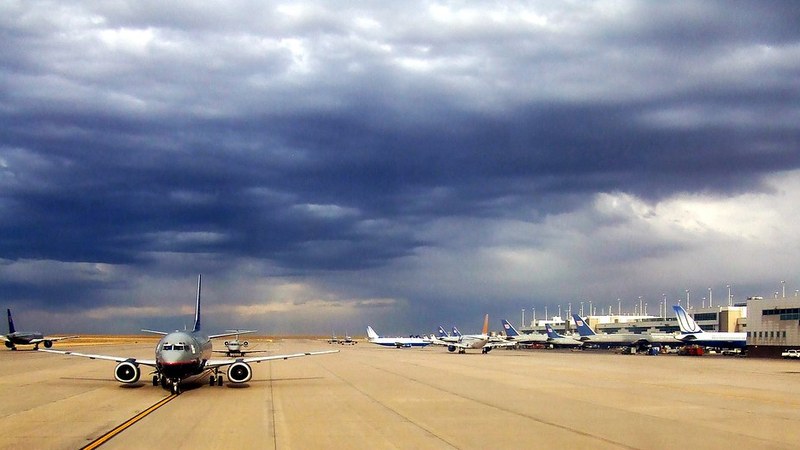
The Federal Aviation Administration (FAA) ordered a ground stop at Denver International Airport (DEN) on August 15, 2026, at 3:25 p.m., halting arrivals due to severe thunderstorms encroaching on final approach routes. This action disrupted more than 700 flights, including delays and cancellations, as storm activity affected the Denver metro area and nearby regions.
FlightAware tracked 689 delayed flights and 22 cancellations during the ground stop itself. United Airlines reported 216 delayed flights and four cancellations, while Southwest Airlines experienced 249 delays and three cancellations. SkyWest recorded 157 delays and 10 cancellations, and Frontier Airlines canceled eight flights. The FAA
lifted the ground stop at 4 p.m., but as of 4:30 p.m., FlightAware logged 91 cancellations and 708 delays airport-wide. At that later time, SkyWest reported 38 cancellations and 121 delays; United had 34 cancellations and 265 delays; Southwest noted 14 cancellations and 211 delays; and Frontier showed five cancellations and 49 delays. Departures to Denver were delayed on average by 114 minutes, with inbound flights facing average delays of two hours after the stop was lifted. Weather-related delays averaged one hour and 44 minutes throughout the day.
Severe Thunderstorms and Weather Conditions
The ground stop was triggered by severe thunderstorms linked to a strong
monsoon moisture surge advancing over the Colorado Front Range and Denver metro area. The National Weather Service issued a severe thunderstorm watch for the Front Range until 9 p.m., warning of damaging winds, large hail, and flash flooding risks. Rainfall rates in the Denver metropolitan region could reach one to two inches in 30 minutes. These convective storms, common during the North American Monsoon season, develop rapidly over the High Plains and produce strong outflow winds causing dangerous wind shear that hampers flight operations at DEN.
Impact on Airlines and Airport Operations
Denver International Airport serves as a major hub for United Airlines, its second-largest, while
also being the top-served airport for Southwest Airlines and the second-busiest for Frontier Airlines. The airport handled a record 82.4 million passengers in 2025, ranking as the fourth-busiest U.S. airport by passenger volume. United Airlines transported 41.4 million passengers through DEN in 2025, marking a 6.3% increase over the previous year. The high volume of operations and carrier market share—United, Southwest, and Frontier control 88% of seat capacity—amplify the impact of any operational disruption at the airport.
This recent ground stop follows earlier weather-driven disruptions in the summer of 2026. A similar event on August 12 forced a nationwide ground
delay program for DEN-bound flights, raising average arrival delays to 144 minutes. Other incidents occurred on July 10, July 29-30, and multiple times in June and May. The pattern reflects DEN’s vulnerability, listed among the FAA “Core 30” airports most susceptible to weather-related ground stops due to its high elevation and exposure to convective thunderstorms.
FAA Ground Stop Procedures and National Impact
The FAA describes a ground stop as its most restrictive air traffic control measure, implemented when an airport’s capacity to accept inbound flights sharply declines or drops to zero, often without prior notice. This tool prevents accumulating inbound aircraft by delaying departures at origin airports.
Ground stops at DEN result in ripple effects across national air travel networks because delayed inbound flights originating elsewhere disrupt schedules beyond Colorado.
The August 15 ground stop was originally scheduled to last until 4 p.m., with the FAA indicating a greater than 60% chance of an extension. Although lifted on time, the ground delay program remained in effect through most of the evening, anticipated to continue until 9:59 p.m., reflecting ongoing weather challenges. These procedures help manage airport congestion and ensure safety amid severe weather conditions affecting final approaches and runway operations.