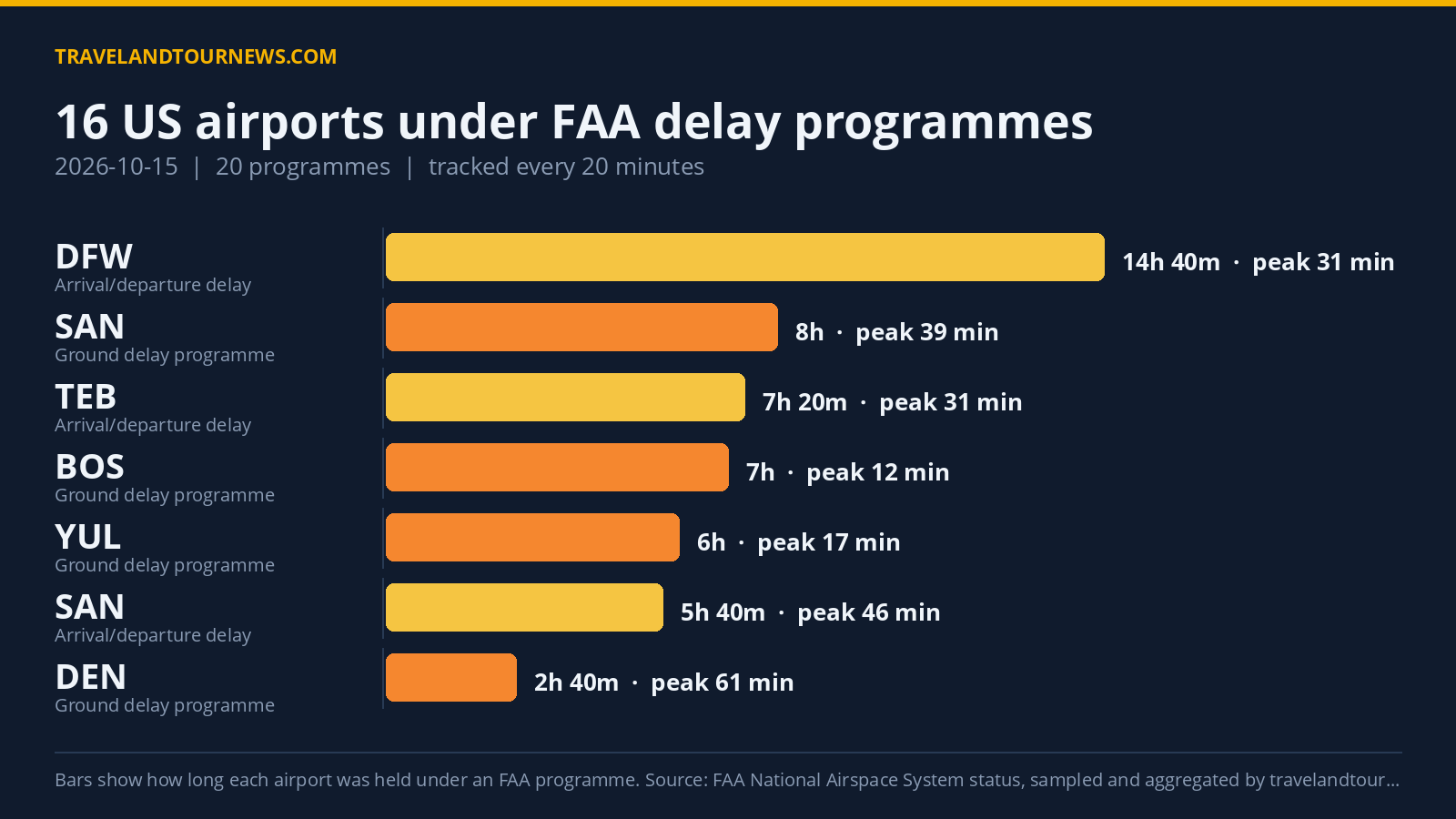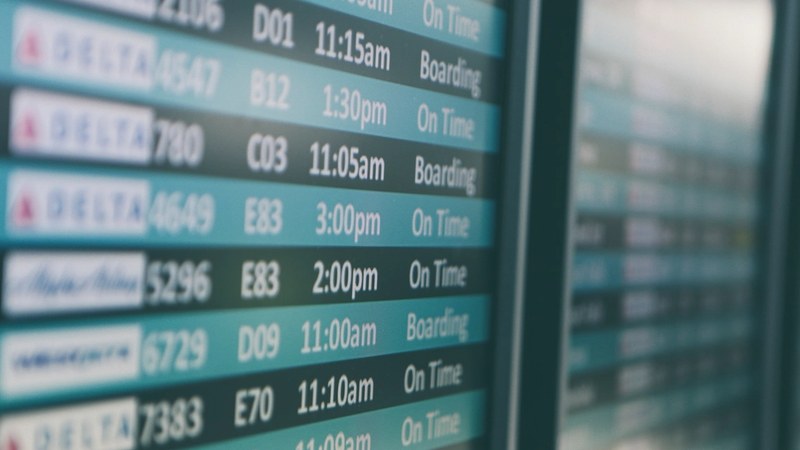
At least 2,036 flights across the United States were delayed and 263 were canceled on Monday, August 10, 2026, after the Federal Aviation Administration (FAA) imposed ground stops the previous day at five major airports. Chicago O’Hare International Airport (ORD) recorded the highest disruption, posting 87 delays and 48 cancellations on August 10, following 148 canceled departures and 124 canceled arrivals on August 9.
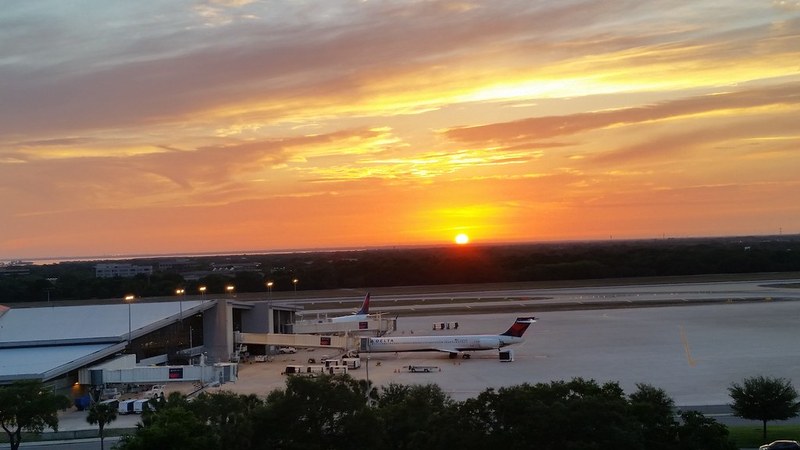
FAA ground stops went into effect on Sunday, August 9, at Chicago O’Hare, Chicago Midway, Denver International, Las Vegas Harry Reid International, and Tampa International airports. O’Hare’s ground stop lasted approximately three hours from around noon
to 3 p.m. Sunday. United Airlines reported 163 delays and 33 cancellations at O’Hare on Monday, August 10. American Airlines issued flexible rebooking waivers for passengers scheduled through O’Hare on August 9.
Causes of FAA Ground Stops and Operational Strain
The FAA implemented ground stops as severe convective weather moved across multiple U.S. regions, leading to thunderstorms and flooding risks especially around Chicago. Capacity constraints at busy airports exacerbated the delays. At Las Vegas’s Harry Reid International Airport, extreme heat has doubled the number of 110°F-plus days compared to mid-20th-century averages, reducing aerodynamic lift and disrupting normal airline operations.
FAA data shows severe weather causes approximately 74.26% of
U.S. flight delays exceeding 15 minutes. The severe storms and ground stops from August 7-10 followed nearly 2,000 cancellations centered on New York airports including JFK, further complicating airline crew and aircraft scheduling.
Traveler Impact and Airline Responses
Passengers faced long waits and cancellations, with no federal requirement for airlines to cover hotel or meal costs for weather-related delays. The U.S. Department of Transportation mandates that airlines provide cash refunds within seven business days if domestic flight delays exceed three hours and passengers decline rebooking. Airlines like American and United offered flexible rebooking waivers, waiving change fees and fare differences for affected travelers at O’Hare.
Travelers with delayed or canceled flights were advised to keep essential items in carry-on bags, monitor airline status notifications closely, and allow extra connection time at busy airports.
FAA Traffic Management and Industry Capacity Challenges
FAA ground stops are the most restrictive traffic control measure, designed to keep aircraft at departure locations to prevent gridlock at destination airports during disruptive weather. Flight-tracking data from Flightradar24 recorded a historic peak of 153,359 commercial flights worldwide in a 24-hour period in July 2026, reflecting near-record airline capacity.
With limited unsold seats, airlines struggling to recover from short ground stops face cascading multi-day delays and cancellations, worsening the nationwide operational
backlog. Weather, combined with constrained airport throughput, remains the dominant cause of U.S. air travel disruption.