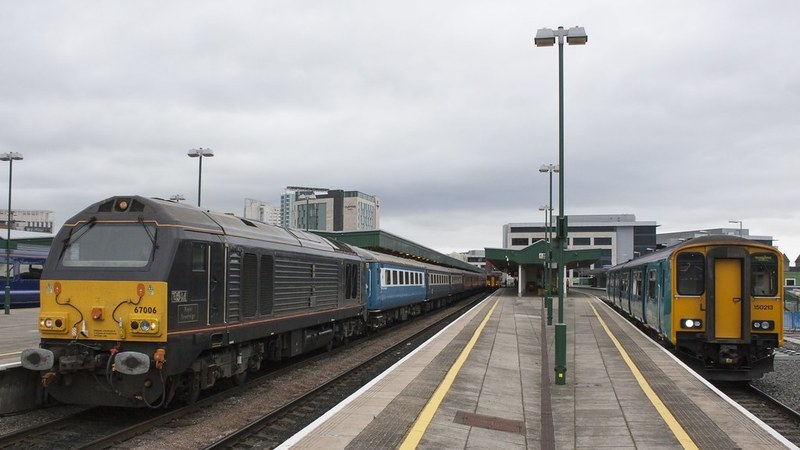
A power failure shortly before 2pm on Thursday, August 6, 2026, at the Manchester regional signalling centre caused widespread disruption to train services across north-west England. The centre responsible for controlling rail traffic in the region experienced an outage that halted trains and led to extensive cancellations and delays.
Affected Operators and Scale of Disruption
Train companies impacted included CrossCountry and London Northwestern Railway, which experienced immediate service suspensions. On the following morning, Friday, August 7, 2026, services operated by Avanti West Coast, East Midlands Railway, Northern, TransPennine Express, and Transport for Wales continued to face operational difficulties. Thousands of passengers in Greater Manchester, parts of
the Midlands, and the north-west suffered travel interruptions as multiple routes were affected, with some trains cancelled entirely or running shortened or revised journeys.
Backup Power Failure and Signalling Restoration
The outage was exacerbated when Network Rail’s backup generators failed to activate immediately, resulting in signalling systems defaulting to red and bringing rail traffic to a halt. Recovering full signalling capability required several hours of controlled power cycling to safely restart operations. Signalling was fully restored late on Thursday evening. Network Rail has since launched an investigation to examine the cause and management of the power failure.
Passenger Advisories and Official Responses
Northern Rail advised its passengers to avoid travel prior
to 10am on Friday due to ongoing service disruption. TransPennine Express also warned of delays and cancellations expected before midday. Chris Wright, Network Rail’s north-west route director, thanked passengers for their patience and confirmed that engineers worked overnight to restore the signalling system. He urged travellers to continue checking for the latest service information before planning journeys.
Eddie Dempsey, general secretary of the RMT union, acknowledged the difficulty faced by train crews during the disruption. He criticized the lack of a functioning backup power supply at the Manchester operations centre, calling the 90-second power cut “devastating” for the large geographical
area served. Dempsey pledged cooperation with Network Rail to evaluate railway infrastructure resilience and necessary future actions.
Additional Disruption Factors and Recovery Outlook
The recovery on Thursday was complicated by the discovery of a wartime bomb near the railway line between Tamworth and Burton-on-Trent, which further hampered remobilisation efforts. Andy Bowes-Roden, deputy editor at Modern Railways magazine, said on BBC Radio 5 Live that while disruption was expected to ease during Friday, full normality was unlikely until the following morning.
National Rail noted that despite some trains operating, cancellations and partial journeys would continue across the Greater Manchester area and north-west England until services fully recovered.
Statements From Officials
National Rail said, “This means that some trains are still expected to be affected this morning. Trains across the Greater Manchester area and north-west of England may still be cancelled in full or revised to only run for part of their normal journey until service is able to fully recover.”
Chris Wright advised, “Anyone planning to travel this morning should continue to check before they travel for the latest information.”
Eddie Dempsey added, “The impact of a 90-second power cut in an important operations centre in Manchester, covering a wide geographical area across the north-west, without a working backup supply has clearly been devastating. We will work with Network Rail to scrutinise how railway infrastructure coped and what actions need
to be taken in the future.”
Andy Bowes-Roden commented, “Quite a lot of disruption this morning easing throughout the day. Hopefully by rush hour the service will be back to normal, but it won’t be until tomorrow morning that this will be sorted.”