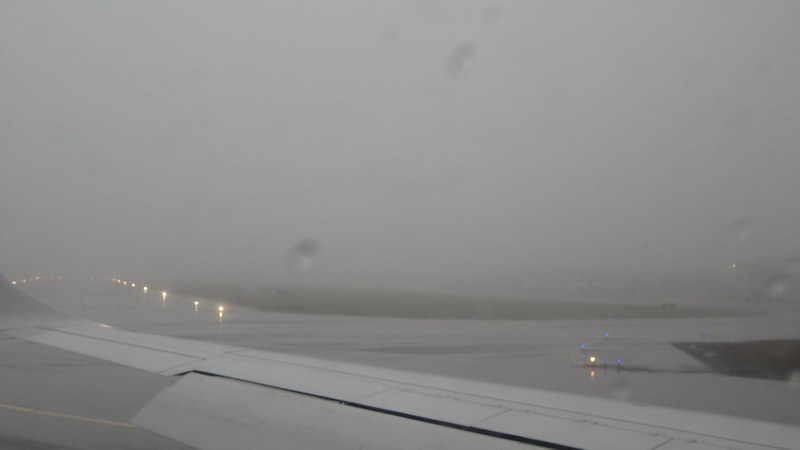
Severe thunderstorms in the U.S. Northeast on August 3 and 4, 2026, caused the cancellation of 726 flights and delayed more than 2,200 others. These disruptions affected major hubs including Boston Logan International Airport (BOS), New York City airports, and Philadelphia International Airport (PHL).
FAA Ground Stops Impact Eight Major Northeast Airports
The Federal Aviation Administration (FAA) issued ground stops on August 3 at eight airports to manage aircraft movements amid hazardous weather. Affected airports included Boston Logan (BOS), Baltimore/Washington International (BWI), Charlotte Douglas (CLT), Newark Liberty (EWR), Washington Dulles (IAD), LaGuardia (LGA), Teterboro (TEB), and Philadelphia International (PHL). Average arrival delays at Boston Logan exceeded two hours.
JFK Airport reported departure delays reaching up to two hours and fifteen minutes, while LaGuardia operated under a Ground Delay Program averaging an hour and twenty-six minutes delay. Newark departure delays ranged from one hour and sixteen minutes to one hour and thirty minutes.
JetBlue Leads with 134 Cancellations Amid Network Vulnerabilities
JetBlue registered 134 flight cancellations on August 3, the highest among U.S. carriers. This reflects the airline’s operational focus at JFK, Boston Logan, and Fort Lauderdale airports, which became vulnerable as simultaneous storms disrupted the Northeast. Delta Air Lines, American Airlines, and Republic Airlines each reported between 45 and 48 cancellations on the same day. Regional
PSA Airlines recorded 50 cancellations. Flight tracking service FlightAware documented over 10,000 delays and more than 500 cancellations across the U.S. on Sunday, August 2, preceding the storm’s peak impact.
Storm Causes and Weather Pattern Behind Disruptions
A slow-moving low-pressure system stalled over the Northeast starting August 1-2, bringing heavy rainfall and thunderstorms through August 3 and 4. The National Weather Service’s Weather Prediction Center identified an anomalous upper-level low producing broad synoptic ascent and significant atmospheric energy, creating favorable conditions for severe thunderstorms and intense precipitation. New York City’s Emergency Management Commissioner warned of heavy rain and wind gusts up to 60 mph expected between 10
a.m. and 6 p.m. on August 3.
Passenger Impact and Airline Waivers
Travelers encountered flight cancellations, extended delays, and prolonged waits at key airports in the Northeast. Major carriers activated weather waivers allowing passengers to rebook flights without fare differences. Delta Air Lines waived change fees for flights involving Newark, White Plains, JFK, and LaGuardia on August 2 and 3, with rebookings allowed through August 6. American Airlines provided waivers for August 3 flights touching Boston Logan, JFK, LaGuardia, and Philadelphia. United Airlines issued the most extensive waivers covering Newark, JFK, LaGuardia, Philadelphia, and eleven Florida airports including Miami, Orlando, Tampa, Fort Lauderdale, and Jacksonville.
Some passengers reported insufficient airline app notifications, leading to missed flights when departure times changed without alerts. Recovery to normal operations could take an additional 12 to 24 hours after storms dissipate.
Official Statements and Ongoing Weather Alerts
The FAA enforced ground stops on August 3 at eight major Northeast airports as a safety measure. New York City officials issued flash flood warnings extending disruptions at LaGuardia, JFK, and Newark beyond August 3. Passengers were encouraged to monitor the FAA’s National Airspace System status page and airline advisories for updates as operations adjusted to weather conditions.
JetBlue’s Network Design and Regulatory Background
JetBlue’s concentration at airports most affected by the storm, such
as JFK and Boston Logan, amplified cancellation numbers. Unlike Delta and American Airlines, which maintain hubs in geographically diverse locations like Atlanta and Dallas-Fort Worth, JetBlue’s focused network lacks flexibility during simultaneous Northeast disruptions. The U.S. Department of Transportation fined JetBlue $2 million in January 2025 for persistent flight delays, preceding this third major Northeast disruption of the summer. This network vulnerability contributed to JetBlue’s lead in cancellations during the recent storm events.