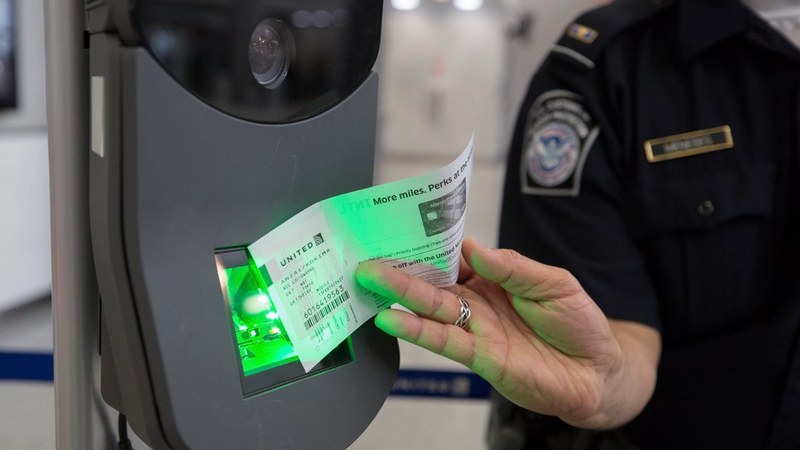
SITA and Qatar Airways launched the Fast Pass opt-in face biometric system at Hamad International Airport in Qatar, connecting more than 700 airport touchpoints across check-in, bag drop, security, and boarding as of mid-2026. Powered by SITA technology, the system allows passengers to enroll once via Qatar Airways’ mobile check-in app or self-service kiosks, using facial recognition in place of boarding passes throughout their airport journey.
Dubai International Airport (DXB) operates the Red Carpet Smart Corridor, employing Paravision’s facial biometric technology to process over 10 travelers simultaneously. Emirates Airline installed more than 200 biometric boarding cameras at DXB in 2017.
Abu Dhabi’s Zayed International Airport has integrated biometric systems at five of its nine passenger touchpoints, supporting Etihad Airways’ trials of facial identity verification for boarding and lounge access. Under construction, Al Maktoum International Airport aims to deliver an AI-powered passenger-centric ecosystem designed to personalize services and optimize passenger flows upon completion.
In 2025, DXB recorded over 95.2 million international passengers, maintaining its position as the world’s busiest international airport and driving investment in biometric technologies. According to the International Air Transport Association (IATA), biometric identity confirmation can reduce passenger processing times by up to 40%. The airport biometrics market
is forecast to reach $150.58 billion by 2030, with biometrics services projected to hit $276.56 billion by 2032. Industry analysts expect that by 2027, 75% of airports will have adopted biometric technology spanning the passenger journey.
Beyond the Middle East, Kazakhstan’s Nursultan Nazarbayev International Airport plans biometric trials enabling passengers to self-register, complete check-in, and print travel documents independently. Noi Bai International Airport in Vietnam introduced biometric check-in kiosks that synchronize biometric data across checkpoints, processing between 2,000 and 3,000 passengers daily to reduce check-in times. Nigeria’s Federal Airports Authority (FAAN) is deploying V-Pass, a facial recognition system developed with
Verxid Technologies and Barnksforte Technologies, providing centralized identity confirmation and tracking at Abuja airport.
Despite extensive biometric testing worldwide, challenges persist in governance, liability, funding, and ownership that limit scalable, interoperable biometric systems. Selim Bouri, SITA’s president for Middle East, Africa & Türkiye, said trusted digital identity is central to transforming passenger movement, noting Hamad International Airport demonstrates a fully integrated biometric journey. Majed Al Joker, COO of Dubai Airports, emphasized the need for consistent, measurable improvements in passenger flows through biometric technology adoption.
Biometric systems offer travelers significant process time reductions and enhanced control over their data. The integration
allows a passenger’s face to replace physical documents as identification across all airport touchpoints. Digital travel credential adoption is projected to exceed 1.2 billion passengers globally by 2035, highlighting the growing impact of biometric identification methods in air travel.