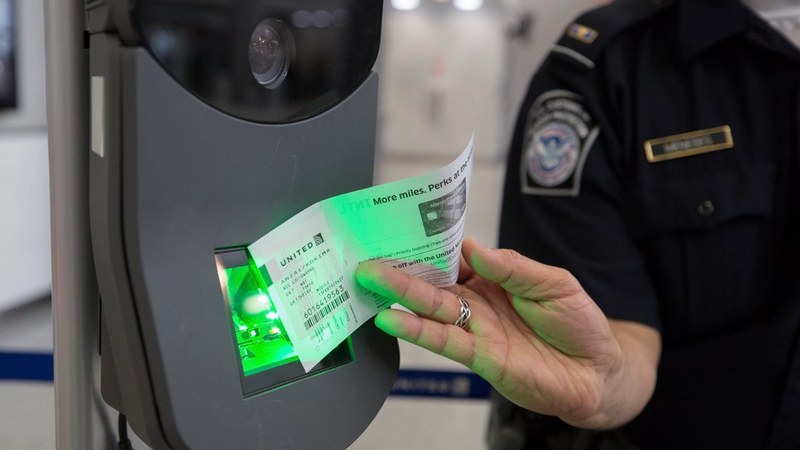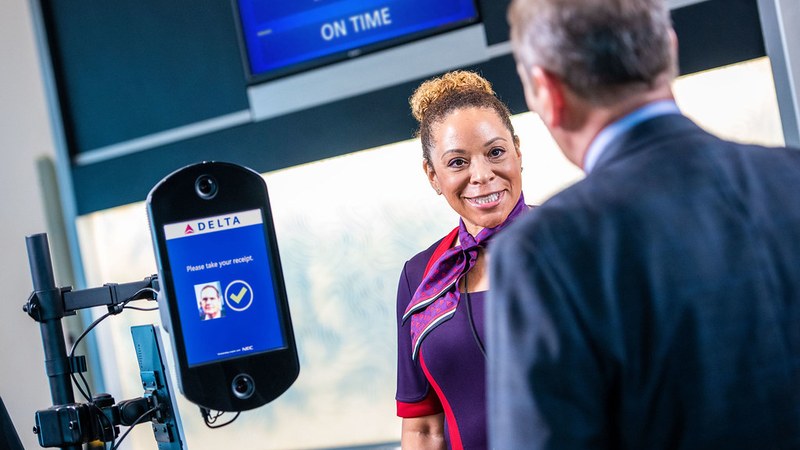
SITA and Qatar Airways have introduced an opt-in facial biometric system named Fast Pass at Hamad International Airport (HIA) in Doha, linking over 700 passenger touchpoints into a unified biometric journey. Passengers can enroll once via the Qatar Airways mobile check-in app or at a terminal kiosk, enabling facial recognition to replace boarding passes through subsequent check-in, bag drop, security, and boarding procedures.
More than 43% of airports globally now use biometric-enabled boarding systems. Selim Bouri, SITA’s president for the Middle East, Africa, and Türkiye, said, “When a passenger is verified once and recognized across the whole journey, the airport
runs more smoothly and the traveler stays in control of their data.” Hamad International Airport’s large-scale deployment sets a new industry model for speed and convenience in travel.
Dubai International Airport’s Biometric Deployments
Dubai International Airport (DXB), handling 95.2 million international passengers in 2025, utilizes biometric solutions including the Red Carpet Smart Corridor, which employs Paravision facial biometrics in cooperation with emaratech to process more than 10 travelers simultaneously. Emirates Airline began integrating biometric boarding cameras at DXB in 2017, installing over 200 units, establishing one of the region’s earliest large-scale biometric implementations.
Facial Recognition Expands Across UAE Airports
At Abu Dhabi’s Zayed International Airport, facial recognition technology is operational at
five out of nine passenger touchpoints throughout the terminal. Additionally, Etihad Airways is testing facial identity verification for boarding passes and lounge access. The under-construction Al Maktoum International Airport near Dubai is projected to feature an advanced biometric ecosystem enhanced by AI-driven analytics to personalize passenger services and optimize terminal flow.
Middle East Passenger Volumes Drive Biometric Adoption
The Middle East region is expected to handle 240 million passengers in 2026, fueling biometric technology investments across airports. Majed Al Joker, COO of Dubai Airports, emphasized the need for continuous improvement in passenger movement efficiency. The International Air Transport Association (IATA) estimates that biometric verification can reduce passenger
processing times by up to 40% compared to manual identity checks.
Market Forecast and Expanded Biometric Trials
Industry projections forecast the biometric technology market reaching $150.58 billion by 2030 and airport biometric services hitting $276.56 billion by 2032. By 2027, 75% of airports are expected to implement biometric technologies throughout travelers’ journeys. Nursultan Nazarbayev International Airport in Kazakhstan plans a biometric passenger registration trial incorporating electronic passports. Noi Bai International Airport in Vietnam has deployed biometric check-in kiosks at Terminal T1, serving 2,000 to 3,000 passengers daily with reduced check-in times. Nigeria’s Federal Airports Authority is rolling out V-Pass, a biometric facial recognition system developed with
Verxid Technologies and Barnksforte Technologies, enhancing secure digital ID verification across terminals.
Governance and Interoperability Challenges
Despite broad biometric adoption, challenges persist regarding governance, liability, funding, and ownership of interoperable biometric systems. Industry reports indicate that although biometric passenger processing is now widespread, few deployments have advanced to scalable and interoperable models. Digital travel credentials (DTCs) are forecast to reach over 1.2 billion users globally by 2035, underscoring the need for strategic alignment and governance to ensure effective biometric ecosystem integration.
Industry Leadership and Official Statements
Selim Bouri of SITA highlighted the efficiency gains, stating, “Hamad International Airport has shown what that looks like at full scale, across every
major touchpoint.” Majed Al Joker of Dubai Airports noted the importance of “consistent, measurable improvements in how guests move through our terminals.” The biometric expansion reflects the Middle East’s leadership in developing integrated biometric passenger journeys aimed at accelerating processing and improving passenger experiences.