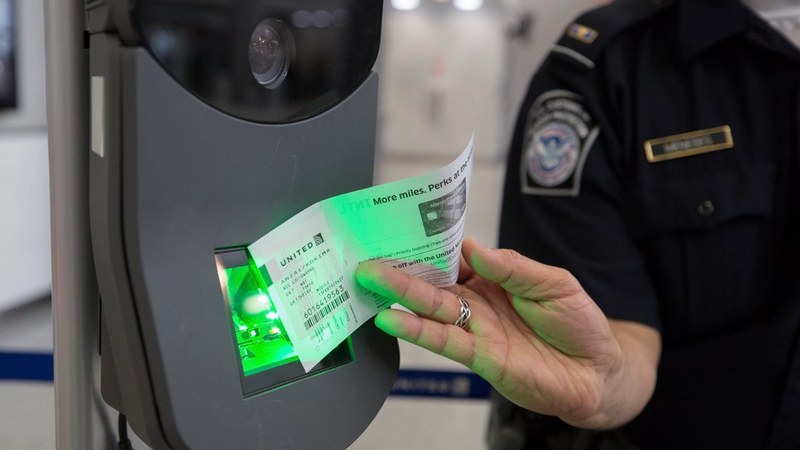
SITA and Qatar Airways launched an opt-in biometric passenger journey system at Hamad International Airport, connecting more than 700 touchpoints for check-in, bag drop, security, and boarding. This Fast Pass system enables passengers to enroll once via the Qatar Airways mobile check-in app or self-service kiosk, allowing facial recognition to replace boarding passes throughout the airport experience.
More than 43% of airports worldwide currently use biometrics-enabled boarding systems, according to SITA. The full-scale deployment at Hamad International Airport exemplifies how trusted digital identity can streamline passenger processing and improve operational efficiency. Selim Bouri, president for Middle East, Africa & Türkiye
at SITA, said the model “is built on trust” and allows airports to run more smoothly while passengers maintain control of their data.
Biometric Systems at Major Middle East Airports
Dubai International Airport integrates biometric technologies through its Red Carpet Smart Corridor, which utilizes facial biometrics provided by Paravision and technology from emaratech. These systems can simultaneously process more than 10 passengers, enhancing throughput during peak periods. Emirates Airline installed over 200 biometric boarding cameras at Dubai International in 2017 to support these operations.
Abu Dhabi’s Zayed International Airport employs facial recognition at five of nine passenger touchpoints. Etihad Airways is currently testing facial identity verification for
boarding and lounge access, advancing the use of biometrics across airline and airport services in the United Arab Emirates.
Al Maktoum International Airport, under construction near Dubai, is planned to deploy an interconnected biometric ecosystem with AI-powered analytics. The system aims to personalize passenger services and optimize flows, positioning the airport to handle substantial future growth.
Passenger Volume and Time Savings
In 2025, Dubai International Airport was the world’s busiest airport by international passenger traffic, handling 95.2 million travelers. Majed Al Joker, COO of Dubai Airports, emphasized the need for “consistent, measurable improvements in how guests move through our terminals” amid this high volume.
The
International Air Transport Association estimates biometric identity confirmation can reduce passenger processing times by up to 40%, improving efficiency at various control points including check-in and boarding. This accelerated processing supports the capacity needs at the region’s busiest airports.
Biometrics Expansion Across Asia and Africa
Nursultan Nazarbayev International Airport in Kazakhstan will trial biometric passenger registration systems allowing independent check-in and electronic passport usage. Similarly, Noi Bai International Airport in Vietnam operates biometric check-in kiosks at Terminal T1, which synchronize passenger data to speed security and boarding. These kiosks currently process between 2,000 and 3,000 passengers daily.
In Nigeria, the Federal Airports Authority (FAAN) is implementing
V-Pass, a biometric identity verification system built in partnership with Verxid and Barnksforte Technologies. V-Pass features a Central Management System for real-time passenger tracking, analytics, and integration with future airport systems. The rollout supports FAAN’s digital transformation strategy to improve access control and security.
Market Growth and Operational Challenges
Airport Show 2026, scheduled for October in Dubai, will showcase biometric technologies amid rising regional investment. The airport biometrics market is projected to reach $150.58 billion by 2030, with related service markets expected to hit $276.56 billion by 2032. By 2027, 75% of airports worldwide are forecast to use biometric technologies across the passenger journey.
Despite
rapid adoption, interoperable biometric systems face challenges surrounding governance, liability, funding, and ownership. According to an Asian Aviation article, biometric passenger processing is no longer experimental but few implementations have achieved scalable, interoperable models. Fundamental strategic alignment and governance remain necessary for wider global integration.
Juniper Research projects global adoption of digital travel credentials will exceed 1.2 billion passengers by 2035, highlighting the growing role of biometric and digital identity technologies in air travel.