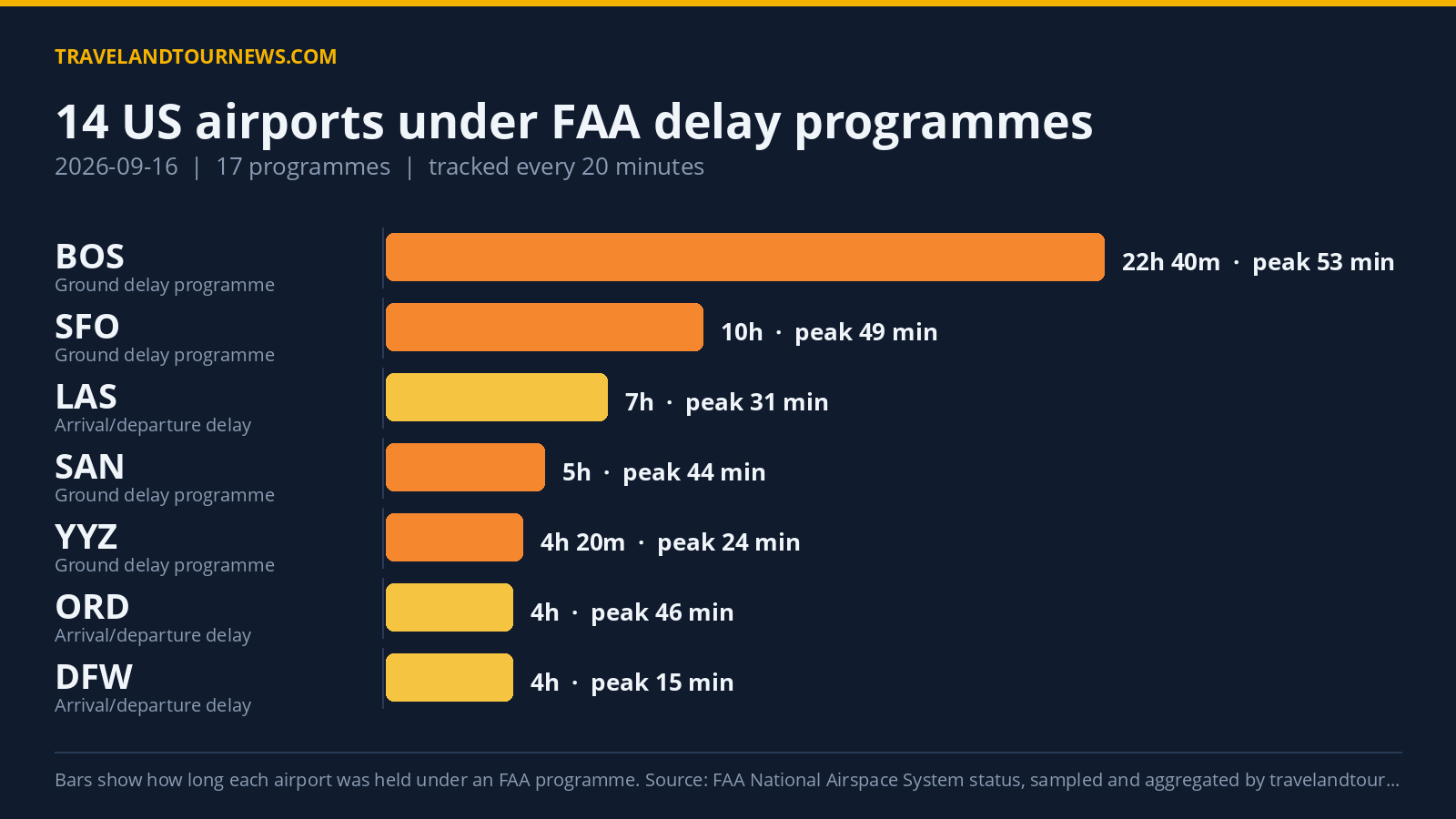
On July 17, 2026, the US air travel network experienced 4,896 flight delays and 126 cancellations, severely disrupting operations at key airports. Chicago O’Hare Airport reported the most significant impact with 801 delays and 17 cancellations, affecting Midwest air traffic networks. Dallas-Fort Worth, Hartsfield-Jackson Atlanta, Orlando, San Francisco, San Diego, Seattle-Tacoma, New York JFK, and Newark Liberty airports also faced heavy disruptions.
Airline Delays and Cancellation Totals
Southwest Airlines had the highest delay count with 866 delays and nine cancellations nationwide. American Airlines followed with 850 delays and 11 cancellations, impacting hubs including Dallas-Fort Worth and Chicago O’Hare. United Airlines recorded 434 delays and four
cancellations at major hubs including Chicago O’Hare and Newark Liberty. SkyWest experienced 434 delays and 21 cancellations, the highest cancellation total among the airlines reported. Frontier Airlines and Delta Air Lines were also affected.
Airport Disruptions Across Key Hubs
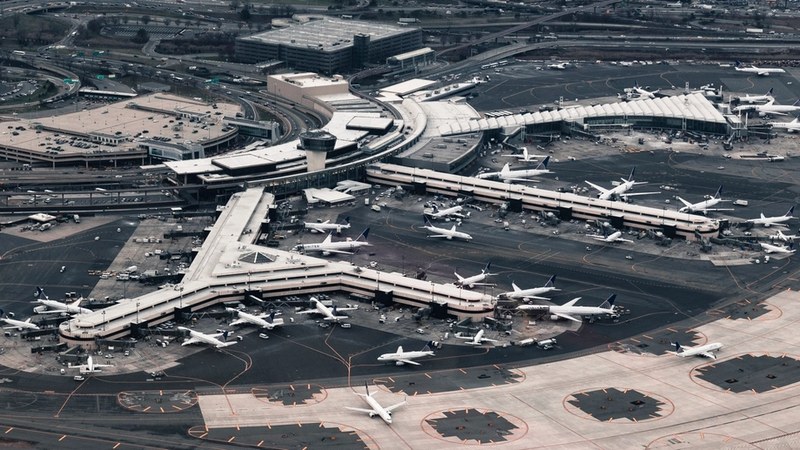
Hartsfield-Jackson Atlanta Airport logged 420 delays and 16 cancellations amid heavy traffic volume. Orlando Airport had 216 delays and five cancellations. West Coast airports were impacted with San Francisco reporting 213 delays and seven cancellations and San Diego registering 182 delays alongside 12 cancellations. New York’s JFK Airport recorded 115 delays and four cancellations, and Newark Liberty Airport had 87 delays and four cancellations as wildfire
smoke reduced visibility in the New York metropolitan area airspace.
Wildfire Smoke Impact on Flight Operations
Wildfire smoke drifting south from Canada into the northeastern United States significantly contributed to flight disruptions. This smoke reduced visibility around New York metropolitan airports including JFK, LaGuardia, and Newark Liberty, forcing increased spacing between aircraft and slowing traffic. The smoke also caused hazardous air quality alerts throughout the Midwest, Mid-Atlantic, and Northeast, with cities such as Chicago and Detroit experiencing high pollution levels. These conditions complicated aviation operations and caused cascading delays.
Traveler and Regional Impacts
Travelers in California, Florida, New York, New Jersey, Texas, and Georgia faced significant delays and cancellations. Major
airports experiencing the heaviest disruptions included Chicago O’Hare, Dallas-Fort Worth, Hartsfield-Jackson Atlanta, Orlando, San Francisco, San Diego, Seattle-Tacoma, JFK, and Newark Liberty. Public health advisories were issued due to smoke-related hazardous air quality, adding challenges for passengers. The 2026 FIFA World Cup Final scheduled at MetLife Stadium in New Jersey may also be affected by outdoor air quality concerns.
Industry Context and Data Sources
These disruptions affected regional and national airlines including Southwest, American, United, SkyWest, Frontier, and Delta. Search volumes for air quality and travel disruptions surged following hazardous air quality alerts. Data for this report was compiled as of July 17, 2026, 3:24
pm ET, aggregated from FlightAware and verified by editorial oversight to track active US airspace disruptions accurately.