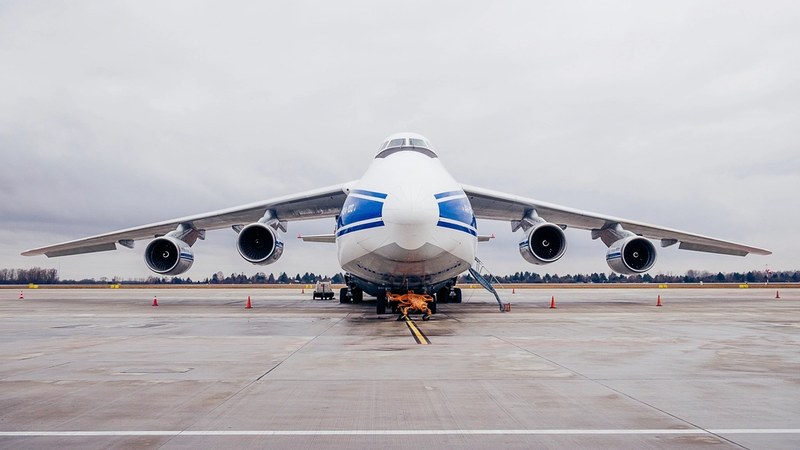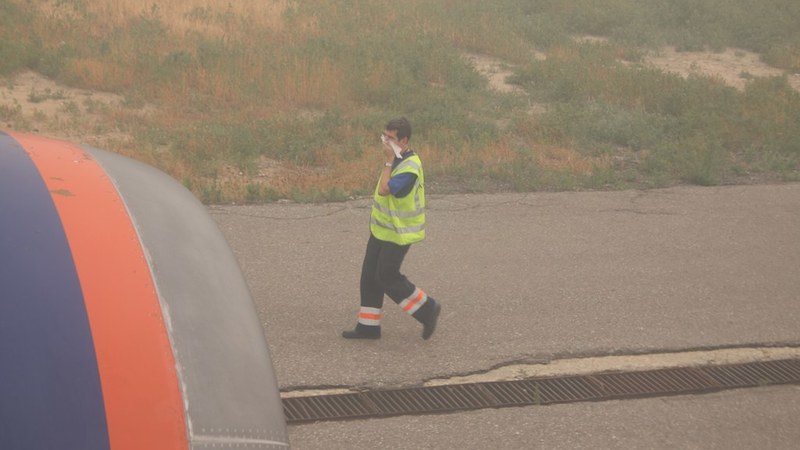
Smoke from hundreds of Canadian wildfires disrupted flight operations across the U.S. Midwest and Northeast on Wednesday, July 15, 2026, affecting major airports including Detroit Metropolitan Wayne County Airport, Chicago O’Hare International Airport, Buffalo Niagara International Airport, and Toronto Pearson International Airport. An estimated 100 million Americans were exposed to air quality hazardous enough to delay or ground flights.
Flight Delays and Airport Disruptions Due to Smoke Particulates
The Federal Aviation Administration (FAA) confirmed that fine particulate matter from wildfire smoke, known as PM2.5, interfered with aircraft instrument landing systems. These solid particles, measuring 2.5 micrometers or less, reduce visibility and degrade navigation accuracy, forcing air traffic controllers to
increase spacing between arriving and departing planes. Kevin Morris of the FAA explained that this effect is more severe than rain or fog, which consist of water droplets that dissipate faster and do not affect navigation systems as persistently.
As a result, airports including Detroit Metropolitan, Chicago O’Hare, Buffalo Niagara, and Toronto Pearson faced significant flight delays and cancellations. These delays caused downstream impacts on connecting flights even at airports without visible smoke, such as Philadelphia. Richard Adams, senior manager of forecast operations at The Weather Company, stated, “Thick smoke reduces visibility at airports, forcing air traffic control to space
planes further apart and slowing down the rate of takeoffs and landings.” Flights serving regional Great Lakes and Northeast airports also experienced disruptions.
Toronto and Surrounding Areas Cancel FIFA World Cup Events
The City of Toronto reported the worst air quality worldwide as of 8 a.m. ET on July 15, according to IQAir. Environment Canada issued an orange (severe) air quality alert statewide, citing health risks from wildfire smoke originating in northwestern Ontario.
To protect public health, Toronto canceled several outdoor FIFA World Cup semi-final events including the Fan Festival at Fort York and The Bentway, and the 3 p.m. ET World Cup broadcast at Nathan Phillips Square. Outdoor
wading pools and morning swimming lessons were closed, and CampTO activities were moved indoors. Premium ticketholders at the Fan Festival were notified about refunds.
The City of Vaughan also canceled its Canada Celebrates FIFA event at Assembly Park, while the University of Toronto called off its FIFA watch party. Niagara Falls suspended its nightly fireworks display until the air quality improves. Event cancellations were made to prevent sustained smoke exposure for attendees and emergency personnel, according to the City of Toronto.
Air Quality Alerts and Regional Health Impacts
Michigan issued a statewide air quality alert for July 15, forecasting “Unhealthy for Sensitive Groups” conditions statewide and “Unhealthy”
levels in the northern Lower Peninsula and Upper Peninsula. Minnesota and Wisconsin also announced air quality alerts. New York State’s Department of Environmental Conservation released a statewide Air Quality Health Advisory for the day, particularly affecting western New York. The New York City Office of Emergency Management monitored smoke plumes, expecting temporary spikes in PM2.5 to remain below health advisory triggers but warned conditions could change.
Temperatures reached between 33°C and 36°C in southern Ontario with humidex values near 42°C, compounding health risks. The heat dome effect over the Upper Midwest directed smoke southeast along the Great Lakes and Eastern
Seaboard, causing the plume to reach the I-95 corridor from New York City to Boston by mid-afternoon on July 15, after impacting cities including Green Bay, Milwaukee, Grand Rapids, Detroit, and Buffalo earlier in the day.
Wildfire Scale, Health Risks, and Protective Measures
On July 9, the Canadian Interagency Forest Fire Centre reported 836 active wildfires, with 194 completely out of control. The 2026 wildfire season had seen 3,137 fires and approximately 1.46 million hectares burned by July 13, representing 134 percent of the previous ten-year average.
Wildfire smoke PM2.5 is more toxic than traffic or industrial pollution, leading to higher respiratory hospitalization rates. Dr. Rebecca Saari,
Canada Research Chair at the University of Waterloo, estimated annual wildfire smoke health damages in Canada range from CAD 500 million to over CAD 6 billion. The exposure disproportionately affects low-income households, elderly people, and communities of color due to limited access to air conditioning, respirators, and the ability to stay home.
Dr. Eric Kennedy, associate professor at York University, urged the public to wear properly fitted N95 or KN95 respirators outdoors, stating that cloth or surgical masks do not filter PM2.5 effectively. Environment Canada advised residents to stay indoors, keep windows and doors closed, and wear respirators if outdoor
exposure is necessary.