Passenger train services on the cross-border Wunderline railway between Groningen, Netherlands, and Leer, Germany, resumed on October 5, 2026, ending a suspension that lasted almost 10 years. The halt in operations began after the Friesen Bridge over the River Ems was irreparably damaged by a ship collision in December 2015.
During the interruption, passengers had to rely on replacement bus services between Weener and Leer and express buses connecting Groningen and Leer. The primary cause for the extended suspension was the impossibility of repairing the damaged bridge.
Bridge Replacement and Investment
Deutsche Bahn undertook a project costing approximately €200 million to replace the damaged
Friesen Bridge and upgrade the associated infrastructure. The old bridge was dismantled in 2021, and construction milestones included placement of the first section of the new bridge in August 2024.
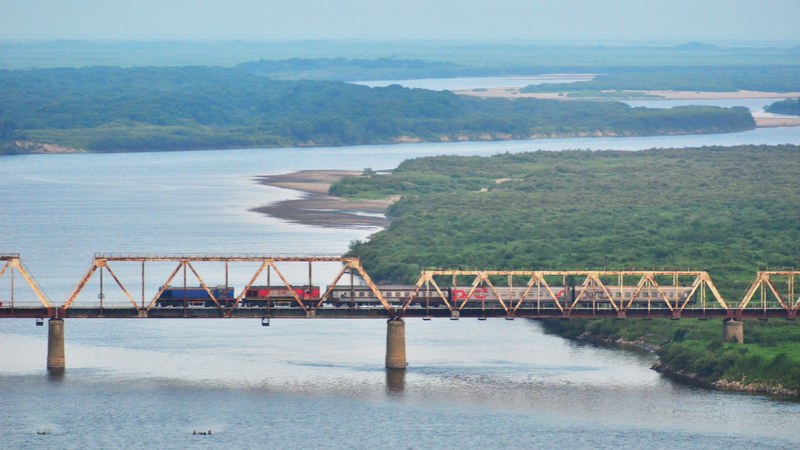
The newly constructed Friesen Bridge measures 335 meters in length and features a 145-meter swinging section weighted at 1,800 tonnes. Designed by engineering firm Schlaich Bergermann Partner, it is Europe’s largest swing and lift rail bridge. Besides carrying a single railway track, it includes a pedestrian footpath and a cycle lane.
The new bridge doubles the passage width for maritime traffic compared to its predecessor, improving navigation by guiding vessels
safely through the opening. Earlier navigation was more difficult as ships had to move against the current.
Corridor Upgrades by Dutch and German Infrastructure Managers
Alongside bridge replacement, the railway corridor spanning 173 kilometers has undergone comprehensive upgrades. Dutch infrastructure manager ProRail and German counterpart DB InfraGO reinforced tracks, improved signalling systems, and enhanced level crossings.
Trackbeds were strengthened to support higher operational speeds and greater reliability. The Province of Groningen completed its portion of work by August 2025. Following this, the Dutch province publicly criticized the German Land of Niedersachsen in autumn 2025 for a perceived lack of urgency in completing its infrastructure obligations.
Passenger Services Resumption and Operational Details
Train operator Arriva
currently runs weekday passenger services on the Wunderline with hourly frequency requiring a transfer at Winschoten in the Netherlands. Through trains operating directly between Groningen and Leer are scheduled in the early morning, late evening, and at weekends.
Operational constraints persist due to the swinging of the bridge to allow maritime traffic, which limits the time windows when trains can pass. Additionally, a speed restriction near Hurdegaryp impacts schedule reliability, making direct connections vulnerable to delays.
Plans exist to offer a direct service between Groningen and Bremen via Leer, bypassing the need for train changes. This service would reduce travel
time by approximately 15 minutes, targeting a journey duration of 2 hours and 11 minutes. However, funding for the required double-tracking in Germany remains uncertain.
Regional Cooperation and Future Prospects
The Province of Groningen, Niedersachsen, and Bremen, alongside ProRail, Deutsche Bahn, and other stakeholders, are pursuing long-term enhancements to strengthen the Wunderline’s international rail link. Local authorities expect improvements to bolster economic cooperation, increase sustainable transport appeal, and enhance cross-border connectivity.
Despite the reopening, the bridge remains accessible only intermittently to rail traffic due to maritime passage requirements. This operational limitation continues to affect direct service reliability in the cross-border region.