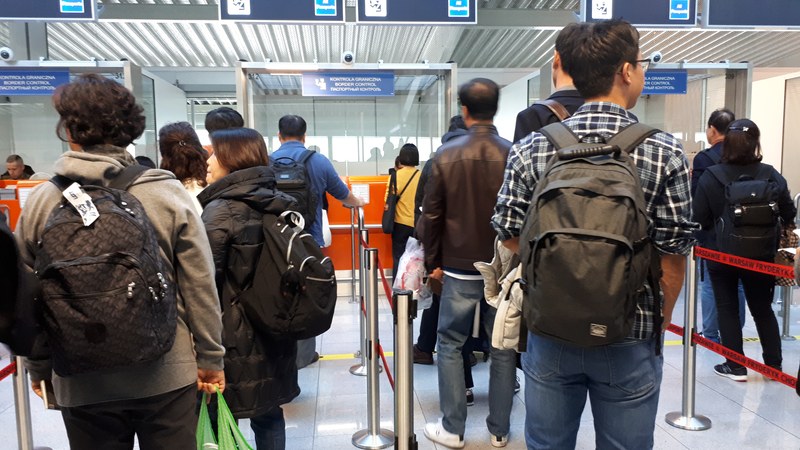
The United States government will limit international student and journalist visas to a maximum duration of four years effective September 15, 2026. The Department of Homeland Security (DHS) and Immigration and Customs Enforcement (ICE) announced the policy adjustment which ends the prior ‘duration of status’ system allowing visa validity for the length of academic enrollment.
Federal Lawsuit Challenges Visa Duration Cap
A coalition including the Association of Independent Colleges and Universities in Massachusetts (AICUM) and the Presidents’ Alliance on Higher Education and Immigration filed a federal lawsuit in Boston seeking to block the new visa rules. The suit names DHS, ICE, Homeland Security Secretary Markwayne Mullin,
and acting ICE director David Venturella as defendants. Plaintiffs argue the policy’s fixed four-year visa term will reduce international student enrollment, research talent, and economic contributions, asserting the agency ignored over 22,000 public comments and failed to consider less restrictive alternatives.
Academic and Economic Concerns in Massachusetts
Boston University Provost Colin Duckett called the visa cap “highly detrimental” to university operations including cancer immunotherapy research labs, staffing, and the recruitment of its 12,000 international students enrolled for 2024-2025. The new rule also prohibits visa holders from pursuing dual degree programs and restricts changing courses or transferring schools without immigration approval.
According to data from NAFSA: Association
of International Educators, nearly 85,000 international students contribute approximately $3.6 billion to Massachusetts’ economy annually. Projections estimate a 10% reduction in international admissions and a 21% decline in doctoral applications after the rule takes effect, potentially causing a $284 million economic loss in the state.
Rob McCarron, president of AICUM, described the policy as a “tremendous risk for the state and its economy,” adding it injects “uncertainty into something that is so important to Massachusetts.”
Official Responses and Impact on Academic Programs
A Department of Homeland Security spokesperson dismissed the lawsuit as “performative outrage” and defended the visa caps, stating, “Where was the outrage when foreign nationals
were abusing the system, violating the terms of their student visas, and making a mockery of our immigration laws?”
Miriam Feldblum, president and CEO of the Presidents’ Alliance on Higher Education and Immigration, criticized the policy’s reliance on immigration officers for decisions normally made by academic institutions. She said, “If you don’t have a predictable pathway with the ability to have your academic program guide you, and not be reliant on an uncertain immigration officer determination, then you’re less likely to come here.”
Restrictions on Student Mobility and Dual Degrees
The new regulation limits student visa holders’ ability to change their courses of study or transfer to
different schools without explicit immigration officer approval. It also prohibits enrollment in dual degree programs, such as combined MBA and medical degrees. These constraints are expected to reduce academic flexibility and deter international student enrollment.