On August 2, 2026, U.S. airports experienced 5,418 flight delays and 576 cancellations nationwide, disruptions primarily caused by severe thunderstorms and a WestJet cabin crew strike affecting Canada-U.S. transborder routes.
Flight Disruptions Concentrated at Major U.S. Airports
Florida airports recorded significant delays, with Orlando reporting 446 delays, Fort Lauderdale 250, and Tampa 224 on August 2. In the Northeast, LaGuardia Airport registered 122 cancellations, the highest single-airport cancellation count, while John F. Kennedy International Airport logged 101 cancellations. Reagan National Airport in Washington D.C. experienced 88 cancellations linked to local storm fronts. Hartsfield-Jackson Atlanta International Airport also faced severe congestion contributing to widespread delays.
FAA Response and Operational Impact
The Federal Aviation
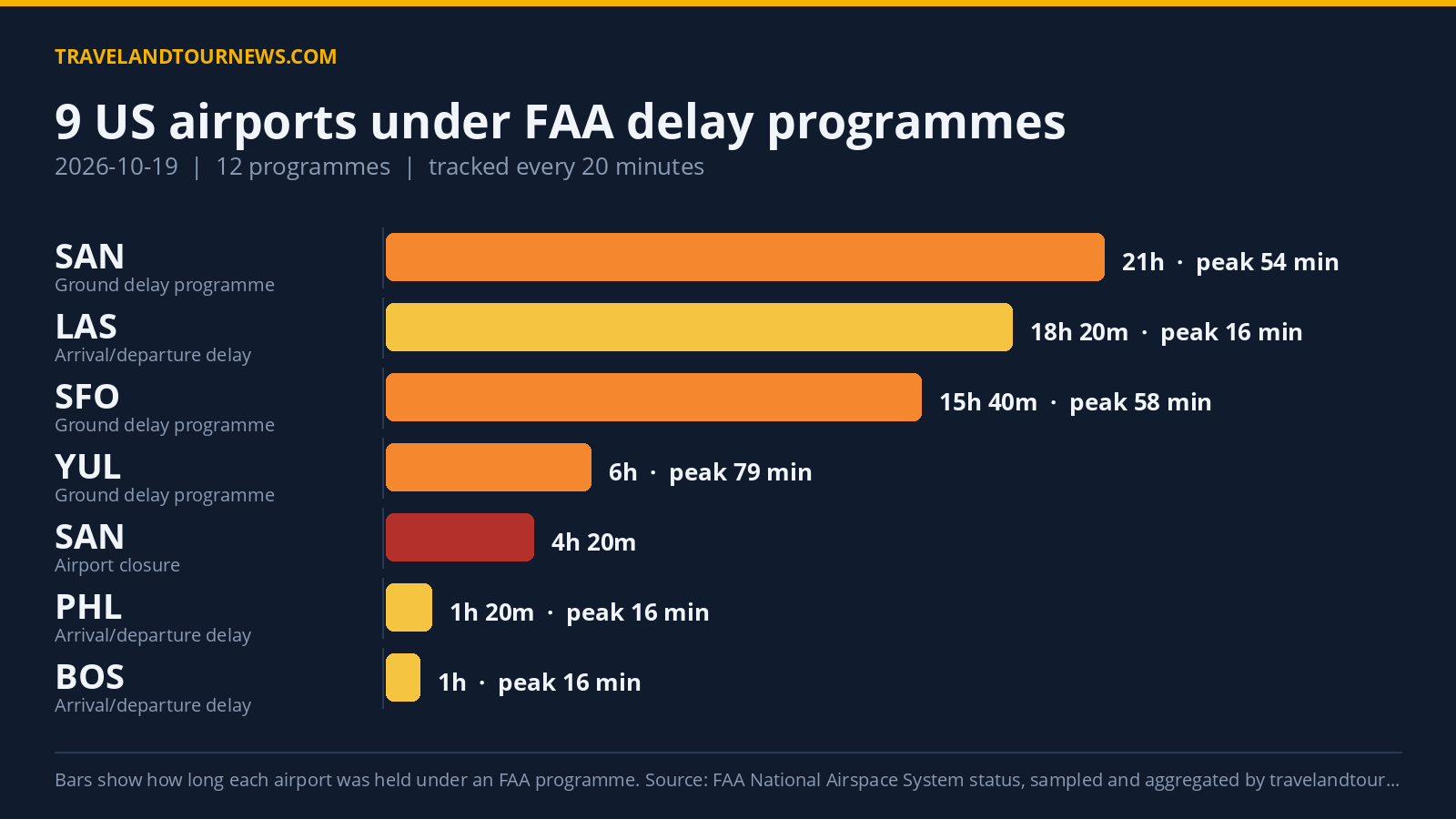
Administration imposed Ground Delay Programs to manage the arrival and departure rates at primary hubs disrupted by severe weather. The WestJet strike caused 495 cancellations on transborder flights between Canada and the United States, contributing significantly to the overall cancellation tally. These operational measures and external factors constrained flight schedules and led to cascading delays across the country.
Traveler Effects and Systemic Scheduling Challenges
The combined effect of intense thunderstorms and the labor strike strained airline and airport operations during a high-demand travel period. Capacity reductions at key hubs such as LaGuardia and Atlanta exacerbated nationwide delays. The limited spare capacity in summer schedules complicated recovery
efforts, affecting thousands of travelers encountering extended delays or canceled flights.
Operational Considerations for Future Disruptions
To address such events, airlines must maintain higher reserve crew availability and optimize aircraft rotations. Airport operators need adequate terminal staffing for gates and baggage handling during peak periods to manage passenger flow and recovery. Coordination between airlines, airports, and the FAA remains critical during combined weather and labor disruptions to minimize system-wide operational impacts.