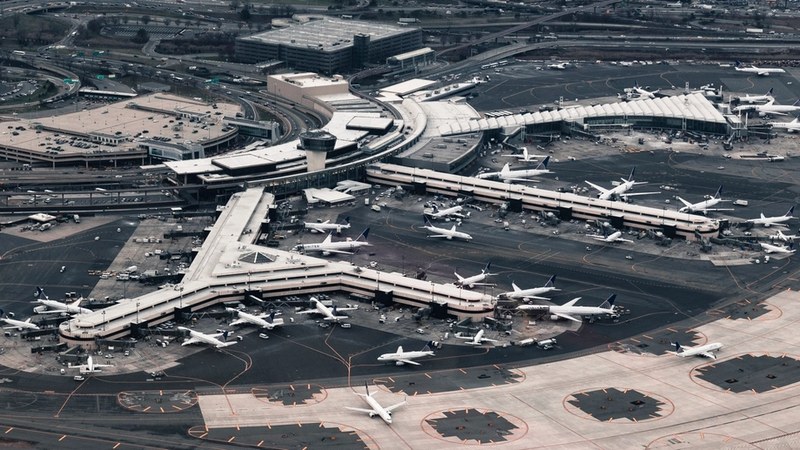
On July 18, 2026, the United States experienced widespread flight disruptions with 4,896 flights delayed and 126 cancelled nationwide. Major airports in California, New York, Florida, Texas, and Georgia faced significant operational impacts. Key hubs affected included Chicago O’Hare, Dallas-Fort Worth, Hartsfield-Jackson Atlanta, Orlando, San Francisco, San Diego, New York JFK, Newark Liberty, and Cleveland.
Airport-Specific Disruptions Across the US
Chicago O’Hare International Airport recorded the highest level of disruption, with 801 flights delayed and 17 cancelled, making it the most affected airport nationally. Hartsfield-Jackson Atlanta International Airport reported 420 delays and 16 cancellations, while Orlando International Airport recorded 216 delays and 5 cancellations. San
Francisco International Airport experienced 213 delays and 7 cancellations, and San Diego had 182 delays coupled with 12 cancellations. The New York metropolitan area saw multiple airports impacted: JFK reported 115 delays and 4 cancellations, and Newark Liberty International Airport logged 87 delays and 4 cancellations.
Airline Delay and Cancellation Totals
Among airlines, Southwest Airlines encountered the highest number of flight delays, with 866 delays and 9 cancellations throughout its network. American Airlines followed closely behind, documenting 850 delayed flights and 11 cancellations. United Airlines reported 434 delays and 4 cancellations, many passing through Chicago O’Hare and Newark Liberty. SkyWest Airlines matched United’s delay total
at 434 but led all carriers in cancellations with 21 flights cancelled.
Wildfire Smoke and FAA Operational Challenges
Federal Aviation Administration officials attribute much of the disruption to wildfire smoke drifting south from numerous active fires in Canada. This smoke has significantly reduced visibility, particularly over the New York metropolitan area including JFK, LaGuardia, and Newark airports. The FAA reported that decreased visibility requires increased spacing between arriving and departing aircraft, slowing flight flow and contributing to delays. Additionally, hazardous air quality advisories have been issued across parts of the Midwest, Mid-Atlantic, and Northeast due to the smoke impact.
The degraded air quality extends across multiple
states including New York, New Jersey, Illinois, and Michigan, where residents have been urged to limit outdoor activities. The wildfire smoke also complicates airport operations and flight safety, especially at key connecting hubs where schedule disruptions reverberate through the national aviation network.
Impact on Travelers and Ongoing Flight Changes
Passengers flying through major airports affected by the operational delays and cancellations on July 18, 2026, face ongoing uncertainty. With significant disruptions reported at hubs such as Chicago O’Hare, Dallas-Fort Worth, Atlanta, Orlando, San Francisco, San Diego, and New York area airports, travelers have experienced delayed departures and cancellations. These issues are aggravated by staffing shortages at the
FAA, intensifying the complexity of managing the traffic flow amid poor visibility conditions.
Travelers are advised to monitor their specific flight status closely as schedules are subject to continued changes throughout the day, with ripple effects expected to impact connecting flights nationwide.
Network Effects and Public Interest in Air Quality
The delays at major connecting hubs on July 18, 2026, have the potential to disrupt both domestic and international flight itineraries. Chicago O’Hare’s status as the busiest affected airport means delays there propagate through numerous airlines’ networks. The New York metropolitan airports also serve as vital transit points, further extending the reach of operational challenges.
Public interest has
surged for real-time air quality data and travel disruption updates. Searches for terms such as “air quality map USA” and “US airport travel disruptions today” increased widely as concerns over wildfire smoke and its effect on aviation and public health grew. The smoke’s prevalence over vast regions of the US Midwest, Mid-Atlantic, and Northeast continues to complicate aviation operations as well as daily activities for millions.