United Airlines cancelled more than 2,000 flights across the United States on July 20, 2026, due to a severe nationwide technology outage. Ground stops were put in place at multiple U.S. airports as the airline faced significant operational setbacks.
Flight Delays and Cancellations Ramp Up Again on August 2
On August 2, 2026, U.S. airports recorded over 5,418 flight delays and 576 cancellations. Disruptions were driven by severe thunderstorms and a strike by WestJet cabin crew, which alone caused 495 cancellations on Canada-U.S. transborder routes.
Florida and Northeastern U.S. Airports Most Affected
Florida airports registered a high volume of delays on August 2 with Orlando reporting 446 delays, Fort Lauderdale 250, and Tampa 224. Northeast airports saw
significant cancellations, including LaGuardia with 122 and John F. Kennedy International Airport with 101 cancellations. Reagan National Airport recorded 88 cancellations linked to local storm fronts, while Hartsfield-Jackson Atlanta International Airport also experienced heavy congestion.
FAA Ground Delay Programs and Capacity Limitations
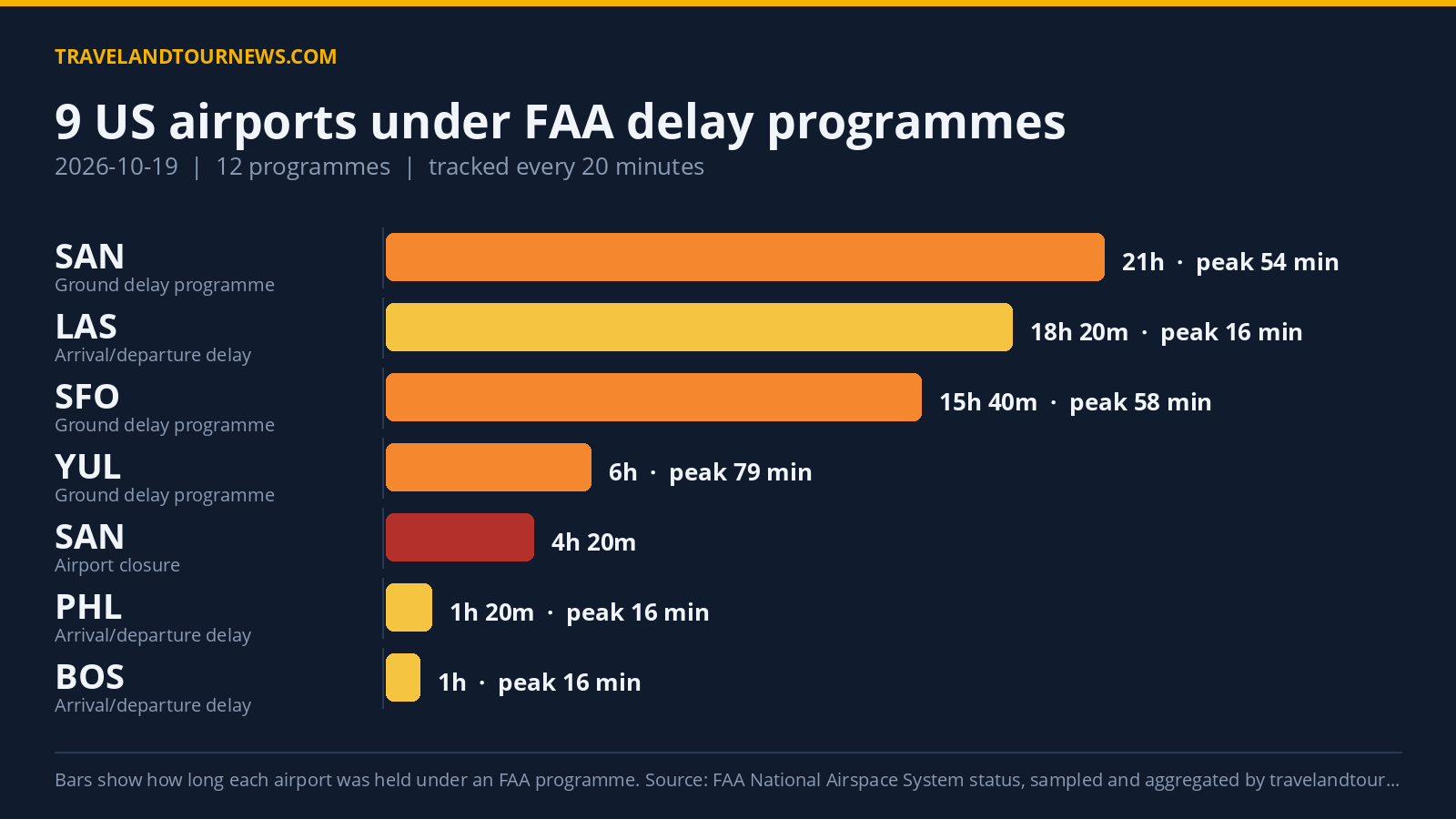
The Federal Aviation Administration (FAA) implemented Ground Delay Programs at major U.S. hubs in response to the severe thunderstorms. Limited schedule capacity during the summer intensified the cascading effects of reduced airport and hub operations, exacerbating delays and cancellations nationwide.
Cascading Effects Impact Travelers and Airport Operations
Thousands of travelers faced disrupted travel plans across the country due to the combined impact of the technology outage, weather, and labor strike. Airlines and
airport operators had to manage terminal gate staffing and baggage drop zones carefully to aid passenger recovery. The limited spare capacity at major hubs like LaGuardia and Atlanta contributed to widespread operational delays affecting secondary airports as well.