On Friday, November 14, 2026, the Federal Aviation Administration (FAA) issued a nationwide ground stop in the United States at 15:54 EST (20:54 GMT), halting all scheduled departures amid a critical failure in the air traffic control system. Over 3,500 aircraft were airborne at the time, and the restriction remained in place for approximately four and a half hours, grounding all outbound flights across the country.
FlightAware data reported that on Saturday, November 14, airlines cancelled more than 5,900 flights and delayed over 7,000 others. The following day, November 15, over 8,800 flights were delayed while 2,400 were cancelled. Additional
reports indicated more than 8,500 delays and 8,000 cancellations in the immediate aftermath of the ground stop.
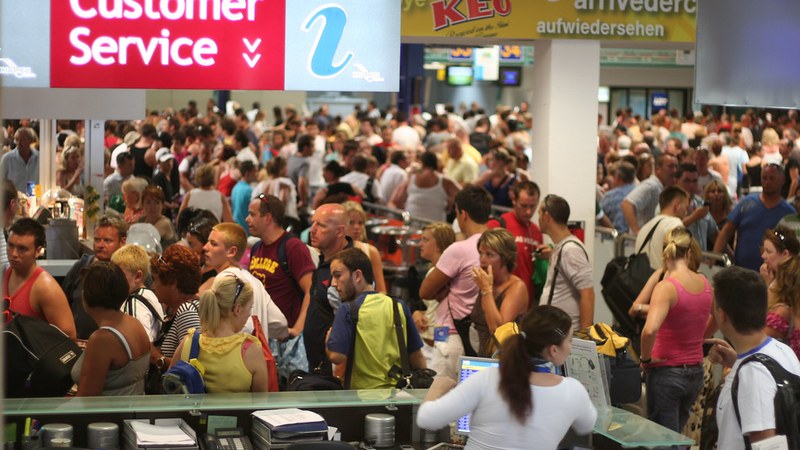
The ground stop caused widespread passenger disruption. Many travelers were confined inside aircraft on airport tarmacs, unable to depart or re-enter terminals. Others remained stranded in airport terminals, some sleeping on floors and struggling to contact airlines amid the chaos. The disruption extended internationally, resulting in flight cancellations in the United Kingdom and Europe due to cascading schedule effects.
Faulty Router in El Dorado Causes System Failure
The FAA identified a failure in a key communications system linking air traffic controllers and pilots as the root cause. Secretary of Transportation Sean
Duffy explained that a computer router, part of an upgrade replacing copper wire with fiber optics and installed in El Dorado, Arkansas, began transmitting faulty signals that overwhelmed the air traffic network. This technical malfunction prompted the unprecedented ground stop.
Recovery to Normal Operations Delayed
Sean Duffy warned that full restoration of normal air traffic operations could extend into Monday, November 16, due to the displacement of aircraft and crews caused by the ground stop. “We have airplanes and crews that are out of position, so it takes a little bit of time,” he said. Duffy stressed the need for broad modernization of the air
traffic control system, which relies on technology dating back five decades, describing it as a neglected network requiring significant investment.
Calls for Modernization and Funding
President Donald Trump urged Congress on November 15 to approve funding for a complete overhaul of the US air traffic control system. He described the current setup as “RIDICULOUS” due to its 50-year-old infrastructure and stated that the process should be completed all at once rather than incrementally. Trump affirmed efforts had begun but emphasized the need for accelerated action, asserting the system could become the best worldwide with adequate investment.
Expert Analysis of Air Traffic Control System
Aviation analysts have portrayed the US air traffic control
system as obsolete. Miles O’Brien characterized it as “a house that’s about to be condemned,” citing systemic decay. Continued failures like the November 14 ground stop underscore vulnerabilities inherent to outdated technology and reinforce calls for comprehensive modernization to prevent future nationwide disruptions.