A powerful coastal storm struck the US East Coast on November 26, 2026, producing wind gusts up to 112 km/h (70 mph) and heavy rainfall that affected states from Virginia to coastal New England. The storm disrupted Thanksgiving holiday travel and caused widespread infrastructure damage across multiple states.
Flight Cancellations and Delays Impact Major East Coast Airports
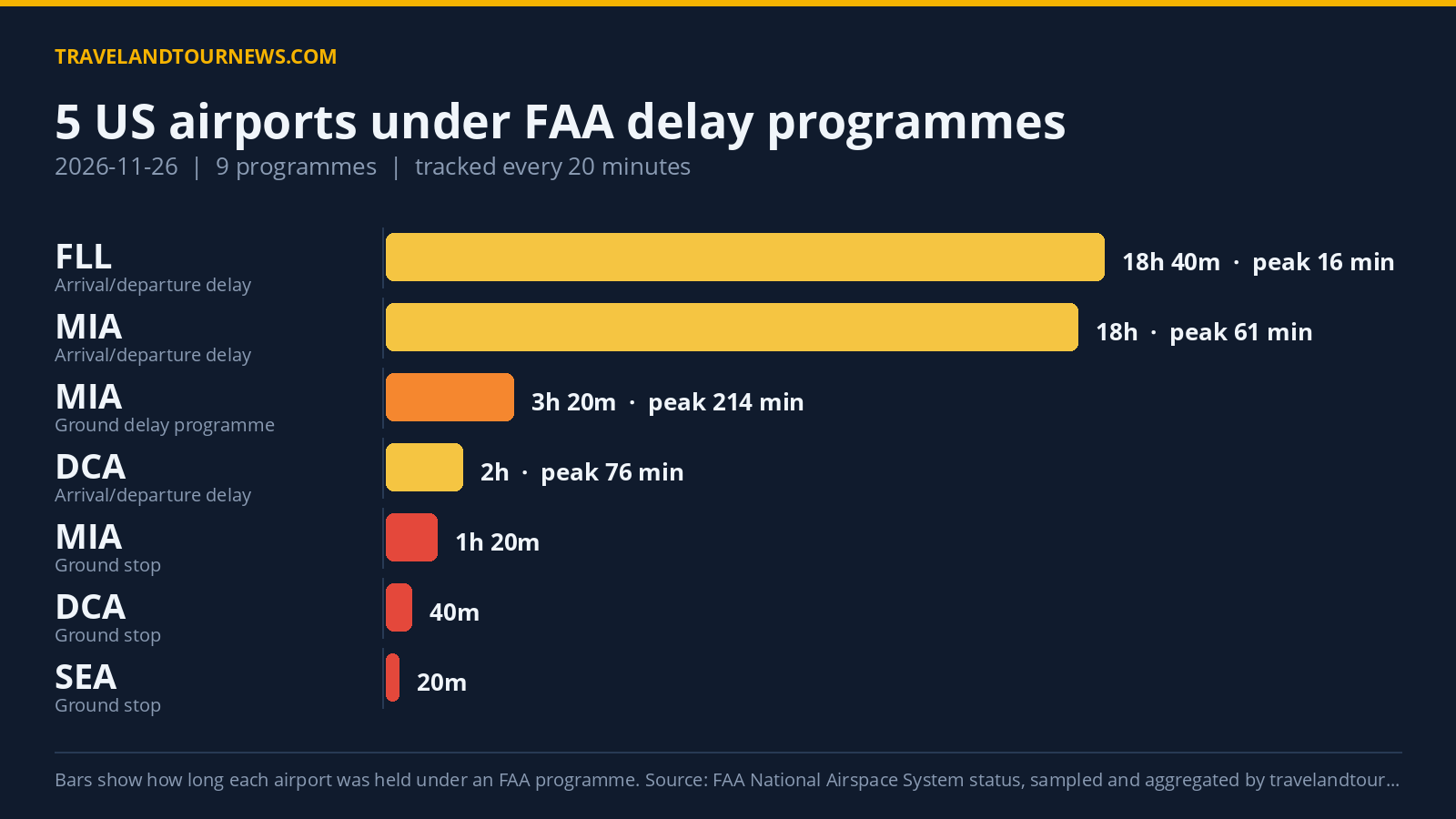
FlightAware reported 417 flight cancellations and approximately 1,800 delays for US flights on November 26. Major airports in the Washington and New York City areas experienced significant operational disruptions due to the storm’s impacts, limiting passenger movements during one of the busiest travel days of the year.
Widespread Power Outages Affect Over 836,000 Customers
According to poweroutage.us, more than
836,000 utility customers were without electricity as of 4:06 pm Eastern Time. Virginia saw the highest outages with over 174,000 customers affected, followed by Maryland with more than 172,000 and Pennsylvania nearly 170,000. Other states reporting extensive outages included Missouri (over 117,000), New Jersey (more than 91,000), Delaware (over 20,000), and North Carolina (close to 16,000).
Strong Winds, Rain, and Coastal Flooding Drive Disruptions
The US National Weather Service issued warnings of damaging high winds and heavy rainfall accompanying the storm, with gusts between 80 and 112 km/h recorded across Virginia, Maryland, Delaware, New Jersey, New York, and coastal New England. LaGuardia Airport reported gusts reaching 90 km/h
on the afternoon of November 26, according to New York City Emergency Management. Saturated grounds from heavy rain combined with strong winds increased risks from falling tree limbs and power lines, contributing to outages. The storm’s strong onshore winds and king tides also caused flooding in low-lying coastal communities along the East Coast.
The Macy’s Thanksgiving Day Parade in New York City was postponed to November 28 for the first time in its 100-year history due to the severe weather conditions. The National Weather Service indicated that conditions would gradually improve overnight as the storm system moved into New England,
though blustery winds with gusts of 40 to 56 km/h were expected to persist on November 27.
New York City Mayor Zohran Mamdani described the event as a “heavy storm” with the danger of winds bringing down “tree limbs and power lines.” The National Weather Service said, “A powerful coastal storm will continue to bring severe impacts to the region through today into this evening due to damaging high winds accompanied by heavy rainfall.”
Thanksgiving is one of the busiest US travel periods, with more than 80 million people expected to travel over the holiday weekend in 2026. Transportation Secretary
Sean Duffy referred to the Thanksgiving travel period as “the Super Bowl of US air travel.” The storm disrupted these plans significantly, especially for airports serving the Washington and New York metropolitan areas.