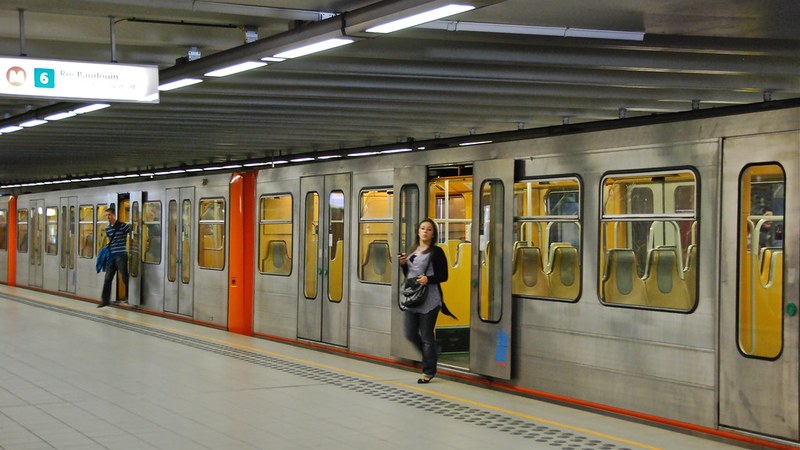
Rail unions in South Korea have launched coordinated work-to-rule actions, starting November 20, 2026, with Seoul Metro unions threatening an indefinite strike from November 25 if management does not fulfill hiring and wage demands. The Seoul Metro Labor Union, the largest of three unions representing the operator, leads the campaign.
Union Demands Focus on Staffing, Wages, and Safety Procedures
The unions demand Seoul Metro hire 1,313 additional workers this year to address understaffing caused by 311 posts below authorized headcount, 443 long-term vacancies related to parental leave and military service, and 714 scheduled retirements, offset by 155 recent hires. They request a 3.5% wage increase in line with government
guidelines, reduced from an initial demand of 5.2%. The labor action includes calls for mandatory two-person teams for hazardous tasks and state funding to cover public service costs.
Union Composition and Strike Preparations
The work-to-rule is carried out by the Seoul Metro Labor Union, affiliated with the Korean Confederation of Trade Unions, and the Seoul Metro Integrated Union, part of the Federation of Korean Trade Unions. Both unions passed strike votes with 86.3%, 80.84%, and 94.9% support respectively across the three metro unions. The Correct Labor Union has approved industrial action but is not participating in the work-to-rule and has not announced a strike date.
Negotiations between management and unions broke down on September 29, 2026, and mediation ended on November 2.
Seoul Metro Operations and Financial Context
Seoul Metro operates Lines 1 through 8 and part of Line 9, running 3,183 scheduled trains daily to carry about 4.65 million passengers each day from January to September 2026. In 2025, Seoul Metro reported a net loss of 826.8 billion won on revenues of 2.37 trillion won against costs of 3.20 trillion won. Public service costs totaled 816.7 billion won, with fare revenue covering only 57% of the cost per passenger on Lines 1–8, where the average fare is 1,036 won and
operating cost per passenger is 1,817 won. Free rides accounted for 448.8 billion won of losses, bus transfer discounts for 290.7 billion won, and commuter passes for 77.2 billion won.
KORAIL Responds with Safety Campaign, Emergency Measures
The Korean Railway Workers’ Union initiated a work-to-rule campaign on November 23, 2026, at KORAIL, which runs South Korea’s national rail network. KORAIL activated a safe-operation campaign for all job categories the same day, ensuring strict adherence to safety rules that may slow train operations. An emergency transportation task force was established on November 22 to minimize delays and passenger inconvenience. KORAIL waived fees for ticket refunds and changes during
the industrial action and advises travelers to check service statuses and consider alternative transport options. Train delay certificates are available on KORAIL platforms.
Union Statements on Staffing Shortages and Safety
Kim Jeong-seop, chair of the Seoul Metro Labor Union, emphasized that replacement hiring for parental leave requires prior approval from the Seoul Metropolitan Government and called on the city to engage in talks. A union official stated, “If trains are delayed and work stops just because we follow the rules, that’s proof of a staffing shortage.” The railway union added that workers will follow required safety procedures previously skipped to speed up work, potentially causing train delays.
Historical Strike and Wage Negotiation Background
Seoul Metro has experienced repeated labor disputes in recent years. Strikes in 2022 and 2023 ended with last-minute agreements avoiding prolonged service interruption. A two-day warning strike in November 2023 and a brief strike threat in 2024 were resolved with pay rises capped between 2.5% and 3.0%, alongside new hires. In December 2025, Seoul Metro and its three unions reached provisional wage agreements capping pay increases at 3.0% of total labor costs and committing to roughly 820 new hires to address staffing shortages.