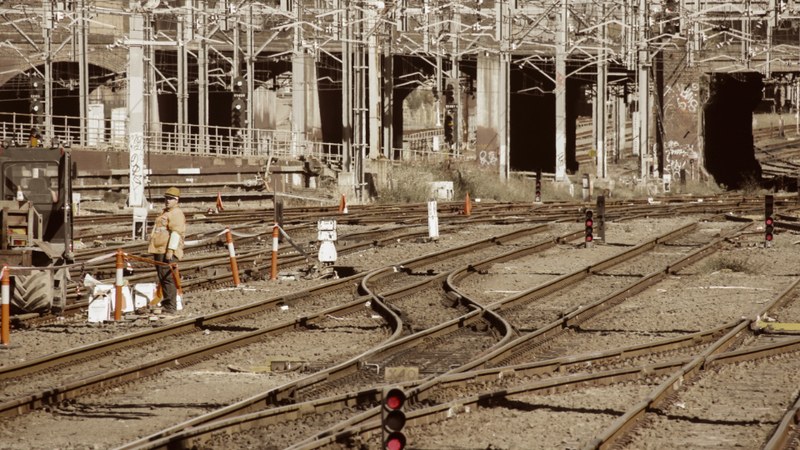
Russian drone attacks on Ukrainian passenger trains began increasing at the end of 2025 and have escalated further in 2026, severely disrupting railway operations across Ukraine.
More than 521 Ukrainian locomotives have been struck since the start of Russia’s full-scale invasion in 2022, with nearly 60% of these hits occurring in 2026 alone. Attacks on railway facilities have also risen from 1,206 in 2025 to 1,700 so far in 2026. In September 2026, Ukrzaliznytsia reported 5,831 train evacuations, averaging 205 trains stopped daily due to the threat of Russian drone strikes.
Oleksandr Pertsovskyi, CEO of Ukrzaliznytsia, described the escalation as
a “real war with railways,” noting that the Russian shahed drones use artificial intelligence and image recognition technology to strike moving targets with precision. Ukrzaliznytsia’s focus has shifted from punctuality to prioritizing the safety of passengers and crew amid these attacks.
Passenger Experiences During Drone Attacks
Passengers have faced frequent and often prolonged evacuations from trains during drone alerts. Yuliia Ponomarenko, a marketing specialist from Kharkiv, experienced a six-hour delay near the Ukraine-Poland border after a Russian drone struck a locomotive. She said, “We were really lucky that we were delayed a little and it wasn’t our train.”
Seventeen-year-old Anastasiia Ryvbalchenko was evacuated at 4
a.m. on 16 September 2026 during a journey from Odesa to Kirovohrad. She described hearing a loud explosion near the train and passengers fleeing into nearby woods. Anastasiia stated, “On my way to Odesa, there had been a lot of evacuations and now on my way back it was happening again. I was already thinking that if there was another evacuation, I just couldn’t take it any more.”
Real-Time Monitoring and Safety Protocols
Ukrzaliznytsia operates an underground command center in Kyiv known as the Iron Command Centre, where staff monitor drone threats across Ukraine’s rail network in real time. Each detected drone is assigned a
100-kilometer radius threat zone; passenger trains within this zone are evacuated and prevented from reboarding until the drone threat subsides and moves away.
CEO Oleksandr Pertsovskyi emphasized, “Our mission is not to let our train or our crew members be in that immediate attack area.” This system helped coordinate the evacuation of thousands of trains despite ongoing drone activity.
Military Claims and Countermeasures
The Russian defence ministry denies targeting civilian infrastructure, asserting that attacks focus on military transport networks. However, the rail disruptions have severely impacted civilian passenger services. Ukraine employs electronic countermeasures to disrupt Russian drone connectivity, though Pertsovskyi acknowledged the challenge, calling
it “a cat-and-mouse game” due to the drones’ AI-driven precision.
Pertsovskyi stated, “It’s a combination of the deadly force of their shahed drones and precision that they achieve with cameras and mesh networks so they can hit moving targets.” Eight Ukrzaliznytsia employees have died in 2026, six from a ballistic missile strike on a Kyiv locomotive depot.
Winter Preparations and Future Operations
With winter approaching, Ukrzaliznytsia is preparing for evacuations amid subzero temperatures that can reach -20°C, often accompanied by heavy snow. The company is coordinating with international donors to supply winter evacuation packs, mobile shelters, and bus services in frequently affected areas.
Despite the
intensified attacks, Pertsovskyi pledged continuity in railway service. “We might be a slightly different railway, a reinvented railway, but we’ll keep connecting the country, no matter what, be it winter, be it summer, no matter how hard the enemy hits us,” he said.