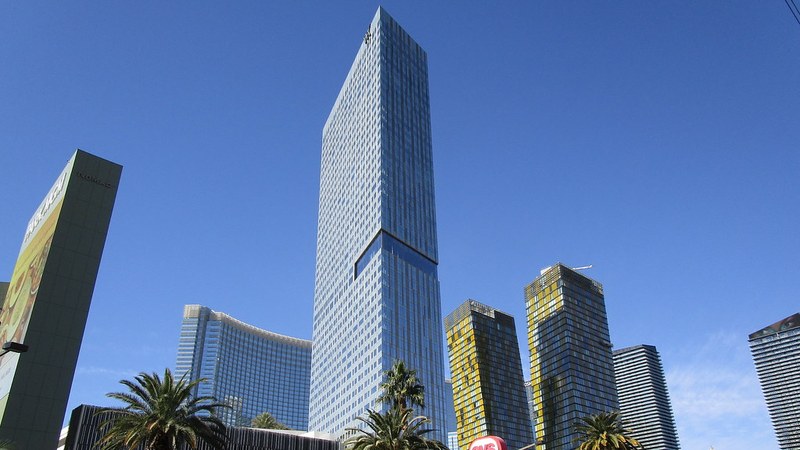
Las Vegas experienced a steep tourism decline last year, recording approximately 3.1 million fewer visitors, a 7.5% drop according to the Las Vegas Convention and Visitors Authority (LVCVA). This marks the largest decrease outside the pandemic period since the LVCVA began tracking data in 1970. Simultaneously, Nevada’s unemployment rate reached 5.1% in June, ranking among the highest in the United States.
Impact on Hospitality Workers and Tip Income
Hospitality workers on the Las Vegas Strip report serious financial strain tied to the tourism downturn. Bellman Joe Spica described how lower hotel occupancy has sharply cut tipping opportunities, his main source of income. “I used to be able
to take care of multiple dinners for me and my family with my tips from one day,” Spica said. “Now I’m lucky to get a dinner for my tip for one day, and it’s hard.”
Restaurant worker Aaron Mahan, a member of Culinary Workers Union Local 226 which represents 60,000 workers in Nevada, said rising costs and diminished tips forced him to budget more carefully. The union noted that although the “no tax on tips” policy introduced during the Trump administration offers a federal deduction of up to $25,000 on tips, its benefits are limited amid declining tip volumes and
delayed tax refunds.
Causes: Tariffs, Costs, and Geopolitical Factors
The tourism slump is linked to tariffs imposed during the Trump administration, including those affecting Canada, which led to a 17.4% drop in Canadian visitors in 2025—the steepest decline among North American markets. High operational costs, including gas prices affected by the Iran conflict, have also burdened hospitality workers and businesses. Some off-Strip restaurants have adjusted operating hours due to reduced demand.
White House spokesman Kush Desai attributed economic challenges partly to oil prices and the conflict involving Iran, asserting that inflation dropped to 3.5% in June from 4.2% the previous month and anticipated further decreases pending
a resolution with Iran.
Official Responses and Political Context
Nevada Democratic Senator Catherine Cortez-Masto highlighted the shift from a $51 billion tourism trade surplus in 2019 to a $70 billion deficit under the current administration. Governor Joe Lombardo acknowledged the tourism revenue decline but pointed to Nevada’s workforce growth of 1.9% from April 2025 to 2026—the highest among U.S. states—as a positive indicator.
Las Vegas Mayor Shelley Berkley credited the city’s expanding convention business and major sporting events, such as the Formula One Grand Prix, the Super Bowl, and NCAA Final Four, for supporting tourism despite federal policies. Democratic gubernatorial nominee Aaron Ford criticized the
current economy as harming working families and plans to focus on small business support and drug cost containment if elected.
Tourism Demographics and Promotional Efforts
Canadian visitor numbers to Las Vegas declined sharply by 17.4% in 2025 following trade tensions and tariffs. Mayor Berkley noted that some Las Vegas casinos and hotels are offering promotional deals to attract Canadian tourists back, reflecting the market’s importance to the local economy.
Limits of Recent Policy Relief
The Trump administration’s “no tax on tips” policy, providing federal income tax deductions up to $25,000 on tips, has not provided immediate financial relief for hospitality workers due to reduced tip income and the delayed nature
of tax refunds. Culinary Workers Union Local 226 observed that if tip income drops, any benefit from this policy is effectively nullified for many workers reliant on these earnings.