Hong Kong International Airport was certified on October 28, 2026, as one of the first two organisations under the International Air Transport Association’s (IATA) One ID digital identity programme. The certification covers airport contactless travel, biometric data handling, and privacy, consent and governance, establishing that the airport meets global standards for biometric processes.
Hong Kong Airport’s Flight Token Facial Recognition System Usage and Impact
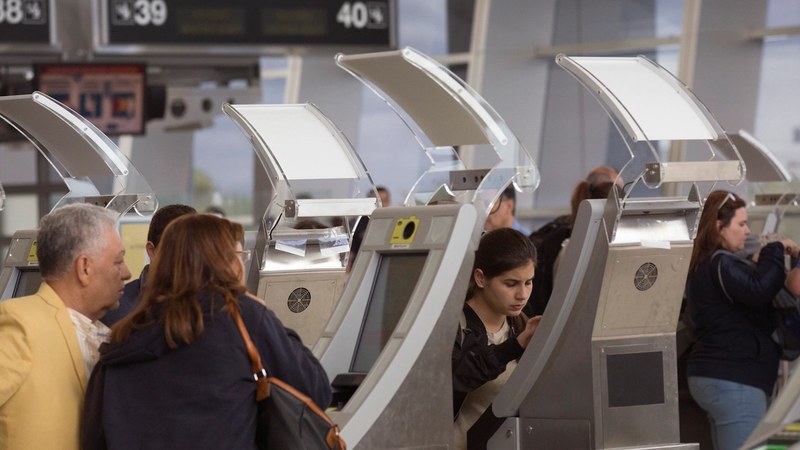
The Flight Token system at Hong Kong International Airport, launched in 2021, uses facial recognition technology to enable passengers to pass through airport checkpoints without physically presenting passports or boarding passes multiple times. More than 80% of departing passengers are eligible to use Flight Token, and since
its introduction, upwards of 93 million travellers have completed journeys using the system.
Flight Token employs decentralized digital identity technology and encrypted tokens, ensuring that original biometric images are not stored, reducing privacy risks. The Airport Authority Hong Kong, led by CEO Vivian Cheung Kar-fay, said the IATA certification confirms that HKIA’s facial recognition and biometric procedures comply with international standards and lays a foundation for expanding Flight Token to other airports and airlines.
Regulatory Challenges Slowing Global Biometric Travel Adoption
Nick Careen, IATA senior vice-president for operations, safety and security, said the biometric travel industry has experienced slow adoption due to government legislation and privacy regulations.
Specifically, varying country requirements for physical identity verification and passenger data sharing complicate cross-border implementation of biometric systems. Careen noted that until governments update laws to unlock these challenges, progress will remain slow.
Careen also remarked that geopolitical tensions, such as between China and the United States, are unlikely to halt the technology’s expansion if certain countries opt not to participate. However, he expects US involvement given American travelers’ demand for streamlined airport procedures.
Technical Privacy Safeguards Cited by Experts
Francis Fong Po-kiu, honorary president of the Hong Kong Information Technology Federation, acknowledged natural public caution regarding biometric data sharing at borders. Fong endorsed the security
approach used by IATA’s One ID framework, highlighting the use of decentralized identities and encrypted tokens that prevent airports from retaining original biometric images. This approach enhances privacy protection beyond typical online applications. However, he cautioned about potential risks from AI-assisted cyberattacks depending on implementation.
IATA’s Industry Benchmarks and Air New Zealand Certification
Air New Zealand is the other organisation certified under the One ID programme. Its certification covers digital admissibility verification, confirming whether passengers have valid documents for entry. The airline recently tested digital identity technology in collaboration with Hong Kong International Airport, trialing cross-border use of the system to reduce document presentation and queue times.
According
to IATA, the One ID framework offers passengers enhanced control over their biometric data, requiring consent for each journey and deleting data after defined periods, improving transparency and security relative to current passenger information sharing between governments and airlines.
Vivian Cheung Kar-fay said the certification “affirms our commitment to enhancing the passenger experience through innovation and demonstrates that HKIA’s digital identity and biometric processes meet IATA’s global standards.” Nick Careen described the certification as setting an industry benchmark for identity verification and data privacy.