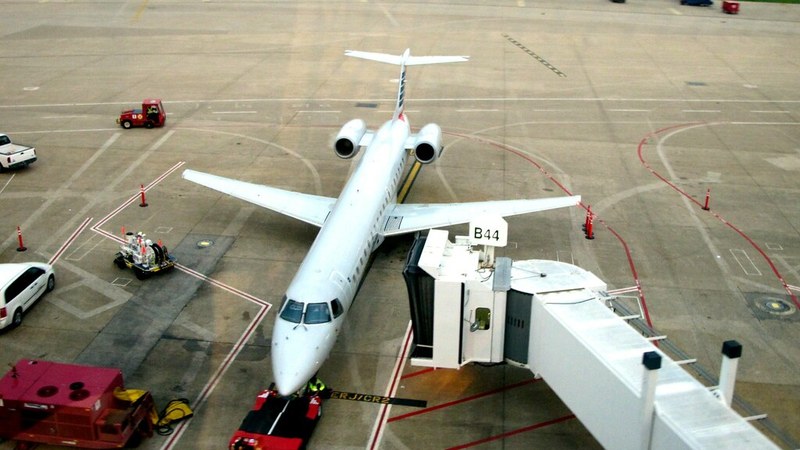
On November 13, 2026, the Federal Aviation Administration (FAA) implemented a nationwide ground stop affecting all U.S. airports due to a critical communication failure impacting all Air Route Traffic Control Centers.
This rare ground stop — only the second nationwide halt since the 9/11 attacks — lasted more than four hours, during which departing flights were grounded nationwide.
Cause Attributed to Telecommunications Outage
The FAA attributed the ground stop to a telecommunications outage affecting its 22 Air Route Traffic Control Centers, which manage flights flying above 18,000 feet.
Transportation Secretary Sean Duffy confirmed the issue as “due to a communication issue impacting all Air Route
Traffic Control Centers,” with FAA technicians actively investigating the cause.
Department of Homeland Security Secretary Markwayne Mullin said there was no evidence the outage was caused by a nefarious attack and described it as “just a telecommunications outage as of now.” He added, “This isn’t another 9/11. I cannot repeat that enough.” Mullin also stated that while a cyberattack was not ruled out initially, no indications of one were found.
More Than 2,000 Flights Canceled and Over 10,000 Delayed
As of 6:20 p.m. on November 13, 2026, FlightAware data showed that the ground stop led to the cancellation of more than 2,000 flights nationwide and delays for over 10,000
flights.
Earlier in the day, both Chicago O’Hare and Midway airports experienced separate ground stops due to equipment outages before the nationwide halt was declared.
Canadian air traffic control authority NAV Canada monitored the situation in coordination with the FAA and confirmed there was no impact to Canadian systems. NAV Canada assured continued safe movement of air traffic within Canada’s airspace, including the management of any diverted flights.
Officials and Industry Push for Investigation and Accountability
Senator Tammy Duckworth, as Aviation Subcommittee Ranking Member, called for a comprehensive investigation into the incident, emphasizing that “the safety of our skies is built on redundancies.” She stated she would demand
answers from the FAA regarding the ground stop.
Senate Commerce Committee Ranking Member Maria Cantwell said her team was in contact with FAA officials and would review technology issues involving primary and backup communication frequencies used by planes.
AirSpace Intel, developer of the SMART AI system recently rolled out at FAA facilities, issued a statement denying any connection between their system and the ground stop. They said, “The current ground stop is not based on or a result of the SMART system, any product of ASI or our integration with FAA and ATC.” Mullin mentioned the rollout was still under
review as part of the investigation.
Flights Resume with Ongoing Delays
Flights resumed on November 14, 2026, after the FAA lifted the ground stop, though delays and cancellations continued to affect airline schedules across major airports including Newark, JFK, LaGuardia, Toronto Pearson, and Montréal-Trudeau.
At the time of the ground stop, approximately 3,100 aircraft were airborne destined for U.S. airports. These flights continued safely, with pilots following established flight plans or diverting if necessary. ABC News contributor John Nance noted, “All pilots in that environment know what to do.” He described the situation as one relying on predictable coordination between pilots and air traffic control.