The Federal Aviation Administration (FAA) issued a nationwide ground stop for all American Airlines flights on Tuesday, July 28, 2026, starting around 6:29 p.m. Eastern Time (ET) due to a systemwide information technology outage affecting the airline’s connectivity and operations across the United States.
The FAA lifted the nationwide ground stop by approximately 8:10 p.m. ET, allowing most American Airlines flights to resume departures. However, at that time, more limited ground stops remained in place at Charlotte Douglas International Airport (CLT) affecting all American Airlines operations across departure facilities, and at Miami International Airport (MIA) impacting American mainline departures only.
Both localized ground stops were classified by the FAA’s Air Traffic Control System Command Center as “Other / Carrier Request.”
American Airlines acknowledged the IT disruption in official statements, confirming the issue briefly impacted connectivity for some systems on Tuesday evening. The airline said its teams worked quickly to restore system functionality and bring flights back online, adding, “Connectivity has been fully restored. We apologize to our customers for the inconvenience.” The carrier also said it implemented the ground stop temporarily while resolving the issue and expressed regret for the disruption.
Flight tracking data from FlightAware indicated some American Airlines flights
departed during the recovery phase. Notable departures included flight AA100 from New York John F. Kennedy International Airport (JFK) to London Heathrow Airport (LHR) at 7:24 p.m. ET and AA1069 from Pittsburgh International Airport (PIT) to Miami International Airport at 7:47 p.m. ET. These flights indicated that operations resumed prior to the full lifting of the nationwide ground stop but did not signal an immediate return to normal schedules.
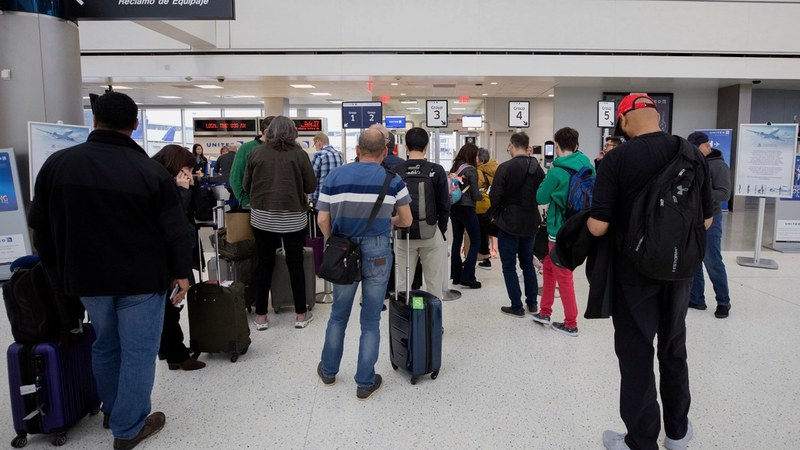
Travelers faced notable delays and operational congestion, particularly at Charlotte Douglas International Airport. Arrival delays at CLT increased substantially, rising from 24 minutes to 49 minutes as the backlog of flights
accumulated. Several American Airlines flights bound for Charlotte were held at their origin airports to mitigate congestion. Passengers experienced disrupted connections and extended departure queues. The airline advised travelers to monitor flight status closely, especially for flights through Charlotte and Miami.
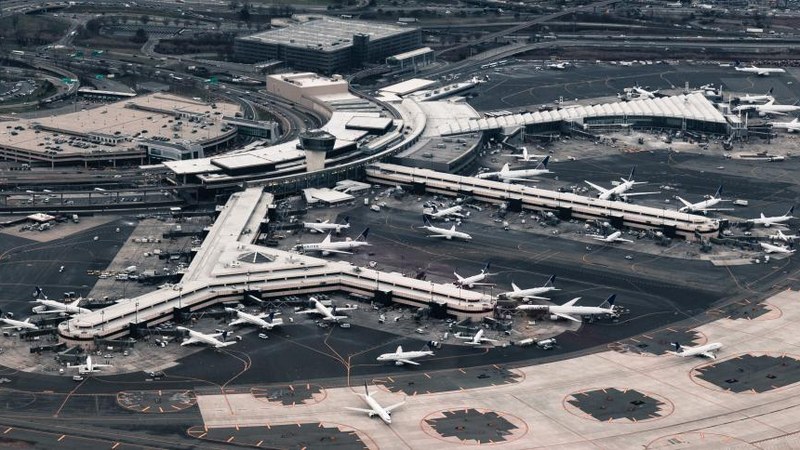
Compounding the operational challenges from the IT outage were concurrent weather-related ground stops and air traffic delay programs affecting several northeastern and mid-Atlantic airports throughout the evening. Boston Logan International Airport (BOS), Newark Liberty International Airport (EWR), Philadelphia International Airport (PHL), Baltimore/Washington International Airport (BWI), Ronald Reagan Washington National Airport (DCA), New York JFK, and New York LaGuardia Airport
(LGA) all experienced ground stops or substantial delays attributed to thunderstorms and other weather phenomena, increasing delays unrelated to American Airlines’ outage.
The FAA’s nationwide ground stop specifically prevented additional American Airlines departures but did not recall aircraft already in flight. Ground stops instruct flights to hold at their departure points until restrictions are lifted or authorization to depart is granted. These restrictions differ from airworthiness groundings which involve type-specific flight bans. American Airlines’ regional affiliates were also covered by the nationwide ground stop, though exact exemptions or scope details remain unspecified.
The cause of the IT outage remains undisclosed
by American Airlines as of the reporting cutoff time on July 28, 2026. No official link has been established between this event and the American Airlines nationwide technical interruption experienced on December 24, 2024. Additionally, no verified information has connected this outage to cybersecurity incidents or vendor failures. American Airlines and the FAA have yet to release comprehensive data regarding the total number of flights or passengers affected or the full duration of airport-specific ground stops. Ongoing ground stops at Charlotte carried a 30% to 60% chance of extension beyond their scheduled end times.