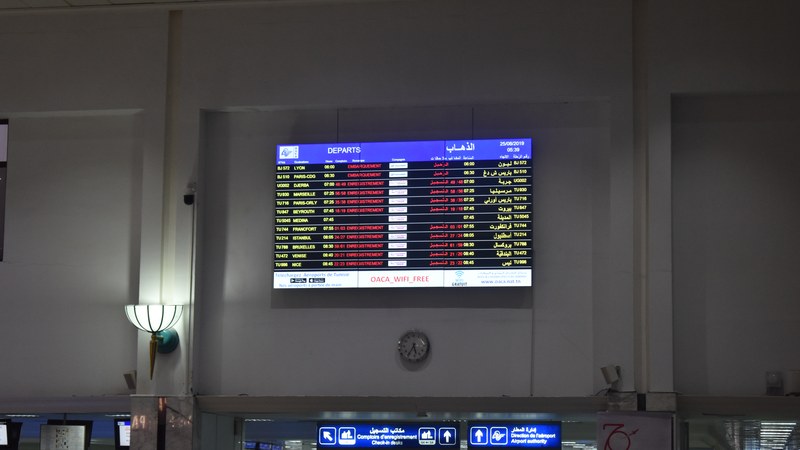
On Friday, November 25, 2026, the Federal Aviation Administration (FAA) ordered a nationwide ground stop for all departing flights at every U.S. airport after a telecommunications failure affected Air Traffic Control Centers and Terminal Radar Approach Control (TRACON) facilities. Approximately 3,500 flights were already airborne when the ground stop began, and inbound international flights were managed on a case-by-case basis.
Flight Disruption Timeline and Scale
The ground stop lasted over four hours before being lifted later the same day. Two hours into the halt, FlightAware data indicated 3,719 flights had been canceled and 10,218 delayed nationwide. By Saturday morning, November 26, cancellations stood at 3,374
with 1,008 delays recorded across the country. By Saturday afternoon, the total number of canceled flights exceeded 4,500 nationwide as operations continued to recover.
Causes of the Telecommunication Failure
Transportation Secretary Sean Duffy attributed the disruption to instability in radar and communication systems that manage flights crossing the United States, citing overload of outdated technology. Routine maintenance was underway at a remote FAA location where telecommunication lines were being upgraded from old copper wiring to fiber optics, which contributed to the inconsistent service. The FAA said the issue affected all Air Route Traffic Control Centers and described it as intermittent communications and radar problems, not
a complete blackout.
Impact on Passengers and National Air Traffic
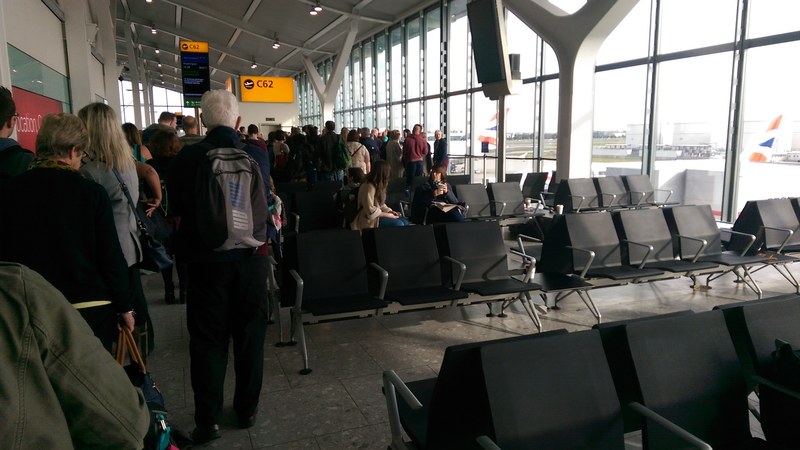
Millions of travelers were stranded across U.S. airports during the ground stop on a busy travel weekend. The combination of flight cancellations and lengthy delays disrupted passenger travel plans nationwide, impacting the flow of cross-country and international flights managed by affected Air Traffic Control facilities.
Official Statements on Safety and Investigation
Transportation Secretary Sean Duffy emphasized safety as the reason for the FAA’s extraordinary ground stop. He stated, “in radar and communications for Air Traffic Control that manages flights that are crossing the country. These flights are in the air,” and clarified that “the disruption is not a complete blackout, but there were
intermittent comms and radar.” Homeland Security Secretary Markwayne Mullin confirmed the glitch was a telecommunication issue and said, “There is no indication, and we had no reason to believe as of right now that this was a threat to the United States.” Both officials reinforced that the FAA was still investigating the precise causes. Duffy explained, “In at least one of our remote FAA locations, a contractor was doing routine maintenance to switch telecommunication lines from old copper wire, and they were bringing it over to fiber.” He added, “We’re still working on the details of what went wrong today.”
An FAA alert ordered, “Attention all aircraft operators, by order of the federal aviation command center all airports are ground stopped. All departing traffic should remain ground stopped until further notice. Inbound international flights will be managed on a case by case basis.”